The sound of a siren in Tel Aviv is not a sound. It is a physical weight. It presses against your chest, vibrating through the soles of your shoes before your brain even processes the frequency. For those living in the crosshairs of the Middle East, that wail is the starting gun for a frantic, practiced choreography: the grabbing of a sleeping child, the sprint to the reinforced room, the holding of breath.
But on that Tuesday night, the air felt different. Thicker. The streaks of light arcing across the black velvet of the Levantine sky weren't the usual localized salvos. These were the heavy hitters. Ballistic trajectories traced by the Islamic Revolutionary Guard Corps (IRGC), launched from deep within Iranian territory, screaming toward the heart of Israel.
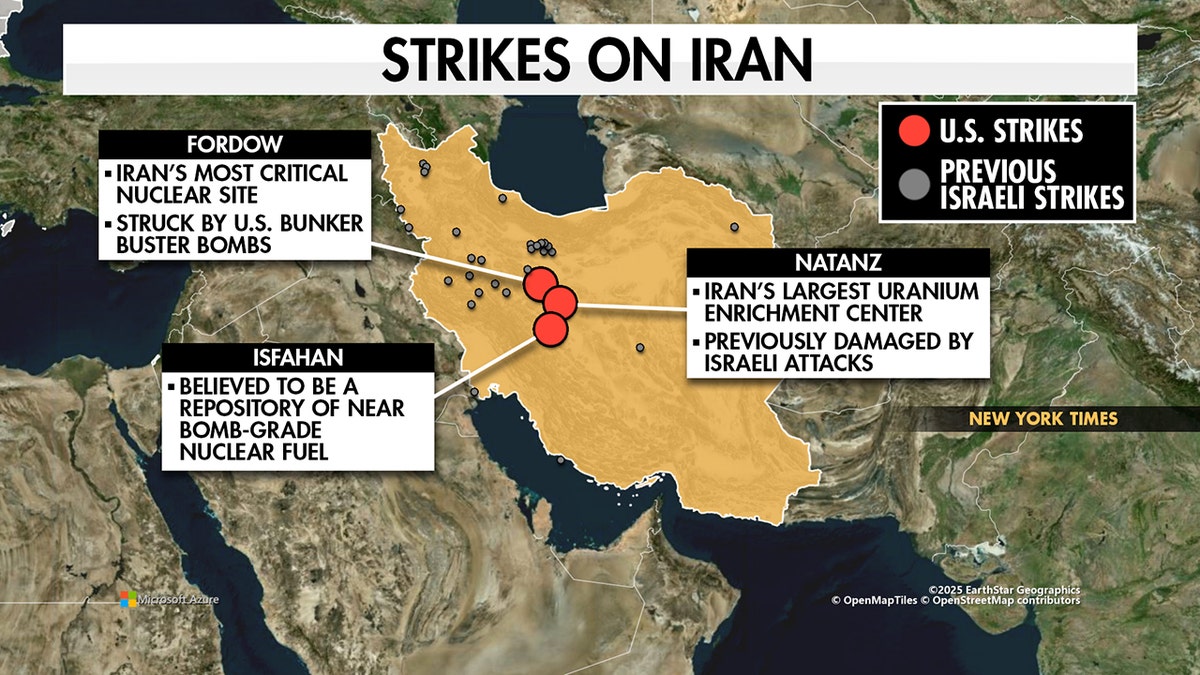
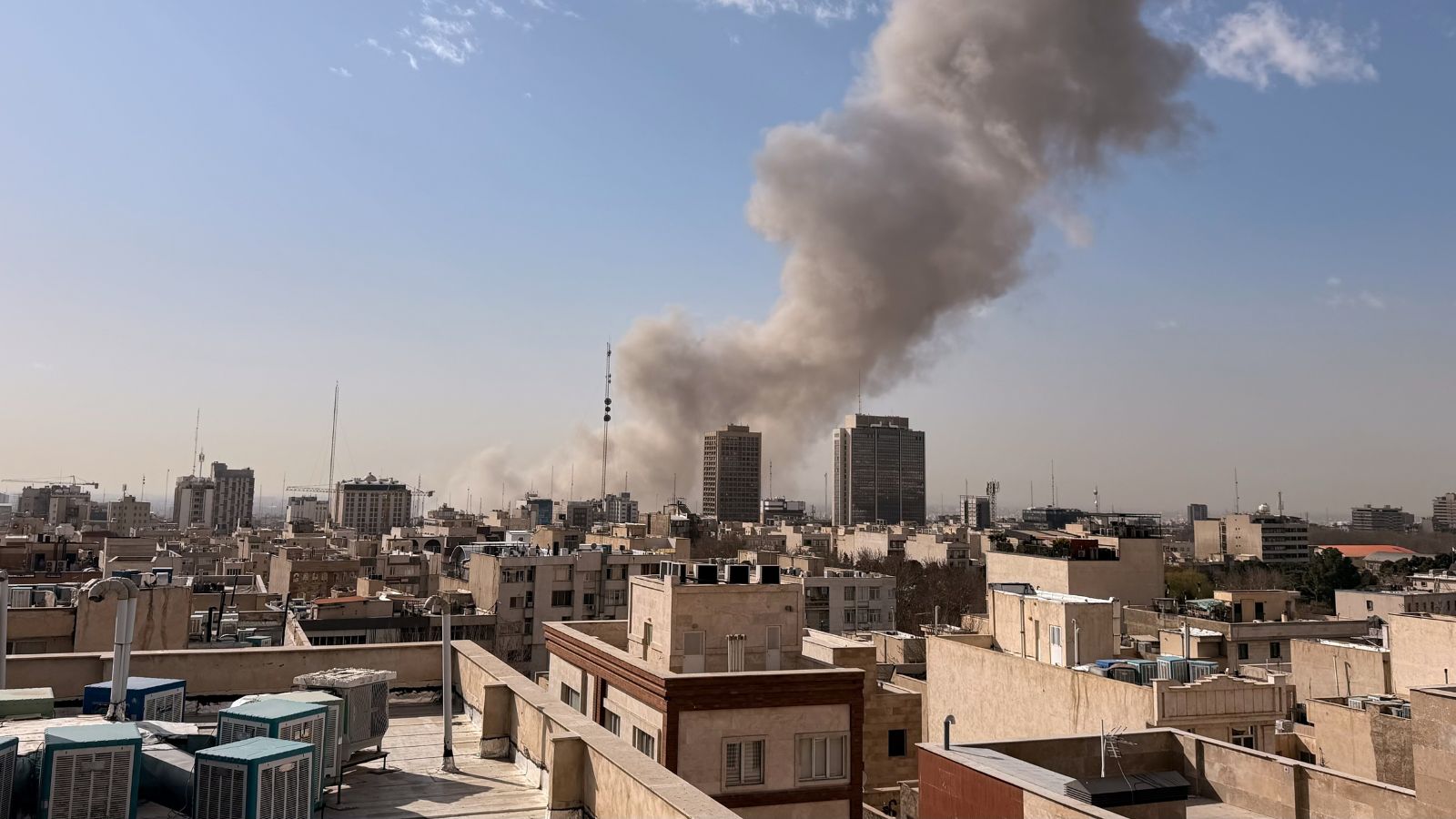
For years, the shadow war between Tehran and Jerusalem was fought in the dark—a cyberattack on a water plant here, a targeted assassination in a leafy suburb there. Now, the shadow has stepped into the light. The joint missile strike on Tehran by Israeli and American forces wasn't an isolated act of aggression. It was the inevitable snapping of a tension wire that had been stretched to the breaking point for decades.
The Physics of Provocation
To understand why F-35s eventually roared over the Iranian capital, we have to look at the math of the preceding weeks. Diplomacy is often just a polite way of describing a series of calculated risks. Iran’s decision to launch nearly 200 missiles directly at Israel was a gamble that the regional status quo could be rewritten through sheer volume.
Israel’s defense isn't just a wall; it is a sophisticated, multi-layered digital organism. You have the Iron Dome for the short-range nuisances, David’s Sling for the medium-range threats, and the Arrow system designed to pick off ballistic missiles while they are still shivering in the thin air of the upper atmosphere.
When the Iranian barrage began, these systems worked in a terrifyingly beautiful harmony. But hardware has limits. Interceptors cost millions. Batteries can be overwhelmed. More importantly, the psychological barrier had been breached. For the first time, the "strategic patience" of the West ran dry. The decision to strike back at the source—Tehran itself—wasn't just about destroying launchers. It was about re-establishing the "logic of the crazy man." In the world of high-stakes geopolitics, if your enemy believes you will never hit back at their home base, they have no reason to stop swinging.
The War Room and the Invisible Hand
While the world watched grainy footage of explosions over the Al-Aqsa Mosque, the real battle was happening in windowless rooms in Tel Aviv and Tampa. This wasn't just an Israeli operation. The presence of U.S. Central Command (CENTCOM) was the silent pulse beneath the entire mission.
Imagine a hypothetical tactical officer—let's call him Elias. Elias sits in front of a screen that distills human tragedy into neon green vectors. His job isn't to hate the enemy; it’s to manage the "data saturation." When the American and Israeli forces coordinated their response, they were sharing more than just a common enemy. They were sharing a nervous system.
The U.S. Aegis destroyers in the Mediterranean acted as the eyes, spotting launches the moment the heat signatures bloomed on satellite sensors. This data was fed into Israeli fire-control systems in microseconds. This level of "interoperability" is why the strike on Tehran was so surgical. It wasn't a carpet-bombing campaign of the 20th century. It was a digital scalpel.
The strike targeted the IRGC's command and control centers and, crucially, the production facilities for the very drones and missiles that had been terrorizing the region. The message sent by the joint strike was clear: We can see you, we can reach you, and your borders are no longer a shield.
The Human Cost of High-Altitude Strategy
It is easy to get lost in the "techno-thriller" aspect of stealth jets and hypersonic defense. But beneath every "target neutralized" is a city of millions. In Tehran, the rumble of explosions wasn't just a military setback; it was a terrifying reminder to the Iranian people that their government's foreign adventures have a local price tag.
The Iranian leadership has long played a game of "proxy defense." By funding groups in Lebanon, Gaza, and Yemen, they kept the fire far from their own doorstep. They bought security with other people's lives. That night, the fire came home.
The complexity of this conflict lies in its layers. You have the geopolitical layer (the struggle for regional hegemony), the religious layer (the ancient schisms that refuse to heal), and the technological layer (the race for the ultimate "off switch"). But the most volatile layer is the human one.
The average person in Tehran is worried about the plummeting value of the rial and the cost of bread. The average person in Tel Aviv is worried about their daughter’s mandatory military service. Neither wants a regional conflagration that turns the Middle East into a glass floor. Yet, they are both passengers on a train driven by leaders who view "de-escalation through escalation" as a valid survival strategy.
The Myth of the Final Blow
There is a dangerous temptation to see a massive joint strike as a "game-over" moment. It is not. In the lexicon of modern warfare, there is rarely a final whistle.
Consider the "Hydra effect." You destroy a missile factory in Tehran, but the blueprints are already in a cloud server in a third country. You take out a commander, and three younger, more radicalized officers vie for his spot. The strike was a tactical masterpiece, but military force is a blunt instrument used to solve a sharp problem.
The real trigger for the strike wasn't just the missiles Iran fired. It was the collapse of the "gray zone." For years, both sides operated in a space where they could deny their actions. "It wasn't us," they’d say with a wink. But when 200 missiles fly across international borders, the gray zone evaporates. You are left with the cold, hard reality of state-on-state violence.
The U.S. involvement is the most delicate thread in this tapestry. Washington does not want another "forever war" in the Middle East. However, the American commitment to Israeli security is a cornerstone of its foreign policy that transcends whichever party holds the White House. By participating in the strike, the U.S. signaled that it is willing to risk direct confrontation to prevent a total regional collapse. It is a paradox: fighting a small war to prevent a big one.
The Architecture of the Aftermath
What happens when the smoke clears over the Alborz Mountains?
The technical experts will analyze the debris. They will look at the failure rates of the Iranian guidance systems and the success rates of the Western interceptors. They will update their software. They will buy more batteries.
But the political landscape has been permanently altered. The "untouchable" status of the Iranian capital has been revoked. The Iranian regime now faces a harrowing choice: do they double down on their nuclear ambitions as the ultimate "stay alive" card, or do they realize that their current path leads to the systematic dismantling of their military infrastructure?
History suggests that when a regime feels backed into a corner, its first instinct is to lash out. But the sheer precision of the Israel-US strike provided a sobering counterpoint. It demonstrated that in 2026, the distance between "threat" and "consequence" has shrunk to almost zero.
The true stakes are not found in the wreckage of a drone factory. They are found in the silence that follows the siren. It is a fragile, hollow silence. It is the silence of a region holding its breath, waiting to see if the next light in the sky is a falling star or the beginning of the end.
The night sky over Tehran eventually returned to its natural dark. The jets returned to their hangars. The technicians wiped their brows and began the long process of reloading. But in the minds of everyone from the halls of the Knesset to the bunkers in Tehran, the world had become a much smaller, much more dangerous place.
The red horizon wasn't just the glow of burning fuel. It was the dawn of a new, unsettled era where the distance between a shadow war and a total one is only as wide as the flicker of a radar screen.
Would you like me to analyze the specific technological differences between the Arrow 3 and the Iranian Fattah-1 missile used in this engagement?