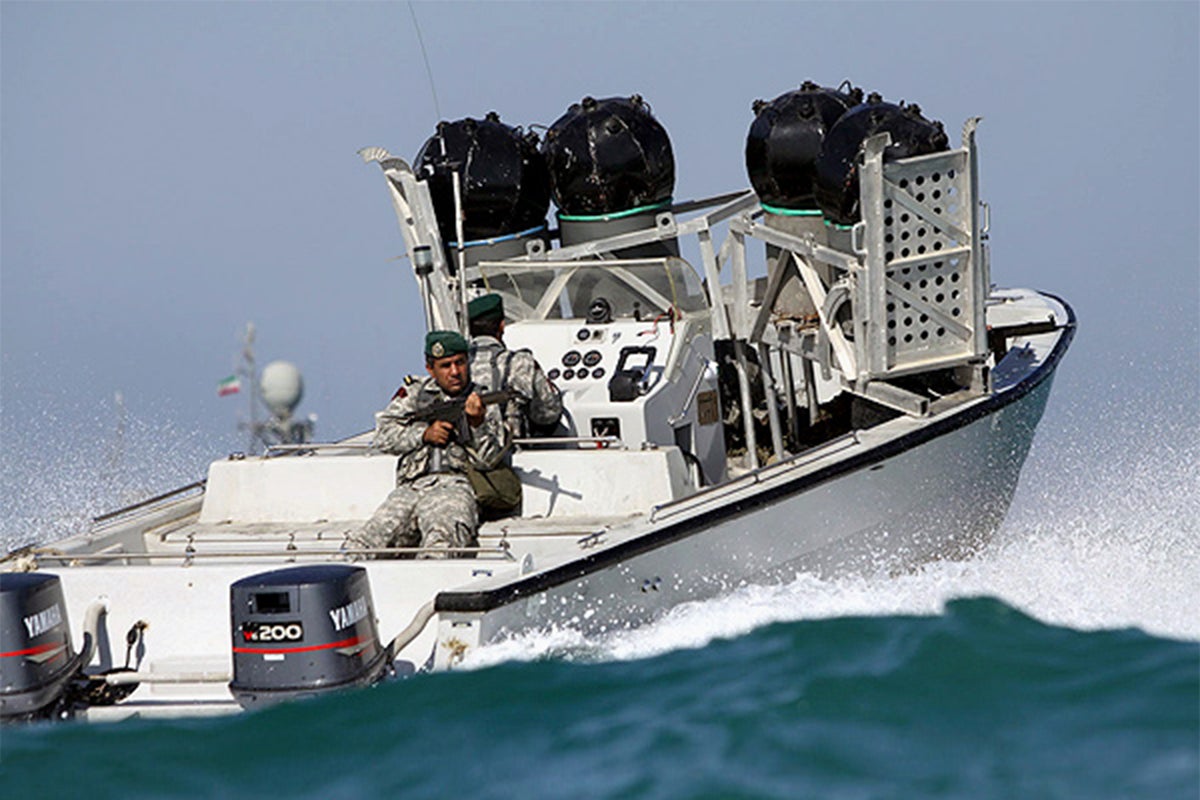
The air near the Strait of Hormuz usually tastes of salt and diesel. It is a thick, humid pressure that clings to the skin of every sailor making the transit toward the Gulf of Oman. On a standard Tuesday, the rhythmic thrum of a massive slow-speed diesel engine is the only heartbeat that matters. It is a sound that signals safety. It means the propeller is turning. It means the cargo—millions of barrels of crude, the very lifeblood of the global power grid—is moving toward its destination.
Then the silence breaks.
It starts with a sound like a physical punch. Not a bang, but a concussive whump that vibrates through the steel hull, traveling from the waterline up through the soles of a crewman’s boots. Imagine standing inside a giant bell while someone strikes it with a sledgehammer. That is what a projectile strike feels like when you are encased in 300,000 tons of steel.
Earlier today, a tanker found itself at the center of this nightmare. Off the coast of Dubai, what was supposed to be a routine transit transformed into a frantic battle for survival. The reports are clinical. They speak of "projectiles" and "incidents." They mention "urgent warnings" issued by maritime authorities. But those words are too clean. They don't capture the smell of scorched paint or the way the emergency klaxon shreds the nerves of a twenty-something third mate who just wanted to earn enough money to build a house for his parents in Manila.
The Invisible Bridge Under Our Feet
Most people think of the global economy as a series of digital transactions or trucks on a highway. We forget that it is actually a physical bridge made of ships. When a tanker catches fire near Dubai, the ripples don't just stay in the water. They travel through the copper wires of every city on earth.
Every time a projectile finds its mark, the insurance premiums for every other vessel in the region spike. Those cents add up. They find their way into the price of a gallon of milk in London or the cost of a commute in New York. We are all tethered to that burning deck by a thousand invisible threads of supply and demand.
The ship in question, now fighting a localized inferno, represents more than just a logistical failure. It is a reminder that the world’s most critical chokepoints are guarded by nothing more than the hope that the "rules-based order" still holds. In the Strait of Hormuz, the gap between peace and a global energy crisis is sometimes as narrow as thirty miles.
Life on the Knife's Edge
Consider the crew. On a tanker, there is no "safe" place to hide when a fire starts. You are living on top of a floating volcano.
Let's look at a hypothetical sailor—we'll call him Elias. Elias is a pumpman. He knows every valve, every seal, and every sensor on that ship. When the projectile hit, Elias wasn't thinking about geopolitical tensions or the price of Brent Crude. He was thinking about the fire suppression system. He was thinking about his daughter's birthday next week.
When the alarm sounds, the training kicks in, but the fear remains. The deck of a tanker is an alien world of pipes and manifolds. Underneath that deck lies a cargo so volatile that a single spark in the wrong vent can turn the entire vessel into a pillar of fire. The crew must move toward the heat, dragging heavy hoses, donned in thick fire suits that turn the desert humidity into a private sauna.
They are the ones who pay the highest price for the instability of our world. While analysts in glass towers debate the strategic implications of the strike, Elias and his crewmates are breathing in acrid smoke and praying that the hull integrity holds.
The Tech of the Hunt
How does a projectile strike a moving target in the middle of a guarded waterway? This isn't the warfare of the past. This isn't a destroyer lining up a broadside. It is the democratization of destruction.
Modern maritime threats often come from low-cost, high-tech solutions. Drones, GPS-guided skiffs, and shoulder-fired missiles have tilted the scales. A vessel worth $100 million, carrying $200 million in oil, can be crippled by a device that costs less than a used car.
The "urgent warning" issued today by the United Kingdom Maritime Trade Operations (UKMTO) is a signal to every captain in the region: look at your radar, but also look at the horizon. The threat is no longer just other ships. It is the invisible, the small, and the persistent.
We have entered an era where the giants of the sea are being harassed by shadows. Technology has given the disgruntled and the desperate the power to stop the world's heart for a beat. Every strike is a test of the system. How much can the global supply chain take before it fractures?
The True Cost of a Flare in the Night
When news of the fire broke, the markets reacted with their usual cold efficiency. A slight uptick in futures. A flurry of panicked trades.
But the real cost isn't found in a spreadsheet. It’s found in the eyes of the families waiting for a satellite phone call that says, "I'm okay." It's found in the environmental fragility of a coastline that could be devastated by a spill of this magnitude.
If that tanker had suffered a catastrophic breach, the damage would have lasted for decades. The coral reefs, the desalination plants that provide water to millions, and the entire ecosystem of the Gulf would have been smothered in a black shroud. We dodge these bullets more often than we realize. Today, the fire was contained. The hull held. The crew survived.
But luck is not a strategy.
The strike near Dubai is a scream in the dark. It is a warning that our reliance on these narrow corridors of water is a vulnerability we haven't yet learned how to protect. We treat the arrival of goods as a certainty, a law of nature as reliable as the tides. We forget that it is actually a miracle of cooperation, one that is currently being shot at.
The fire on the deck might be out, but the heat remains. It’s the heat of a world where the sea is no longer a neutral highway, but a front line. As the sun sets over the Gulf, the silhouette of the damaged tanker serves as a lonely monument to our shared fragility. We are all on that ship, whether we know it or not, watching the horizon and hoping the next sound we hear isn't the breaking of the silence.
The ocean has a way of swallowing secrets, but it cannot hide the glow of a burning ship. That light is meant for us to see.