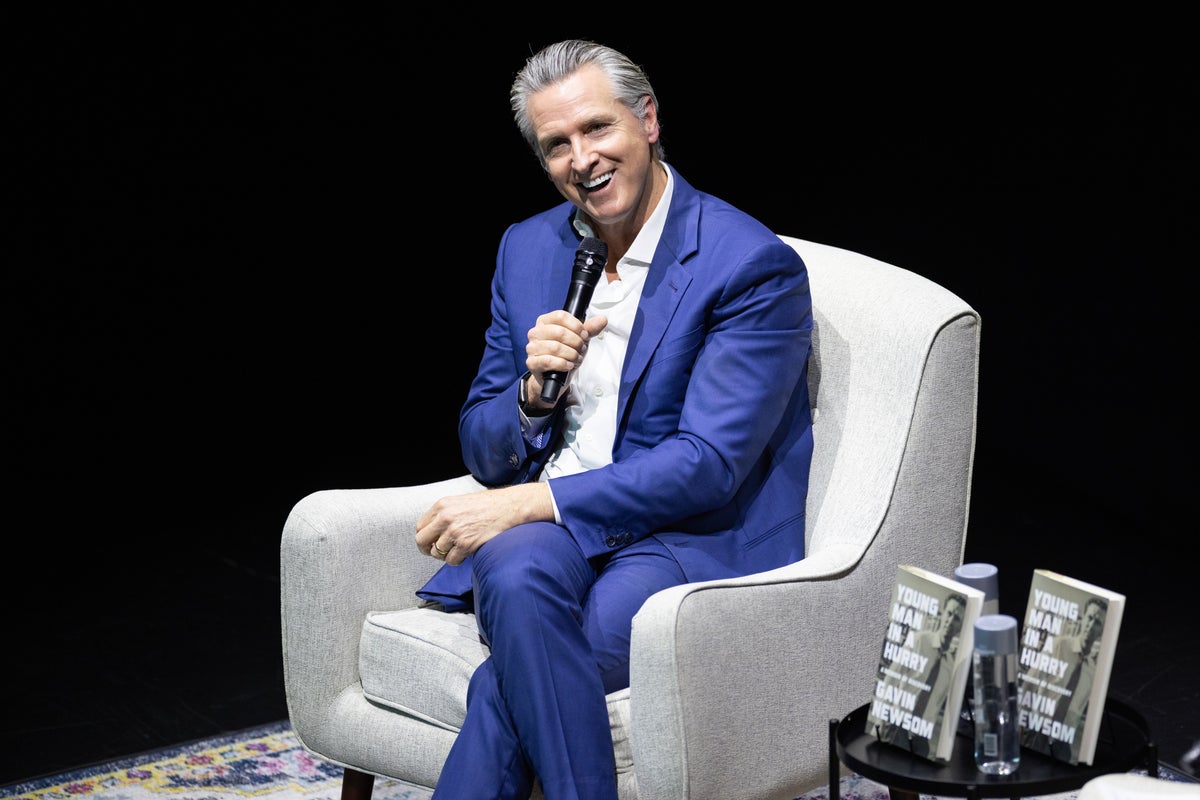
Gavin Newsom is currently performing a delicate political dance that every veteran observer of the Golden State recognizes. He is publicly weighing the toll of a 2028 presidential run against the wishes of his four children, claiming they feel "too young" for the searing heat of a national spotlight. While the sentiment is grounded in the very real pressures of a family in the public eye, it serves a dual purpose as a strategic buffer. By positioning himself as a father first, Newsom buys time to navigate a treacherous national polling environment where his favorability frequently lags behind the figures he aims to replace.
The Governor’s children—Montana, Hunter, Brooklynn, and Dutch—have grown up in the fishbowl of the Sacramento Governor’s Mansion. In a series of recent interviews, Newsom has detailed a household where a 2028 bid is a matter of active debate, often centering on a text message from his son that urged him to reconsider. This narrative of a "reluctant candidate" is one of the oldest plays in the American political handbook. It allows a politician to remain in the conversation without fully committing, shielding them from the "ambitious" label that has sunk many a campaign before it could launch.
The Strategy of Parental Hesitation
The reality of 2026 is that Gavin Newsom is a term-limited governor of the world’s fourth-largest economy with nowhere left to go but the federal stage. His recent activity suggests a man far more focused on a national legacy than a quiet retirement. From launching a high-profile podcast to aggressively sparring with the current administration over everything from immigration to military deployments in Los Angeles, Newsom is already running. The "family discussion" provides a convenient exit ramp should his internal numbers fail to improve, but it also humanizes a politician often criticized for being too polished, too slick, and too "California."
Recent polling highlights why this humanization is necessary. While Newsom maintains a 45% approval rating within California, his national standing is more fragile. A March 2026 NBC News survey placed his favorability at just 27%, trailing significantly behind President Trump and even former Vice President Kamala Harris. For a man who models his social media presence after the "strong and wrong" aesthetic—prioritizing combativeness over consensus—the disconnect with middle America is a glaring vulnerability.
Hard Truths of the California Record
The primary obstacle to a Newsom presidency isn't a text from his son; it is the dossier of unresolved issues back home. Investigative scrutiny of his tenure reveals a pattern of bold "stretch goals" that frequently collide with reality.
- Housing and Homelessness: In 2019, Newsom promised 3.5 million new homes by 2025. By 2026, the state has permitted only a fraction of that goal. Despite declaring himself the "homeless czar," the visibility of encampments remains a potent weapon for his detractors.
- Health Care: His early campaign pledge for a single-payer system was eventually swapped for more incremental reforms, a move that alienated the progressive wing of his party.
- The Trump Mirror: Newsom has openly stated that Americans prefer "strong and wrong" over "weak and right." He has spent the last year imitating the very tactics he decries, using all-caps social media posts and aggressive merchandise to build a national brand.
The 2028 Field and the Succession War
As Newsom prepares to exit the Governor’s office, the scramble to replace him is already shifting the tectonic plates of Democratic politics. Congressman Eric Swalwell and billionaire Tom Steyer are among those vying for the seat, but their success depends largely on how much of Newsom’s legacy they choose to carry. Simultaneously, the 2028 presidential field is maturing. With JD Vance and Marco Rubio solidified as the Republican heirs apparent, the Democratic Party is looking for a counter-puncher.
Newsom’s internal dilemma is real, but it is also a luxury of the elite. The "we’re too young" argument from his children reflects a desire for a normal adolescence—a commodity that is non-existent for the offspring of a President. However, in the brutal logic of national politics, a "maybe" is often more powerful than a "yes." It keeps donors on the hook and keeps his name in the headlines without requiring him to defend his record in a primary debate just yet.
The Governor has indicated he will make a definitive choice after the 2026 midterm elections. Until then, expect the narrative of the torn father to persist. It is a relatable, empathetic shield that hides the calculated movements of a politician who has been in a "hurry" his entire career. If Newsom truly believes that strength is the only currency the modern voter respects, he will eventually have to choose between the quiet of his home and the noise of the trail. The kids might not want the spotlight, but for a man who has spent decades seeking it, the darkness of a post-political life may be the scarier prospect.
Would you like me to analyze the recent 2026 California gubernatorial polling data to see which candidate is best positioned to inherit Newsom's political machine?