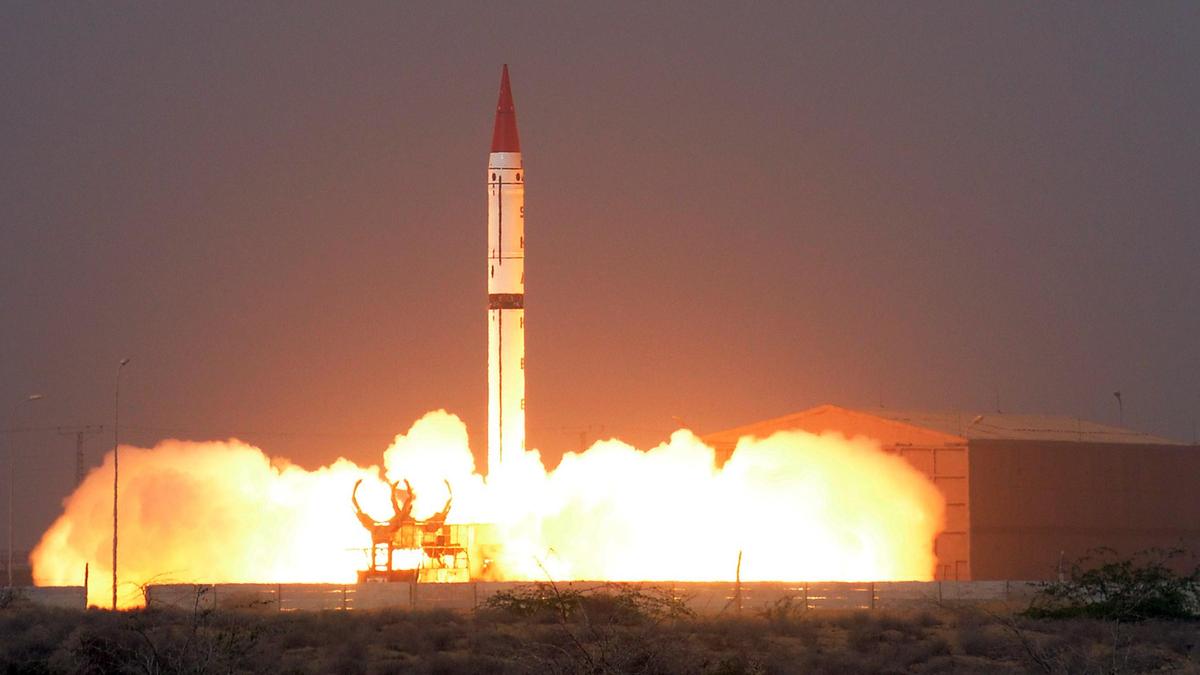
The idea that Pakistan could hit the U.S. mainland with a missile used to be the stuff of fringe Tom Clancy novels. Not anymore. On March 18, 2026, Director of National Intelligence Tulsi Gabbard stood before the Senate Intelligence Committee and dropped a bombshell that should've stopped every person in the room cold. Pakistan isn't just a regional power anymore; it’s quietly building the tech to put American soil in its crosshairs.
If you’ve followed Gabbard’s career, you know she isn’t exactly a hawk. She’s built her brand on skepticism of foreign intervention. So when she gets up and says Pakistan’s long-range ballistic missile development "potentially could include ICBMs" capable of striking the Homeland, it isn’t just noise. It’s a massive shift in how the U.S. views the global threat grid.
The Massive Jump from Regional to Intercontinental
For decades, Pakistan’s missile program had one target: India. Everything they built—the Ghaznavis, the Ghauris, even the Shaheen-II—was designed to make sure New Delhi didn't get too comfortable. Their range topped out around 2,500 to 2,750 kilometers. That’s enough to cover all of India, but it doesn't even get you to London, let alone Los Angeles.
But according to the 2026 Annual Threat Assessment, that localized focus is dead. The Intelligence Community (IC) now sees Pakistan researching "novel and advanced" delivery systems. We aren't just talking about bigger fuel tanks. We’re talking about the transition from Medium-Range Ballistic Missiles (MRBMs) to true Intercontinental Ballistic Missiles (ICBMs).
To put this in perspective, an ICBM needs a range of at least 5,500 kilometers. To hit the U.S. West Coast from Pakistan, you’re looking at over 12,000 kilometers. That’s a monumental technological leap. It requires sophisticated multi-stage rockets, heat shielding for reentry, and advanced guidance systems that Pakistan hasn't publicly demonstrated—yet.
The Numbers are Exploding
Gabbard didn't just single out Pakistan. She painted a picture of a world that is becoming increasingly crowded with high-speed projectiles.
- Current Global Missile Count: Over 3,000.
- Projected Count by 2035: Over 16,000.
That’s more than a 400% increase in just nine years. While Russia and China are the primary drivers of this, the inclusion of Pakistan in the same breath as North Korea and Iran tells you that the "nuclear club" is getting much more aggressive about its reach.
Why Pakistan is Changing its Strategy
You might wonder why Pakistan would even want to target the U.S. They've been a complicated "frenemy" for years, receiving billions in aid while often playing both sides of the fence. But the geopolitical reality of 2026 is messy.
First, there’s the China factor. Pakistan is China’s closest ally in the region. As the U.S. and China head toward a more confrontational relationship, Pakistan's "all-weather friendship" with Beijing likely includes technology sharing. If China wants to complicate U.S. defense planning, helping Pakistan develop long-range capabilities is an easy way to do it.
Second, it’s about survival. Pakistan watches what happens to countries that don't have a "big stick." They saw what happened in the recent U.S. strikes on Iran, which Gabbard described as "obliterating" Iranian nuclear capabilities. If you’re a military leader in Islamabad, you’re probably thinking that the only way to ensure the U.S. stays out of your business is to make sure you can hit them back where it hurts.
The MIRV Factor and Missile Defense
The most alarming part of this development isn't just the range; it's the payload. There has been growing evidence that Pakistan is working on Multiple Independently Targetable Reentry Vehicles (MIRV).
In plain English? One missile carries three, four, or five warheads. When it reaches space, it drops them off like a bus letting passengers out at different stops. This is a nightmare for U.S. missile defenses like the Ground-based Midcourse Defense (GMD) system. If one missile turns into five targets, the math of shooting them down becomes nearly impossible.
Gabbard noted that China and Russia are already building systems specifically designed to "penetrate or bypass" U.S. defenses. Pakistan following suit suggests they’re no longer interested in just "credible minimum deterrence." They're looking for "assured destruction."
The Intelligence Gap
There’s also a weird tension in Gabbard's testimony. While she was direct about the Pakistan threat, she was grilled by Senators like Mark Warner over what wasn't in the report. For the first time in years, the threat assessment didn't mention foreign interference in U.S. elections.
Warner’s take? The IC is being "muzzled" or "not allowed to speak honestly." This matters because if the intelligence is being filtered for political reasons, we have to ask: Are we getting the full story on Pakistan, or is the threat actually even more advanced than what's being shared?
What This Means for You
It’s easy to dismiss this as "Washington talk," but the proliferation of long-range nukes changes the cost of every foreign policy decision. If Pakistan achieves a viable ICBM, the U.S. loses a massive amount of leverage in South Asia.
Don't expect a test flight toward the Pacific tomorrow. These things take years of trial and error. But the "potential" Gabbard mentioned is a warning that the window for containing this technology is closing fast.
If you're keeping tabs on global security, keep your eyes on the next few Pakistani missile tests. Look for anything involving the Ababeel or Shaheen-III platforms. If they start testing solid-fuel boosters with longer burn times or more stages, you’ll know they’re serious about that 12,000-kilometer goal.
You should also watch how the U.S. adjusts its "Integrated Air and Missile Defense" (IAMD) budget. If we start seeing a massive influx of cash into West Coast interceptor sites, it’s a sign that the DNI’s "potential" threat has become a "probable" one. Stay informed by checking the Congressional Budget Office (CBO) reports on missile defense—they usually tell the story the politicians won't.