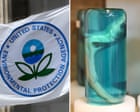
The air in your home or office just got a little more complicated. If you've ever bought a new piece of furniture and noticed that "new smell," you've probably met formaldehyde. It's a colorless, pungent gas used in everything from the glue in your kitchen cabinets to the permanent-press coating on your favorite shirt. For years, the scientific consensus was simple: there's no safe level of exposure when it comes to cancer. But the EPA just flipped the script, and the paper trail suggests they didn't do it because the science changed. They did it because the people in charge did.
Newly released documents from early 2026 reveal that the Trump administration’s EPA relied almost exclusively on industry-funded research to weaken formaldehyde safety standards. By shifting the "safe" threshold to 0.3 parts per million (ppm), the agency has effectively cleared the way for higher chemical concentrations in consumer goods and workplaces. It's a move that directly contradicts decades of independent research and the EPA’s own long-standing Integrated Risk Information System (IRIS) findings.
The Industry Playbook at Work
The core of this regulatory shift isn't a breakthrough in oncology. It’s a change in leadership. In late 2025 and into 2026, the EPA began moving away from the "linear" risk model—the idea that any amount of a carcinogen carries some risk—and toward a "threshold" model. This new approach assumes your body can handle a certain amount of formaldehyde before cancer becomes a threat.
Where did this 0.3 ppm number come from? It wasn't plucked from a peer-reviewed independent study. Documents obtained via Freedom of Information Act requests show the agency leaned heavily on work by Rory Conolly, a scientist whose research has been funded by chemical trade groups like the American Chemistry Council. Conolly’s 2023 paper argued that formaldehyde only causes cancer after it first causes "sensory irritation" like watery eyes or a scratchy throat. Essentially, the EPA is now betting your life on the idea that if your eyes aren't stinging, you're not getting cancer.
The Problem With Thresholds
Independent toxicologists aren't buying it. Formaldehyde is known to cause nasopharyngeal cancer and has been strongly linked to leukemia. The Biden-era EPA 2024 assessment reaffirmed that because formaldehyde can damage DNA directly, there is no "safe" starting point. By adopting the industry’s threshold theory, the current administration is ignoring the "gold standard" science it claims to uphold.
Who Is Running the EPA Now
You can't talk about these rules without looking at who wrote them. The same individuals who spent years lobbying against formaldehyde restrictions on behalf of the chemical industry are now the ones sitting in the deputy seats at the EPA. Nancy Beck and Lynn Dekleva, both former industry insiders, have been identified as the key architects behind these revised risk assessments.
It’s a classic "fox guarding the hen house" scenario. When the people responsible for protecting public health are the same people who previously got paid to minimize chemical risks, the "science" starts to look a lot like a corporate balance sheet. These officials have bypassed the IRIS program—traditionally the most politically insulated scientific body within the EPA—to push through a version of reality that favors 5 billion pounds of annual chemical production over public respiratory health.
Real World Risks for Your Family
So, what does this actually mean for you? It’s not just about abstract numbers in a federal register. It’s about the air you breathe every day. Formaldehyde is ubiquitous. It’s in:
- Pressed-wood products: Particleboard, plywood, and fiberboard used in flooring and furniture.
- Household cleaners: Some dish soaps and disinfectants.
- Permanent-press fabrics: Curtains and clothing that don't wrinkle.
- Cosmetics: As a preservative in certain shampoos and nail polishes.
Under the old rules, manufacturers were under constant pressure to lower emissions. Under the new 0.3 ppm threshold, those incentives vanish. If you’re a worker in a furniture factory or a laboratory, your daily exposure limit just became much more "flexible." For children, whose respiratory systems are still developing, the risk is even more acute.
The Leukemia Connection
While the industry focuses on "sensory irritation," the broader scientific community is worried about the blood. Multiple studies, including the EPA’s own previous drafts, have pointed to a causal link between formaldehyde inhalation and myeloid leukemia. The new EPA stance downplays this connection, focusing instead on the "portal of entry" (the nose and throat) where irritation occurs. By ignoring the systemic effects of the chemical, the agency is leaving a massive gap in public protection.
How to Protect Yourself Since the EPA Won't
Since the federal government is stepping back, the burden of safety falls on you. You don't have to wait for a regulatory rollback to be reversed to improve your indoor air quality.
- Check the Label: Look for products labeled "No Added Formaldehyde" (NAF) or "Ultra-Low Emitting Formaldehyde" (ULEF).
- Wash New Clothes: Always wash permanent-press clothing before wearing it to remove excess chemical residue.
- Ventilate: Formaldehyde off-gassing increases in heat and humidity. Keep your home cool and use a HEPA filter with an activated carbon stage, which is specifically designed to capture gases and VOCs.
- Choose Solid Wood: Whenever possible, opt for solid wood furniture over pressed-wood or MDF, which rely heavily on formaldehyde-based glues.
The reality is that 2026 is shaping up to be a year of massive deregulation. While the EPA claims these moves "right-size" the economy, they're doing so by ignoring the biological reality of how toxins affect the human body. Stay informed, monitor the air quality in your home with a VOC sensor, and don't assume that "legal" means "safe."