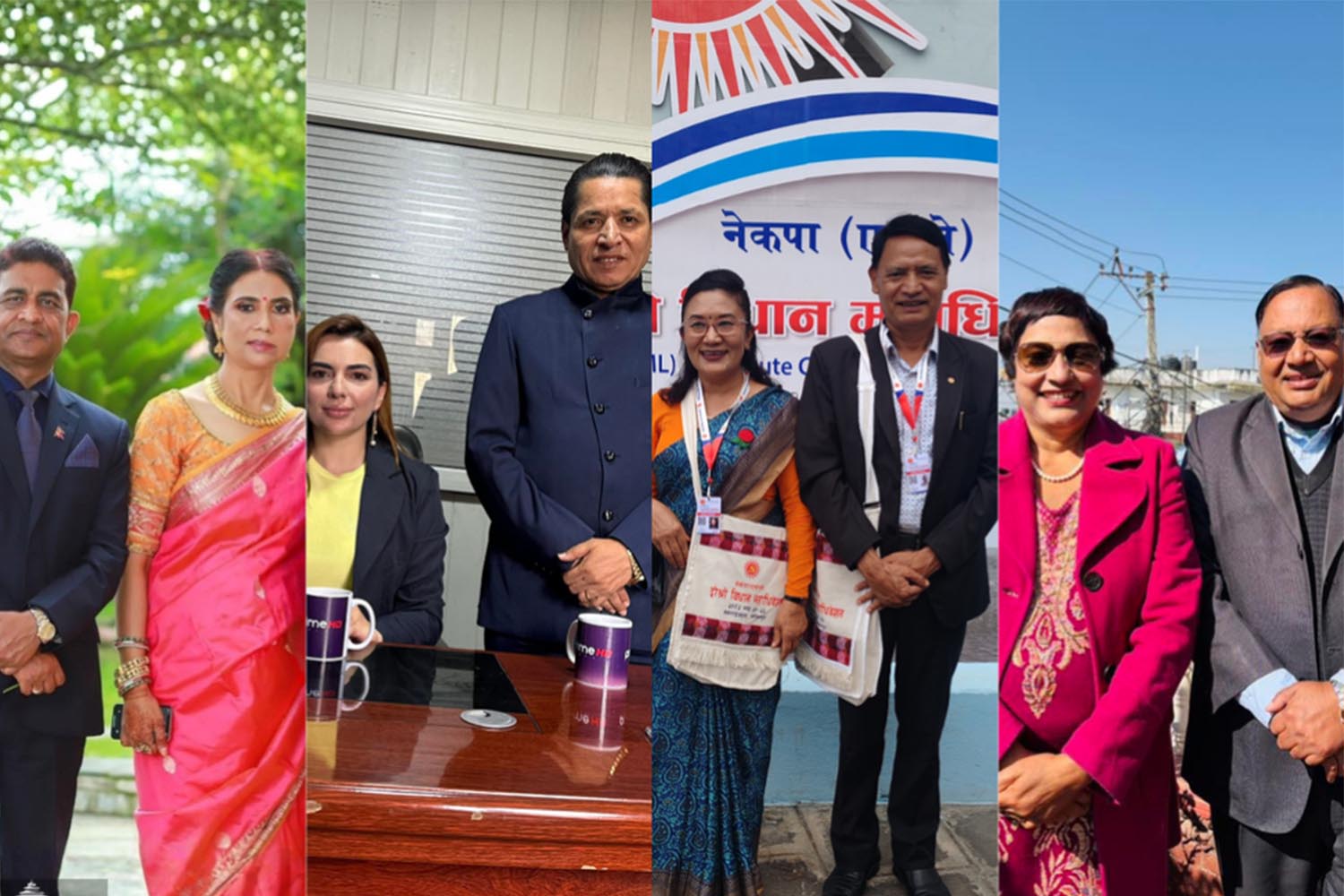
The cameras captured the predictable theater: 275 lawmakers in Daura Suruwal and various ethnic finery, raising their right hands in the International Convention Centre. The media calls it a "new era" or a "milestone for democracy."
They are wrong. For a different look, read: this related article.
What you witnessed in Kathmandu wasn't the birth of a functioning legislature. It was the latest rehearsal of a political necrocracy where the same three men have been shuffling the same deck of marked cards for thirty years. To celebrate the "oath-taking" as a sign of progress is to mistake a revolving door for a path forward.
If you want to understand the actual mechanics of power in Nepal, stop looking at the ballot boxes. Start looking at the math of the "Hung Parliament" and the predatory coalition culture that treats the national budget like a private buffet. Related analysis on the subject has been provided by NBC News.
The Myth of the Fresh Start
The mainstream narrative suggests that every new session of the Pratinidhi Sabha (House of Representatives) offers a chance for reform. This is the first lie.
Nepal’s electoral system is designed to prevent stability. With a mix of 65% First-Past-The-Post (FPTP) and 35% Proportional Representation (PR), the math almost guarantees that no single party will ever hold a majority. In a mature democracy, this would force consensus. In Nepal, it creates a marketplace for political human trafficking.
I’ve watched this cycle repeat since the 2006 Comprehensive Peace Accord. The "new" parliament is actually a hostage situation. The fringe parties, some holding as few as ten seats, become kingmakers. They don't demand policy shifts; they demand ministries with the highest "extractive potential"—Infrastructure, Land Reform, and Finance.
When a lawmaker takes an oath in Kathmandu, they aren't swearing to serve the constituent in Jumla or Dhanusha. They are swearing fealty to the "Syndicate."
The Syndicate: Three Men and a Deadlock
To understand why this session is DOA, you have to look at the three-headed hydra of Nepali politics: Sher Bahadur Deuba (NC), K.P. Sharma Oli (CPN-UML), and Pushpa Kamal Dahal "Prachanda" (CPN-MC).
The competitor articles focus on the "diversity" of the new house. They point to the rise of the Rastriya Swatantra Party (RSP) or the CK Raut-led Janamat Party. This is a distraction. While these newer faces occupy seats, the levers of the state—the bureaucracy, the police transfers, and the billion-rupee contract pipelines—remain firmly in the hands of the "Big Three."
- Sher Bahadur Deuba: The master of the status quo. His expertise is not in governance, but in survival through inertia.
- K.P. Sharma Oli: The nationalist populist who uses constitutional loopholes like a surgeon uses a scalpel.
- Prachanda: The ultimate swing voter. He has mastered the art of holding the country's stability hostage with a diminishing electoral mandate.
This isn't a parliament. It’s a cartel meeting where the public is invited to watch the opening ceremony but barred from the backroom negotiations.
The Economic Cost of Political Theater
While the international community offers polite applause for Nepal’s "democratic transition," the numbers tell a story of systemic collapse.
Nepal’s debt-to-GDP ratio has ballooned. The trade deficit is a chasm. The country’s primary export isn't hydropower or tea; it’s people. Every single day that these lawmakers spend bickering over who gets the Speaker's chair, roughly 2,000 to 3,000 young Nepalis pass through Tribhuvan International Airport with a one-way ticket to the Gulf or Malaysia.
The "oath" they took today? It should have been a confession.
The parliament is an expensive facade for a Remittance Economy. The government has no incentive to create jobs at home because the more people leave, the more foreign currency flows back to keep the banks liquid and the import-heavy economy afloat. A functioning parliament would disrupt this. A dysfunctional one, like the one that just convened, ensures the flow of cheap labor continues.
Dismantling the "People Also Ask" Delusions
Does a new parliament mean policy stability?
No. It means a "Musical Chairs" of cabinet reshuffles. Expect at least three different Prime Ministers or dozens of cabinet changes before this term is up. In Nepal, a minister’s average lifespan in office is shorter than a seasonal harvest. You cannot build a national power grid or a highway system when the person signing the checks changes every eight months.
Is the rise of independent parties a "Game Changer"?
The term "game changer" is a lazy label for "minor annoyance." The RSP and other newcomers are currently being swallowed by the system. They face a brutal choice: join a corrupt coalition to get a taste of power, or sit in the opposition and watch their promises die in committee. The system is built to corrupt the incorruptible through the sheer weight of bureaucratic red tape.
Will this session fix the economy?
The parliament doesn't run the economy; the "Contractor-Politician Nexus" does. A significant percentage of the sitting MPs are either construction contractors or have direct stakes in the industries they are supposed to regulate. This is a massive conflict of interest that is rarely discussed in "new session" coverage. They aren't there to pass laws; they are there to protect their margins.
The Federalism Failure
We were told federalism would bring "Singha Durbar to every village." Instead, it just exported the corruption of Kathmandu to seven provinces.
The new parliamentary session is supposed to streamline federal relations, but it won't. The central government refuses to devolve power, and the provinces are treated as retirement homes for failed central leaders. The cost of maintaining this multi-layered bureaucracy is eating the capital expenditure budget alive.
We are paying for a luxury democratic suite while living on a studio apartment budget.
Stop Cheering for the Process
The international media loves a "peaceful transition" story. It looks good on a diplomatic cable. But for the person living in the Terai or the mountains, this ceremony is meaningless.
Real power in Nepal doesn't reside in the floor of the House. It resides in:
- The Kitchen Cabinets: Where the wives and brothers-in-law of the Big Three decide on ambassadorial appointments.
- The Power Brokers in Delhi and Beijing: Who view the Nepali parliament as a chessboard for regional hegemony.
- The Interest Groups: The transport syndicates and private school cartels that lobby (read: bribe) to ensure no competitive legislation ever sees the light of day.
[Image showing the influence of external geopolitical players on Nepal's internal politics]
The Harsh Reality of the "New" MPs
Look closely at the "newly elected" faces. Many are simply proxies for the old guard. Others are celebrities with zero grasp of constitutional law. While they pose for selfies on the parliament steps, the veterans are already carving up the spoils.
The tragedy of Nepal isn't that democracy failed. It’s that democracy was successfully hijacked and turned into a high-yield investment vehicle for a tiny elite.
The ceremony you saw today wasn't an inauguration. It was a renewal of a lease. The tenants are the same, the roof is leaking, and the bill is being sent to a generation of Nepalis currently working in 45-degree heat in Qatar.
Stop looking at the colorful outfits and start looking at the ledger.
The session is open. The looting resumes at 11:00 AM.
Forget the "oath." Watch the hands.