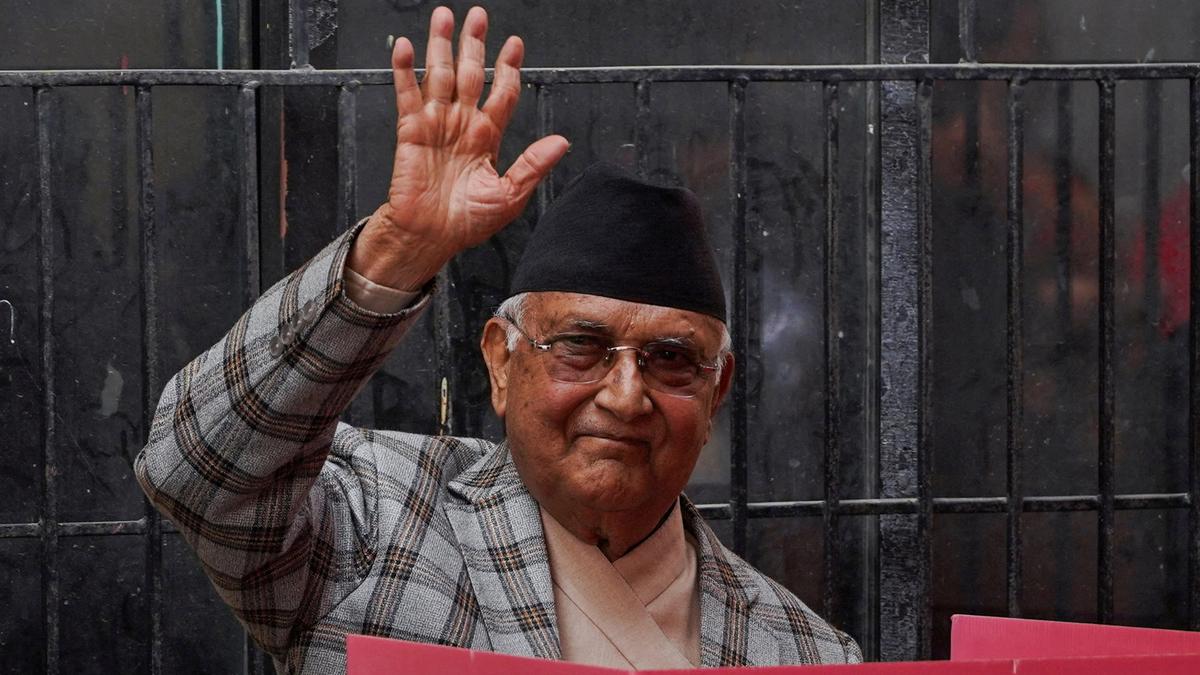
The headlines are screaming about Khadga Prasad Sharma Oli’s five-day remand. They describe it as a seismic shift in Nepalese justice, a moment of accountability, or a spark for a national uprising.
They are wrong.
What we are witnessing isn't a legal breakthrough. It is a carefully choreographed sequence of political theater designed to distract from a collapsing economic reality. If you believe this judicial custody represents a genuine threat to the old guard, you haven't been paying attention to how power actually moves in Kathmandu.
The media treats this like a "watershed moment." In reality, it’s a pressure valve.
The Remand Illusion
The standard narrative suggests that putting a former Prime Minister behind bars—even for a few days—is a victory for the rule of law. It implies the judiciary has finally found its teeth.
It hasn't.
Remand in the Nepalese context is often a cooling-off period, not a precursor to a conviction. I have watched this cycle repeat for decades. A leader is detained, the base is energized, the international community expresses "concern," and then, through a series of "technicalities" or backroom deals, the status quo is restored.
Think of it as a strategic retreat. By entering custody, a politician often resets their brand. They transform from a bureaucrat accused of mismanagement into a martyr for a cause. This isn't about guilt or innocence anymore; it's about optics.
The Economic Ghost in the Room
While the streets of Kathmandu fill with protesters and the police ready their water cannons, the real story is rotting in the bank vaults and the trade balance sheets.
Nepal’s economy is currently a house of cards held together by remittances and a dwindling tourism sector. The obsession with Oli’s legal status is a gift to the current administration. As long as the public is arguing about whether a 70-something-year-old man should spend a week in a cell, they aren't asking why the youth unemployment rate remains a national disgrace or why the cost of living has outpaced wage growth by a staggering margin.
The "protests" we see aren't organic outpourings of civic duty. They are professionalized. I’ve stood on those streets. I’ve seen the buses roll in. These are orchestrated movements funded by partisan coffers to ensure that the conversation stays on personalities rather than policy.
The Fallacy of the Strongman
The "People Also Ask" sections of the internet are currently flooded with variations of: "Is this the end of Oli’s career?" or "Who will lead Nepal next?"
These are the wrong questions.
The right question is: Why does the Nepalese political system require a villain to function?
By focusing on Oli, the opposition avoids the hard work of presenting a viable alternative. If Oli is the problem, then his removal is the solution. This is a dangerous oversimplification. The problem isn't a single man; it's a structural dependency on patronage.
I’ve seen this in corporate restructuring too. A CEO is fired for "cultural issues," the stock price jumps for 48 hours, and then the same systemic rot continues because the board of directors never changed. Nepal is currently firing its CEO while the board remains comfortably in power.
Why the Protests are a Distraction
Protests in Nepal have become a commodity. They are the currency of the disenfranchised, but they are spent by the elite.
When you see a crowd of 10,000 people, don't look at the banners. Look at the logistics. Who fed them? Who transported them? This is not a revolution; it is a negotiation tactic. The judicial custody is a chip on the table.
- Scenario A: Oli stays in custody, becomes a martyr, and his party sweeps the next local elections.
- Scenario B: Oli is released early, claims a victory against a "biased" system, and his party sweeps the next local elections.
Notice the pattern? The outcome for the average citizen remains the same: zero progress on infrastructure, stagnant trade with India and China, and a brain drain that is gutting the country’s future.
Breaking the Cycle
If you actually want to see change in Nepal, stop looking at the Supreme Court and start looking at the Nepal Rastra Bank.
The real power doesn't lie in who is in a cell today. It lies in who controls the liquidity of the nation tomorrow. The current obsession with judicial remand is a "lazy consensus" play. It feels productive because it’s loud. It feels important because it’s high-stakes drama.
But drama doesn't build roads. It doesn't fix the power grid. It doesn't create a tech ecosystem that keeps the brightest Nepalese minds in the country.
The Harsh Reality of Accountability
True accountability in Nepal would look quiet. It wouldn't involve tear gas or five-day remands. It would involve the systematic dismantling of the "Syndicate" system that controls everything from transport to education.
Until the judicial system targets the mechanisms of corruption rather than the personalities of the leaders, these arrests are nothing more than a temporary reshuffling of the deck chairs on the Titanic.
We are told this is a "test for democracy."
It’s not. It’s a test of how much noise the public can endure before they stop asking why their lives aren't getting better.
The judicial custody of a former PM is a vanity project for a failing state.
Stop watching the courtroom. Watch the exits. The people with the real power already left the room while you were busy cheering for the handcuffs.
Get off the streets and start demanding a balance sheet that makes sense. Otherwise, you’re just an extra in someone else’s campaign movie.
Shut it down.