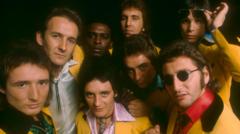
The basement in East London smelled of stale rain and overpriced gin, the kind of humidity that sticks to your skin before the first note even hits. Arlo Parks stood center stage, a figure usually defined by the soft, whispered intimacies of a bedroom poet. For years, she was the patron saint of the overthinker, the voice you turned to when the sun went down and the anxiety crept up. We expected the acoustic guitar. We expected the gentle sway of a sun-drenched indie lullaby.
Then the kick drum started.
It wasn’t the polite thud of a folk-pop backing track. It was a physical intrusion. It was the sound of the dancefloor claiming a soul that had previously belonged to the quiet corners of the library. This is the story of a musical migration, a moment where the internal world of the singer-songwriter finally gets tired of sitting still and decides to sweat.
The Velocity of Vulnerability
When Arlo Parks released My Soft Machine, the world saw a shift that felt almost seismic for those who had followed her from the beginning. To understand why this matters, you have to understand the box we put "sensitive" artists in. We want them to stay in the melancholy. We want them to be the soundtrack to our rainy bus rides forever.
But Parks chose to move.
The influence of 1990s club culture and the shimmering heat of house music began to bleed into her prose. It’s a risky pivot. When an artist known for lyrical precision leans into the repetitive, primal nature of dance music, they risk losing the very thing that made them special. Yet, watching her perform "Devotion," you realize the lyrics haven't lost their teeth; they’ve just found a faster heartbeat. The stakes are higher when you’re confessing your deepest insecurities over a BPM that makes it impossible to hide.
Consider a hypothetical listener named Elias. Elias bought Arlo’s first record because he felt lonely in a crowded room. He liked the stillness. When he hears the new, club-ready arrangements, he’s initially defensive. "This isn't my Arlo," he thinks. But then he finds himself in a crowd, the bass vibrating in his chest, and he realizes that collective joy is just as healing as private sorrow. The dancefloor isn't an escape from the self; it’s a different way of meeting it.
The Mediterranean Electric
While Parks is dragging the bedroom into the club in London, something equally visceral is happening in the humid air of the Italian electronic scene. If British pop is currently obsessed with the "sad banger," the Italians are mastering the art of the "anxious groove."
Italian electro-pop has moved far beyond the kitsch of the eighties. It has become a sophisticated, often jagged reflection of a generation caught between ancient history and a digital future. There is a specific tension in the synthesizers coming out of Milan and Rome right now. It sounds like high-fashion grit.
Take the rise of artists who blend traditional melodic sensibilities with aggressive, almost industrial textures. They are fighting against the "easy listening" label that often plagues European exports. This music isn't background noise for a seaside spritz. It’s a confrontation. The vocals are often mixed low, submerged in a sea of oscillating saws and heavy percussion, forcing the listener to work to find the humanity in the machine.
It’s a mirror of the modern Italian experience: a struggle to maintain a distinct, lyrical identity in a world that feels increasingly automated and cold. When you hear these tracks in a dark room, you aren't just dancing; you’re navigating a labyrinth of sound that feels both familiar and dangerously new.
The Ghost of the Celtic Fringe
Further north, across the English Channel, the wind is blowing differently. If Arlo Parks is the pulse and the Italians are the machine, the Breton psych-rock movement is the fever dream.
Brittany has always been a place of shadows and myths, a rugged peninsula that feels more connected to the sea and the stars than to the bureaucracy of Paris. The music reflecting this region right now is a heavy, swirling cocktail of garage rock and hallucinogenic folk. It is the sound of the "Breton psych" explosion—a genre that feels like it was unearthed from a peat bog rather than recorded in a studio.
These bands don't care about the charts. They care about the trance. Using traditional instruments filtered through a wall of distortion pedals, they create a wall of sound that feels ancient. It’s the musical equivalent of a pagan ritual held in a disused warehouse.
Imagine standing in a field in Rennes at 2:00 AM. The air is cold, but the music coming from the stage is searingly hot. The guitars aren't playing chords so much as they are conjuring weather patterns. There is a sense of "Invisible Stakes" here—the feeling that if the band stops playing, the darkness of the surrounding countryside might actually swallow the crowd whole.
The Convergence of the Displaced
What connects a London poet, a Milanese programmer, and a Breton guitarist?
On the surface, nothing. They speak different languages, inhabit different subcultures, and use different tools. But look closer at the emotional architecture of these movements. They are all responses to a world that has become too loud to be heard in a whisper.
The "Music Show" of the modern era isn't just a variety pack of genres. It’s a map of how we are trying to survive the 2020s. We are seeking out Arlo Parks’ dancefloor because we need to feel our bodies again. We are listening to Italian electro because we need to find beauty in the glitch. We are losing ourselves in Breton psych because we need to remember that the world is still mysterious and wild.
The industry likes to categorize these things. It likes to talk about "emerging markets" and "genre-bending trends." Those are hollow words. They describe the container but ignore the water inside. The reality is much more human. We are all just looking for a frequency that matches the chaos inside our own heads.
I remember a night in a small club where the transition between an electronic set and a live psych band felt like a physical blow. The audience didn't leave. They didn't even flinch. They simply adjusted their breathing. We have become a culture of omnivores, not because we are bored, but because we are hungry. One genre isn't enough to explain how complicated it feels to be alive right now.
The Sound of the Shift
The guitar isn't dead, but it’s lonely. The synthesizer isn't a toy, but it’s no longer a novelty.
When Arlo Parks steps onto a stage today, she carries the weight of her old self—the girl with the diary—into the glare of the strobe lights. It’s a brave act of transformation. It’s an admission that even the most sensitive among us need to move, to sweat, and to scream occasionally.
The Italian producers are layering their tracks with more than just beats; they are layering them with a quiet desperation to be understood in a digital age. And the Breton rockers are digging into the earth to find a sound that isn't polished, isn't perfect, and isn't for sale to the highest bidder.
This isn't just a "music show." It’s a pulse check on a continent that is trying to find its rhythm again.
The kick drum continues. The fog machine obscures the faces in the front row. For a moment, the distinction between the poet, the programmer, and the pagan disappears. There is only the sound, a heavy, vibrating proof that despite everything, we are still here, and we are still listening for the truth in the noise.
The lights fade to a deep, bruised purple. The feedback lingers in the ears long after the stage is empty. You walk out into the cool night air, the city streets feeling a little less solid than they did before. You realize the music didn't just fill the silence. It changed the way the silence feels.