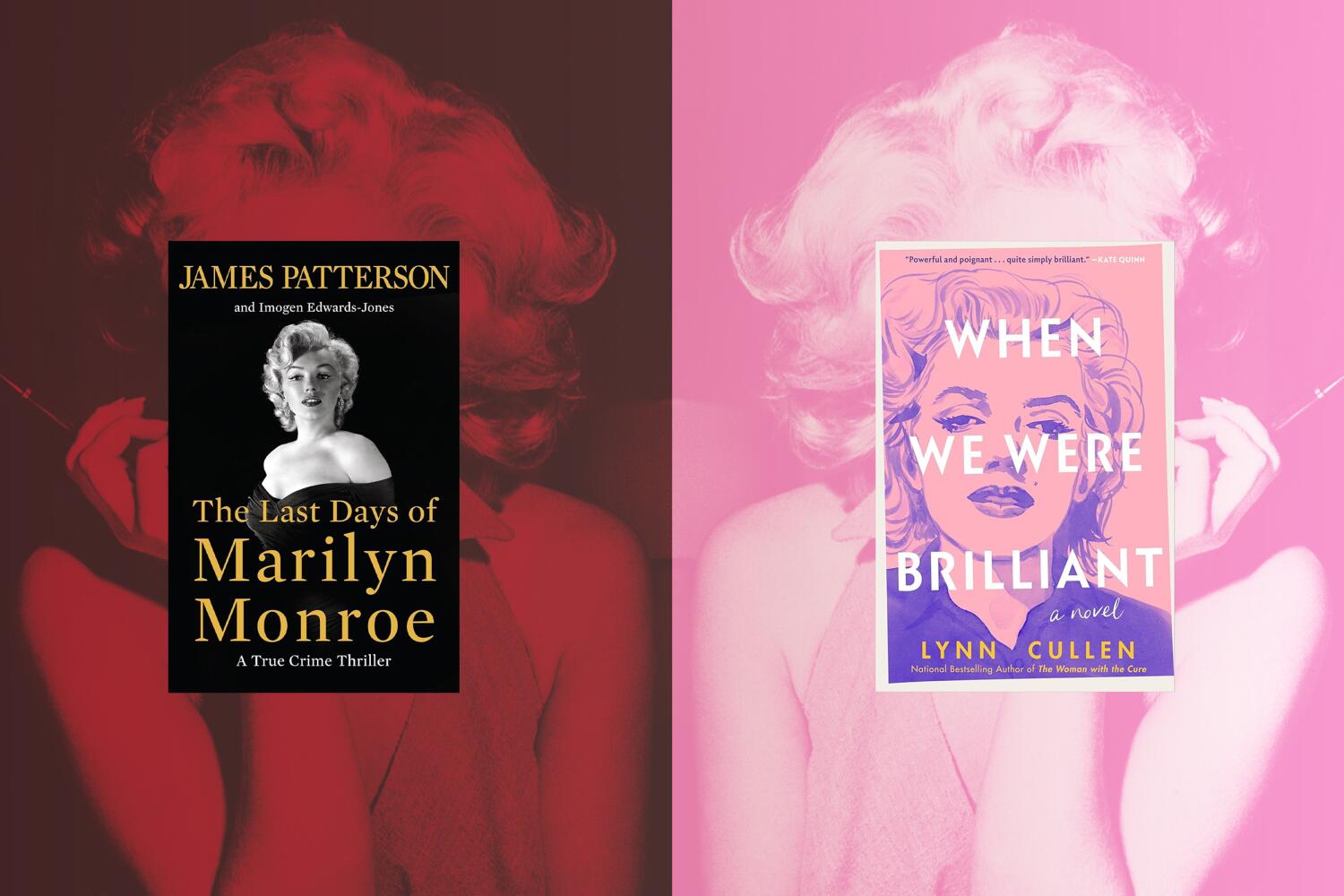
Norma Jeane Mortenson would have been one hundred years old this year. It is a number that feels heavy, impossible, and deeply strange. We have become so accustomed to the frozen image of her at thirty-six—the platinum halo, the translucent skin, the eyes that always seemed to be looking for an exit—that imagining her with the lived-in lines of a centenarian feels like a betrayal of the myth.
But the myth is exactly the problem. For decades, Marilyn Monroe has been less of a woman and more of a Rorschach test. We peel back layers of her life not to find her, but to find ourselves, our obsessions, and our excuses. This centennial has triggered the predictable surge of "tributes," including two high-profile novels that attempt to resurrect her. One of them understands the heartbeat beneath the Chanel No. 5. The other is just a collection of mannequins in blonde wigs.
The tragedy of Marilyn isn't just that she died young. It is that she is never allowed to stay dead. We keep digging her up, hoping she’ll finally tell us the secret to her own disintegration.
The Weight of the Gaze
Imagine a woman standing in front of a mirror, not out of vanity, but out of a desperate need for confirmation. If she stops looking, does she still exist? This is the emotional frequency that the first of these new novels, The Girl in the White Dress, manages to tune into. It doesn't treat Marilyn as a tragedy waiting to happen. It treats her as a person trying to happen.
The author understands that the "Marilyn" persona was a meticulously constructed piece of technology. It was a suit of armor made of silk. This book follows her through a fictionalized week during the filming of The Seven Year Itch, focusing on the suffocating heat of New York and the even more suffocating heat of public expectation.
The prose is jagged. It’s nervous. It mirrors the internal cadence of a woman who was constantly told she was the most beautiful thing in the world while being treated like a piece of public property. There is a scene where she sits in a bathtub, the water cooling, staring at her own knees and wondering if they belong to her or to 20th Century Fox. It’s quiet. It’s devastating.
This is where the literature of celebrity usually fails. Most writers are so dazzled by the flashbulbs that they forget to describe the darkness that follows. They focus on the diamonds, but they miss the way the metal cold-shocks the skin. This novel doesn't make that mistake. It captures the invisible stakes: the battle for a soul that everyone wants a piece of, until there is nothing left but a silhouette.
The Sound of a Falling Star
Then, there is the other book.
If the first novel is an intimate whisper, Norma Jeane: A Life in Technicolor is a megaphone blaring at a funeral. It is a "dud" in the most clinical sense of the word. It mistakes volume for depth and scandal for insight.
Reading it feels like flipping through a stack of old tabloids that have been glued together to look like a narrative. It hits every predictable beat—the foster homes, the red velvet, the Kennedy rumors, the barbiturates. It treats her life like a checklist of trauma.
There is a fundamental dishonesty in writing about a human being as if they are a series of unfortunate events. When we reduce Marilyn to a victim, we rob her of her agency, her wit, and her terrifying intelligence. She wasn't a passive passenger in her own life; she was a woman who knew exactly what she was building, even if she didn't know how to live inside it once the roof was on.
The failure of this second book lies in its lack of empathy. It looks at the car crash, but it never bothers to look at the driver. It uses the anniversary of her birth as a marketing hook, dragging her back into the light only to remind us that she’s gone. It is a hollow exercise in grave-robbing, dressed up in literary pretension.
The Mathematics of Memory
Why are we still doing this? Why, a century after her birth, is the world still leaning over her shoulder?
Maybe it’s because Marilyn represents the ultimate American bargain. She is the proof that you can have everything—the fame, the money, the adoration of the masses—and still be starving for a single moment of genuine connection. We look at her and we see the cost of the dream.
The "brilliant" novel of the two succeeds because it acknowledges the gap between the person and the icon. It treats the 100th anniversary not as a celebration of a brand, but as a mourning for a woman who never got to be old. It asks us to consider what it would have been like if she had survived. If she had become a silver-haired lioness of the theater, or a quiet recluse in the desert, or just a grandmother who liked to garden.
The "dud" fails because it refuses to let her grow. It wants her to stay on the subway grate forever, her dress flying up, her mouth open in a perpetual, silent "Oh."
The Invisible Stakes
Writing about Marilyn Monroe in 2026 requires more than just research. It requires a specific kind of courage. You have to be willing to look past the calendar girl and see the person who was scared of the dark. You have to be willing to admit that we, the audience, were the ones holding the cameras.
The better of these two books forces the reader into an uncomfortable position. You aren't just an observer; you are a participant. You feel the weight of your own gaze. You realize that every time we demand more of her—more secrets, more photos, more "lost" diaries—we are just adding more bricks to the wall that eventually crushed her.
Consider the reality of her final years. She was a woman who read Joyce and Kerouac, who studied under Lee Strasberg, who started her own production company at a time when actresses were treated like cattle. She was trying to evolve. But the world didn't want an evolved Marilyn. They wanted the girl in the white dress. They wanted the fantasy.
Beyond the Anniversary
The 100-year mark will pass. The books will be shelved. The documentaries will stop airing for a few months. But the ghost of Norma Jeane will remain, hovering in the corner of our cultural consciousness.
She is the reminder that fame is a hungry ghost. It consumes the person and leaves the image behind, and then it spends the next century trying to figure out where the person went. These two novels represent the two ways we deal with that loss. We can either try to understand the humanity that was sacrificed, or we can keep polishing the monument.
The brilliant book gives us a glimpse of the woman. The dud gives us more of the ghost.
In the end, perhaps the most respectful thing we could do for her centennial is to stop writing about her altogether. To let the books close and the screens go dark. To let her finally have the one thing she was never allowed in life: a moment of absolute, undisturbed privacy.
But we won't. We can't help ourselves. We’ll keep searching for her in the pages of fiction, hoping that this time, in some alternate universe or clever narrative twist, she finds a way to stay.
She remains the girl we all think we know, yet never truly met, standing on a street corner in a city that doesn't exist anymore, waiting for a train that is never going to arrive.


