The asphalt on Hollywood Boulevard doesn’t just hold heat; it holds a century of desperation and glitter. If you stand outside the Dolby Theatre on a Tuesday in July, the air smells of roasted hot dogs, exhaust, and the faint, metallic tang of tourists’ hopes. For twenty years, this patch of Los Angeles has been the center of the cinematic universe for exactly one night every spring.
Then the trucks arrived. Not the production trucks for a premiere, but the ones moving the furniture.
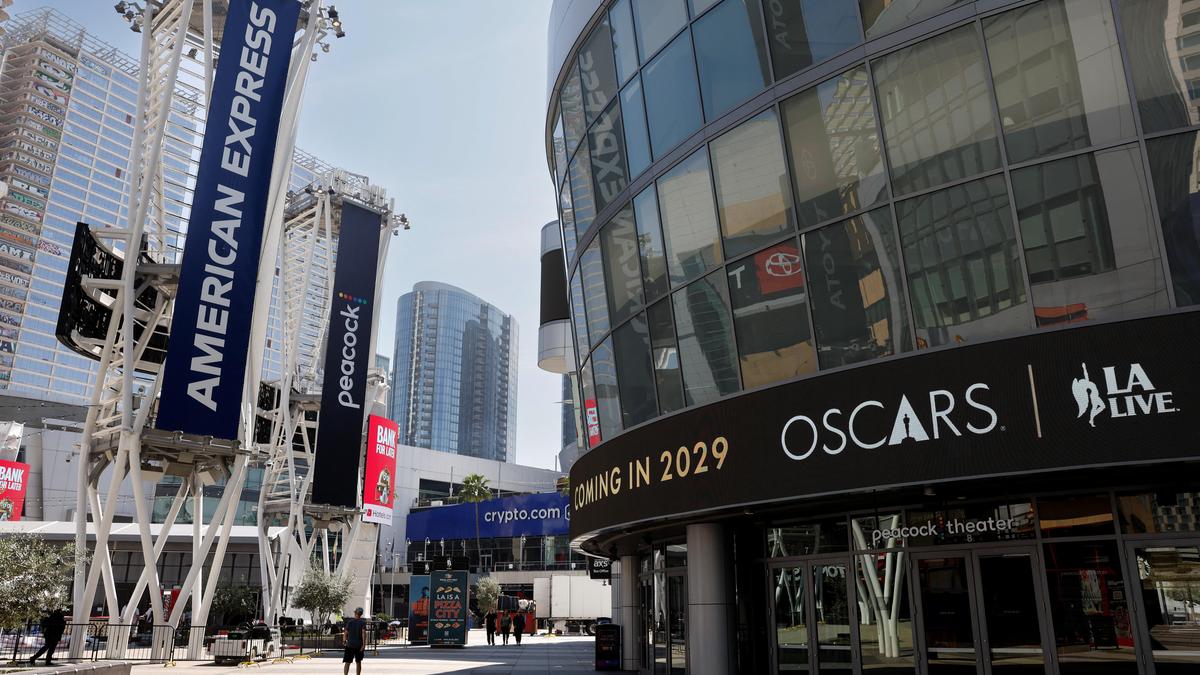
The Academy of Motion Picture Arts and Sciences is packing its bags. The Oscars are leaving the neighborhood that bears the industry's name, migrating twelve miles south to the revitalized concrete canyons of Downtown Los Angeles (DTLA). On paper, it’s a logistical shift—a matter of square footage and modern amenities. In reality, it is the final exhale of a dying era.
The Weight of Gold
Consider a man named Arthur. Arthur isn't a movie star. He owns a small deli three blocks from the Dolby. For two decades, "Oscar Season" was his Christmas. It wasn't just the money; it was the electricity. He’d watch the bleachers go up, the red carpet unroll like a velvet tongue, and the black SUVs begin their slow crawl. He felt like he lived in the heartbeat of the world.
When the news hit that the ceremony was moving to the Crypto.com Arena and the surrounding L.A. Live complex, Arthur didn't see a "strategic relocation." He saw a divorce.
Hollywood—the physical place—has always been a bit of a lie. It’s a collection of strip malls and aging theaters held together by the sheer force of its own mythology. The Academy stayed there for so long because they needed that mythology. They needed the ghost of Marilyn Monroe to hover over the proceedings to remind everyone that movies still mattered.
But ghosts don't pay the bills.
The Dolby Theatre, while beautiful, is a cramped relic in the eyes of modern broadcast demands. It seats roughly 3,400 people. In the world of global streaming and massive live events, that is a boutique size. The move to Downtown isn't just about a bigger stage; it’s about a bigger footprint. The L.A. Live district is a fortress of corporate efficiency, designed to handle thousands of people with the precision of an airport terminal. It has the hotels, the security cordons, and the digital infrastructure that a crumbling Hollywood Boulevard simply cannot provide.
A Tale of Two Cities
The distance between Hollywood and Downtown is only twelve miles, but in Los Angeles, twelve miles is a lifetime.
To understand the shift, you have to look at the geometry of the two locations. Hollywood is a circle; it’s inward-looking, obsessed with its own past. The streets are narrow, the parking is a nightmare, and the "Walk of Fame" is often covered in the grime of a city that hasn't quite figured out how to care for its legends.
Downtown is a grid. It’s built for the future.
The move reflects a broader trend in how we consume "prestige." We used to want our awards shows to feel like a private party in a historic mansion. Now, we want them to feel like a Super Bowl. The Academy is chasing the energy of a sports arena because, in the attention economy, movies are no longer the only game in town. They are competing with TikTok stars, 24-hour gaming streams, and the sheer noise of the internet. By moving to the home of the Lakers and the Kings, the Oscars are signaling a desperate desire to remain relevant in a world that values scale over intimacy.
The Invisible Stakes
Why should anyone who doesn't live in a Los Angeles zip code care about where a group of millionaires hands out golden statues?
The stakes are found in the identity of the craft. When the Oscars leave Hollywood, they are stripping away the last vestige of the "studio system" feel. For decades, the ceremony was a neighborhood affair. You could walk from a studio lot to the theater if you were ambitious enough. Now, it becomes a corporate event in a corporate district.
There is a psychological cost to this.
Metaphorically speaking, it’s like moving the Vatican to a shiny new office park in Milan. Sure, the Wi-Fi is better and the bathrooms are cleaner, but do the prayers still have the same weight? When an actor stands on a stage in Downtown L.A., they aren't standing on the "hallowed ground" of cinema history. They are standing in a multipurpose venue that held a monster truck rally three nights prior.
This isn't just a change of scenery; it's a change of soul.
The Ghost in the Machine
The logistics of the move are staggering. We aren't just talking about a podium and some flowers. We’re talking about the relocation of an entire ecosystem.
- Security Parametres: In Hollywood, closing the streets meant paralyzing a major tourist artery for a week. In DTLA, the "event campus" is designed to be locked down without disturbing the flow of the city.
- Media Access: The press rooms at the Dolby were legendary for being sweatboxes. The new facilities offer the kind of high-speed fiber-optic "synergy" (to use a word the suits love) that makes a global broadcast feel effortless.
- The After-Party: The Governors Ball and the myriad of satellite parties can now exist within walking distance of the main event, creating a "walled garden" for the elite.
But listen to the silence in Hollywood.
The bars that used to fill up with seat-fillers and production assistants will be quieter. The hotels that hiked their prices to $1,000 a night will have to find a new hook. The myth of Hollywood as the physical home of the movies is officially a theme park attraction now, divorced from the actual business of the industry.
The New Reality
Imagine a young filmmaker, someone who grew up in a small town with a poster of the Hollywood sign on their wall. They finally get nominated. They fly to Los Angeles, heart pounding, expecting to see the Walk of Fame and the TCL Chinese Theatre.
Instead, their Uber drops them off in front of a glass-and-steel skyscraper next to a Staples store.
They walk into a venue that feels like every other high-end arena in London, Tokyo, or New York. The specific, gritty, romantic "Hollywood-ness" of the night has been scrubbed clean. It’s efficient. It’s safe. It’s professional.
It’s also a little bit boring.
The Academy’s decision is a logical one. You cannot run a billion-dollar brand on nostalgia alone. The infrastructure of Hollywood was buckling under the weight of the modern world. The streets were too small for the egos, and the pipes were too old for the pressure.
But as the caravans move east toward the rising glass of the downtown skyline, something is being left behind in the gutters of Sunset Boulevard. It’s the feeling that magic is local. It’s the belief that certain places hold a specific power that cannot be replicated by better lighting or more comfortable seats.
Arthur, the deli owner, will still sell his sandwiches. The tourists will still take selfies with the brass stars on the sidewalk. But the crown has been moved. The king is in a new castle, one with better parking and more exit signs, while the old palace sits empty, a beautiful, neon-lit ghost of what we used to think movies were.
The red carpet is being rolled up for the last time on the boulevard. When it unrolls again, it will be on a different street, under different lights, in a city that looks like everywhere else. The show must go on, as they say. It just won’t go on here.
The credits are rolling on Hollywood. The sequel is being filmed in a skyscraper.
Would you like me to look into the economic impact studies of this move on the small businesses of Hollywood Boulevard?


