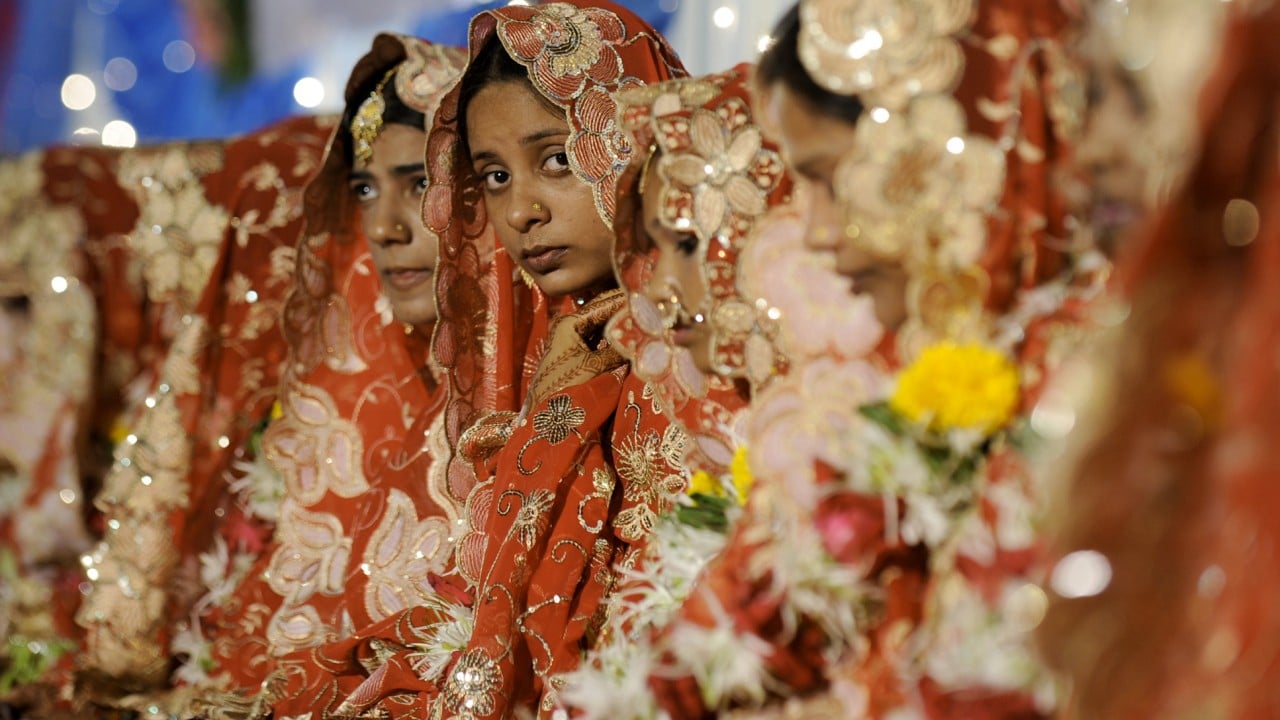
The silk is heavy, stiff with zari work that catches the light like a thousand tiny mirrors. It should feel like a victory. But for Priya—a hypothetical but typical 28-year-old marketing executive in Mumbai—the gold-threaded fabric feels like a cage. Three months before her wedding, the conversation in her family WhatsApp group isn't about the menu or the music. It is about her waistline. The pressure isn't a whisper; it’s a roar.
Then comes the suggestion, delivered over tea by a well-meaning aunt. A tiny needle. A weekly ritual. A promise that the weight will simply evaporate, leaving behind the "perfect" bride.
In high-end clinics from Delhi to Bengaluru, a new guest has joined the wedding guest list: Tirzepatide, known commercially as Mounjaro. It isn't just a medication anymore. It has become a status symbol, a secret weapon, and a high-stakes gamble taken by women who feel they are running out of time.
The Chemistry of a Quick Fix
Mounjaro is a sophisticated piece of biological engineering. It targets two specific receptors in the body: glucagon-like peptide-1 (GLP-1) and glucose-dependent insulinotropic polypeptide (GIP). Think of these as the body’s internal volume knobs for hunger.
When Priya takes her first dose, the drug mimics these hormones. It slows down gastric emptying. The food sits in her stomach longer, sending a persistent signal to her brain that she is full. The "food noise"—that constant, nagging background static of thinking about the next meal—suddenly switches off. Silence.
For someone who has spent a lifetime battling the scale, this silence feels like a miracle. Clinical trials showed that participants without diabetes lost an average of 20% of their body weight over 72 weeks. But Priya doesn't have 72 weeks. She has twelve. And that is where the narrative of health shifts into something far more precarious.
The Off-Label Gold Rush
Mounjaro is not officially approved for weight loss in India the way its older cousin, Wegovy, is in the West. It is a drug for Type 2 diabetes. Yet, the "Mounjaro Bride" phenomenon thrives in a gray market of off-label prescriptions and expensive imports.
A single month’s supply can cost as much as a designer bridal handbag. For the elite, this is a small price to pay for the assurance that they will fit into a sample-size couture gown. But the cost isn't just financial.
Doctors are seeing an influx of young women who do not meet the medical criteria for obesity but are desperate to lose those last five or ten kilograms. When a drug designed for chronic metabolic disease is used as a short-term cosmetic tool, the biological math changes.
The body doesn't just lose fat. It loses muscle.
The Face of the Miracle
There is a specific look emerging in the social circles of South Delhi and South Mumbai. They call it "Ozempic Face," though it applies to Mounjaro just as well. Because the weight loss is so rapid, the fat pads in the cheeks vanish before the skin has time to lose its elasticity.
The result is a hollowing out. Sunken eyes. A gauntness that looks less like "bridal glow" and more like exhaustion.
Priya notices it in the mirror by week six. She is thinner, yes. Her lehenga fits. But her hair is thinning, a common side effect of rapid weight loss known as telogen effluvium. Her body, sensing a sudden and drastic caloric deficit, has decided that growing hair is a luxury it can no longer afford. It is prioritizing survival over aesthetics, even if Priya is doing the exact opposite.
The Ghost in the Gut
Nausea is the constant companion of the Mounjaro bride. It is a dull, rolling sea-sickness that makes the thought of a wedding feast—the butter-laden dals, the saffron-infused biryanis—repulsive.
Consider the irony. A celebration centered around abundance and communal eating becomes a minefield. At her own engagement party, Priya pushes a single piece of paneer around her plate. Her guests toast to her health, unaware that she is fighting the urge to vomit because her digestive system has slowed to a crawl.
There are darker risks, too. Pancreatitis. Gallstones. Kidney issues. These aren't just fine-print warnings on a box; they are real possibilities when the body is pushed too hard and too fast. The drug is designed for long-term metabolic management, a "forever" commitment for many. When used as a "get thin quick" scheme, the rebound can be brutal.
The Weight of the Aftermath
What happens when the honeymoon ends?
The metabolic machinery of the human body is stubborn. It has an internal "set point" it strives to maintain. When the Mounjaro injections stop, the GIP and GLP-1 levels drop. The "food noise" returns, often louder than before.
Statistics suggest that a significant portion of the weight lost on these medications is regained once the treatment stops, unless there is a radical, permanent shift in lifestyle. For the Mounjaro bride, the drug was a bridge to a specific day. Once that day passes, the bridge collapses.
Priya finds herself in a cycle of fear. She is terrified of the needle, and terrified of life without it. The medication has fixed her silhouette, but it has done nothing for the culture that told her she wasn't enough to begin with.
The Invisible Stakes
We have reached a point where the wedding industry and the pharmaceutical industry have formed a terrifying symmetry. One sells the dream of a perfect, static moment; the other sells the chemical means to achieve it.
But a marriage is a marathon, not a photoshoot.
The invisible stakes are the years following the wedding. If we teach a generation of women that their bodies are problems to be solved with a weekly injection, we are not just changing their weight. We are changing their relationship with sustenance, with their own hunger, and with the idea of self-acceptance.
The needle goes in. The pounds go away. The silence in the brain begins.
But as Priya stands in front of her mirror, cinching the heavy gold belt of her lehenga, she realizes the silence isn't peace. It’s a temporary truce. And the body always, eventually, breaks its silence.
The mirrors on her dress sparkle, reflecting a version of herself that is smaller, frailer, and hollowed out. She is ready for the photos. She is ready for the stage. But as the music starts, she wonders if she has enough strength left to actually dance.