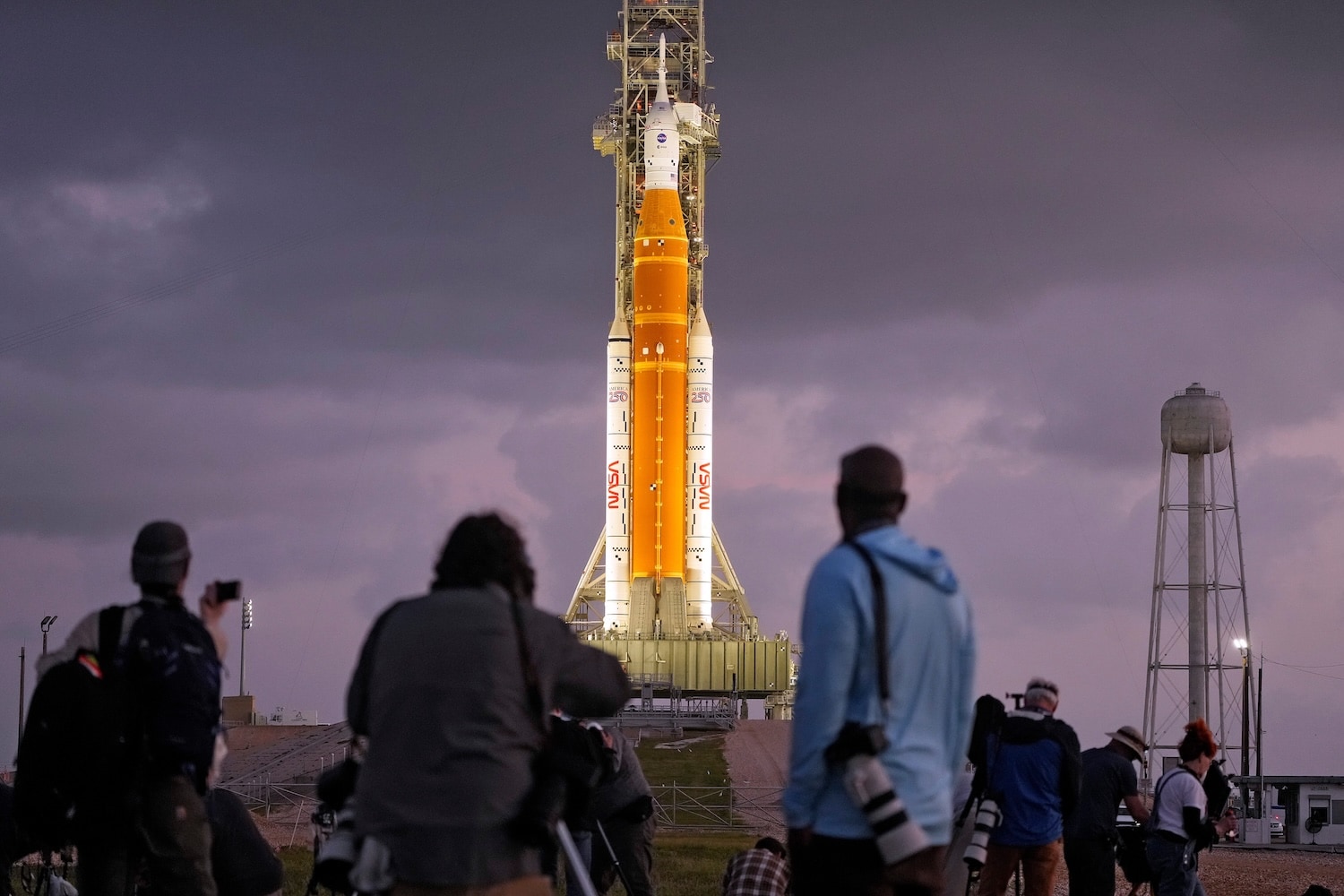
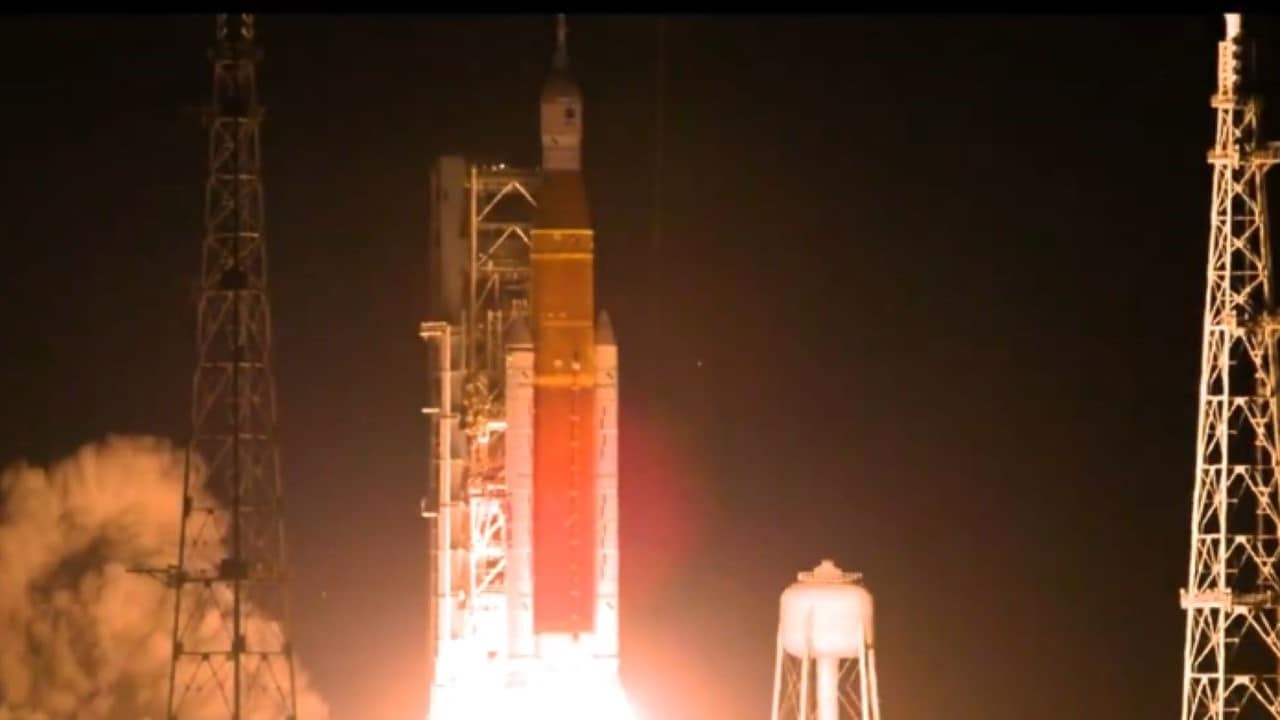
The ground at Kennedy Space Center is shaking with more than just the vibration of heavy machinery today. It’s the weight of history. After fifty years of quiet on the lunar front, NASA is finally pumping super-chilled liquid oxygen and hydrogen into the Space Launch System (SLS) rocket. This isn’t a test flight for dummies or sensors anymore. There are four humans waiting for their turn to leave the atmosphere. We’re watching the Artemis II mission transition from a series of PowerPoint slides into a thundering reality.
It’s about time.
People often ask why this matters when we’ve already been there. The answer is simple. We didn't stay. Artemis II isn't a "flags and footprints" mission. It’s the stress test for a permanent human presence in deep space. If this fueling process goes well and that rocket clears the tower, we’re no longer a planet-bound species. We're back in the deep end of the pool.
The cold hard truth about cryogenic fueling
Fuelling a rocket like the SLS isn't like pulling your SUV up to a gas station. You're dealing with hundreds of thousands of gallons of liquid oxygen at -297 degrees Fahrenheit and liquid hydrogen at a bone-chilling -423 degrees. At these temperatures, metal shrinks. Gels freeze. The smallest leak can turn the entire launchpad into a literal fireball.
NASA engineers call this "the clock." Once you start flowing these propellants, the countdown becomes a living thing. You can't just let a fully fueled rocket sit there forever. The liquid hydrogen is notorious for escaping through the tiniest microscopic gaps in seals. We saw this repeatedly during the Artemis I attempts. It’s finicky, dangerous, and honestly, a bit of a nightmare to manage.
The crew—Reid Wiseman, Victor Glover, Christina Koch, and Jeremy Hansen—are currently finishing their final prep while those tanks fill up. They know the risks better than anyone. They’re sitting on top of what is essentially a controlled explosion. The SLS generates 8.8 million pounds of thrust. That’s 15% more power than the Saturn V. It’s a beast.
Why Artemis II is the mission that actually matters
Artemis I proved the hardware could survive the trip and the return. But a ship without a crew is just an expensive RC toy. Artemis II adds the most unpredictable variable in the universe: life.
The ten-day mission will take the crew 4,600 miles beyond the far side of the moon. They won't land yet. Instead, they'll perform a "hybrid free-return trajectory." Basically, they use the moon’s gravity like a slingshot to whip them back toward Earth. It’s a safety-first flight profile. If something goes wrong with the engines after they've left Earth's orbit, physics will naturally bring them home.
Testing the life support systems in the wild
Inside the Orion capsule, the stakes are different now. Engineers aren't just looking at structural integrity. They're watching the Nitrogen-Oxygen Recharge System. They’re monitoring how the carbon dioxide scrubbers handle four humans breathing, sweating, and living in a space the size of a small SUV.
- The Exercise Equipment: Bone density loss happens fast in microgravity.
- Radiation Shielding: They’re heading through the Van Allen belts and into deep space radiation.
- Waste Management: Let’s be real, going to the bathroom in space is the part nobody talks about but everyone worries about.
If these systems fail, the mission ends. There's no quick way back. Once you’ve committed to that lunar trajectory, you're on a multi-day trek where "oops" isn't an option.
Breaking down the lunar orbit logistics
Most people assume the rocket flies straight to the moon. It doesn't. After the SLS gets them into space, the crew will spend about 24 hours in a high Earth orbit. This is the "checkout" phase. They'll test the Orion’s proximity operations by using the spent upper stage of the rocket as a target. This mimics the docking maneuvers they'll need for future missions with the Gateway station or the SpaceX Starship HLS.
Only after every system is green will they fire the engines to head for the moon. It's a three-day commute. During that time, the crew will be the furthest humans have ever been from home. They’ll see the entire Earth as a tiny blue marble. It’s a perspective we haven't had since 1972.
The international team making it happen
This isn't just a NASA show. This mission represents a shift in how we do space. Jeremy Hansen is from the Canadian Space Agency, marking the first time a non-American leaves low Earth orbit. The European Space Agency (ESA) provided the Service Module—the "powerhouse" that sits below the Orion capsule and provides air, water, and electricity.
This collaboration is what makes Artemis sustainable. In the Apollo era, it was a race. Once we won, the funding dried up. Today, it’s an infrastructure project. We're building a supply chain that extends 240,000 miles.
Addressing the skeptics and the delays
I get it. Space is expensive. The SLS has been hit with delays and billion-dollar price hikes that make your head spin. Critics say we should have just used private rockets. Maybe they’re right in the long run. But right now, the SLS is the only vehicle flight-certified and capable of sending the Orion and its crew to the moon in a single shot.
The "why" is bigger than the "how much." We're looking for water ice in the lunar south pole. We're looking for Helium-3. We're looking for a way to get to Mars. You don't get to the Red Planet without mastering the Moon first. It’s our backyard laboratory.
What to watch for during the countdown
If you're following the live feed, keep an eye on the "leak checks." If the countdown holds at the T-minus 10-minute mark for too long, it’s usually because the hydrogen sensors are acting up. Don’t panic. That’s normal for a vehicle this complex.
The weather is the other big factor. High-altitude winds can scrub a launch even if the sky looks clear to you on the ground. NASA doesn't take chances with a multi-billion dollar rocket and four lives.
The flight timeline at a glance
- Liftoff: The twin solid rocket boosters ignite. Two minutes of pure noise.
- Core Stage Disposal: The big orange tank falls away and burns up.
- Trans-Lunar Injection: The burn that sends them toward the moon.
- Splashdown: Ten days later, they hit the Pacific Ocean.
This isn't just about a rocket launch. It’s about the fact that we're finally done waiting. We're done looking at old grainy photos of the Apollo missions and wondering if we'd ever go back. The fueling has started. The vent clouds are visible on the pad.
Clear your schedule for the launch window. This is the moment where the next century of space exploration actually begins. Watch the ice fall off the side of the boosters. Listen to the roar. We're going back, and this time, we're doing it right. Keep your eyes on the NASA live stream and stay tuned for the post-launch telemetry data to see if Orion hits its target orbit.