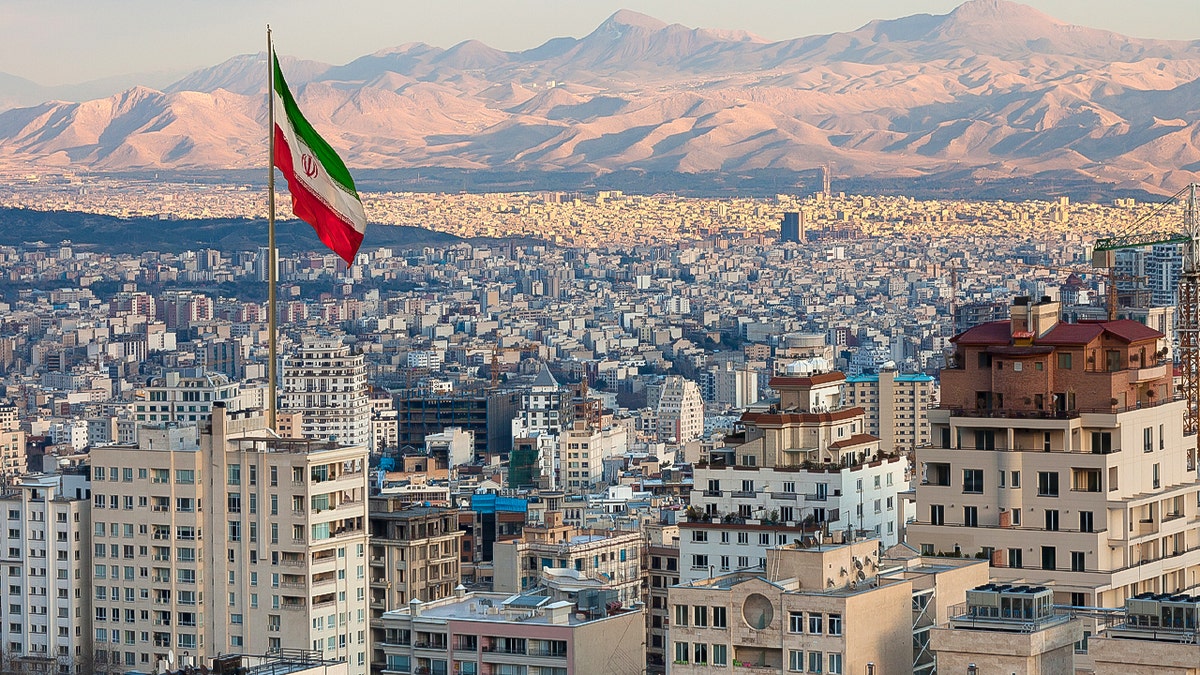
Geopolitics is often reduced to a game of checkers by those who should be playing three-dimensional chess. The prevailing narrative—suggesting Saudi Arabia’s leadership is whispering in Washington’s ear to trigger a collapse in Tehran—is not just oversimplified; it is fundamentally detached from the cold, hard math of Gulf security. If you believe Riyadh wants a chaotic, vacuum-filled Iran on its doorstep, you haven't been paying attention to the last twenty years of Middle Eastern wreckage.
The "lazy consensus" pushed by mainstream outlets posits that the Saudi Crown Prince is a hawk looking for a shortcut to regional hegemony via a U.S.-led regime change. This ignores the reality of the "Vision 2030" balance sheet. You cannot build a global tourism hub and a tech-centric economy in a region defined by the fallout of a collapsed neighboring theocracy. Riyadh isn't looking for a revolution in Iran; they are looking for a containment strategy that doesn't blow up their own skyscrapers.
The Regime Change Fallacy
Regime change is a Western academic luxury. For the people actually living in the Persian Gulf, it is a nightmare scenario. When a state like Iran—with its deep-rooted institutional structures and complex internal factions—collapses, it doesn't transform into a liberal democracy overnight. It becomes a massive, radioactive version of post-2003 Iraq or modern-day Libya.
Riyadh knows this. I’ve sat in rooms with analysts who have tracked the flow of small arms and radicalization across these borders for decades. They know that a failed state in Tehran would result in:
- Refugee Waves: Millions of displaced people crossing the Gulf or pushing into Iraq, destabilizing an already fragile neighborhood.
- Loose Hardware: Iran’s massive arsenal of ballistic missiles and drone technology would not simply vanish. It would hit the black market, arming every non-state actor from the Levant to the Horn of Africa.
- The Power Vacuum: Nature abhors a vacuum, and so does the IRGC (Islamic Revolutionary Guard Corps). In a collapse, the most organized, armed, and radical elements are the ones who seize the scraps, not the secular students in Tehran.
The idea that Saudi Arabia is "urging" for this chaos is a fundamental misreading of their strategic pivot. They need stability to ensure the flow of Foreign Direct Investment (FDI). Capital is cowardly; it does not fly into a war zone.
The Brinkmanship Buffer
What the media mistakes for a call for regime change is actually a sophisticated form of coercive diplomacy.
Riyadh wants the United States to maintain "Maximum Pressure" not to topple the building, but to keep the occupants too busy to look out the window. It’s about limiting Iran’s ability to fund proxies—the Houthis in Yemen, Hezbollah in Lebanon, and militias in Iraq. When the Crown Prince talks to Washington, he isn't asking for a ground invasion or a decapitation strike. He is asking for a security guarantee that makes Iranian aggression too expensive to maintain.
Consider the physics of the region. The Strait of Hormuz is a choke point where roughly 20% of the world's petroleum liquids pass.
$$V_{oil} \approx 21 \text{ million barrels/day}$$
If that flow is interrupted by the chaos of a regime collapse or a hot war, the global economy doesn't just stutter; it breaks. The Saudis, who are currently trying to diversify their economy away from oil, still need those oil revenues to fund their transition. They aren't going to set fire to their own bank account just to spite an old rival.
Why the "Puppet Master" Narrative Persists
The Western press loves the "Saudi Puppet Master" trope because it fits a tired Orientalist script of desert kings manipulating American power. It’s a convenient way to ignore American agency and the internal failures of U.S. foreign policy.
In reality, the relationship is far more transactional and frustrated. Riyadh has watched the U.S. flip-flop on Iran policy for three administrations. They saw the JCPOA (Nuclear Deal) as a betrayal that ignored their security concerns, and they saw the subsequent withdrawal as a chaotic move that lacked a follow-up plan.
The "urging" mentioned in the headlines is likely a demand for clarity. They are saying: "If you are going to squeeze them, do it effectively. If you are going to talk to them, do it from a position of strength. But stop leaving us to deal with the shrapnel."
The "Grey Zone" Reality
The conflict between Riyadh and Tehran isn't a "Cold War" in the traditional sense. It’s a struggle for the Grey Zone—the space between total peace and total war.
- Cyber Warfare: Both sides are pouring billions into offensive cyber capabilities.
- Economic Sabotage: Using regional influence to block trade routes and investment.
- Proxy Friction: Managing localized conflicts to bleed the opponent without triggering a direct confrontation.
Traditional regime change would end the Grey Zone and start a Red Zone—a period of high-intensity conflict that would target Saudi desalination plants, oil refineries, and the budding "giga-projects" like NEOM. A single successful drone strike on a major desalination plant would render a Saudi city uninhabitable within days. No amount of "regime change" in Tehran is worth that risk.
The Misunderstanding of "Regime Change" vs. "Behavior Change"
We need to be precise with our terms. The Indian Express and others conflate Regime Change (the removal of the system of government) with Behavior Change (forcing the existing government to stop specific actions).
Riyadh wants behavior change. They want:
- An end to the export of the revolution.
- The cessation of ballistic missile transfers to the Houthis.
- A seat at the table for any future nuclear negotiations.
Targeting the "regime" is a high-variance gamble. Targeting "behavior" is a calibrated strategic objective. To suggest the Saudis are pushing for the former is to suggest they have lost their sense of self-preservation. They haven't. They are more calculated now than they have ever been.
The Cost of Being Wrong
If Washington actually listens to the neoconservative hawks who claim the Saudis are "all in" for a regime collapse, the result will be a strategic catastrophe. We have seen this movie before. The intelligence was "certain" in 2003. The "liberation" was supposed to be easy.
The downside of my contrarian view? If the Iranian regime is indeed as brittle as some suggest, a lack of pressure might miss a window for a relatively bloodless transition. But in the Middle East, the "bloodless transition" is a myth. The price of an unstable Iran is paid in Rials, Dinars, and lives across the entire Levant.
The true insider knows that the Saudi leadership is playing a defensive game masked as an offensive one. They are building a fortress, not an invasion force. They want a neutralized Iran, not a vaporized one.
Stop looking for a "regime change" smoking gun in Riyadh. You’ll find instead a ledger of risks and a desperate hope that the U.S. doesn't do something stupid enough to set the entire neighborhood on fire.
The next time you see a headline about a "secret push" for war, ask yourself who benefits from that narrative. It’s usually the people who don’t have to live with the consequences of the explosion. Riyadh is many things, but it isn't suicidal. They know that when you're living in a glass house, the last thing you do is hand your neighbor a hand grenade and tell him to pull the pin.