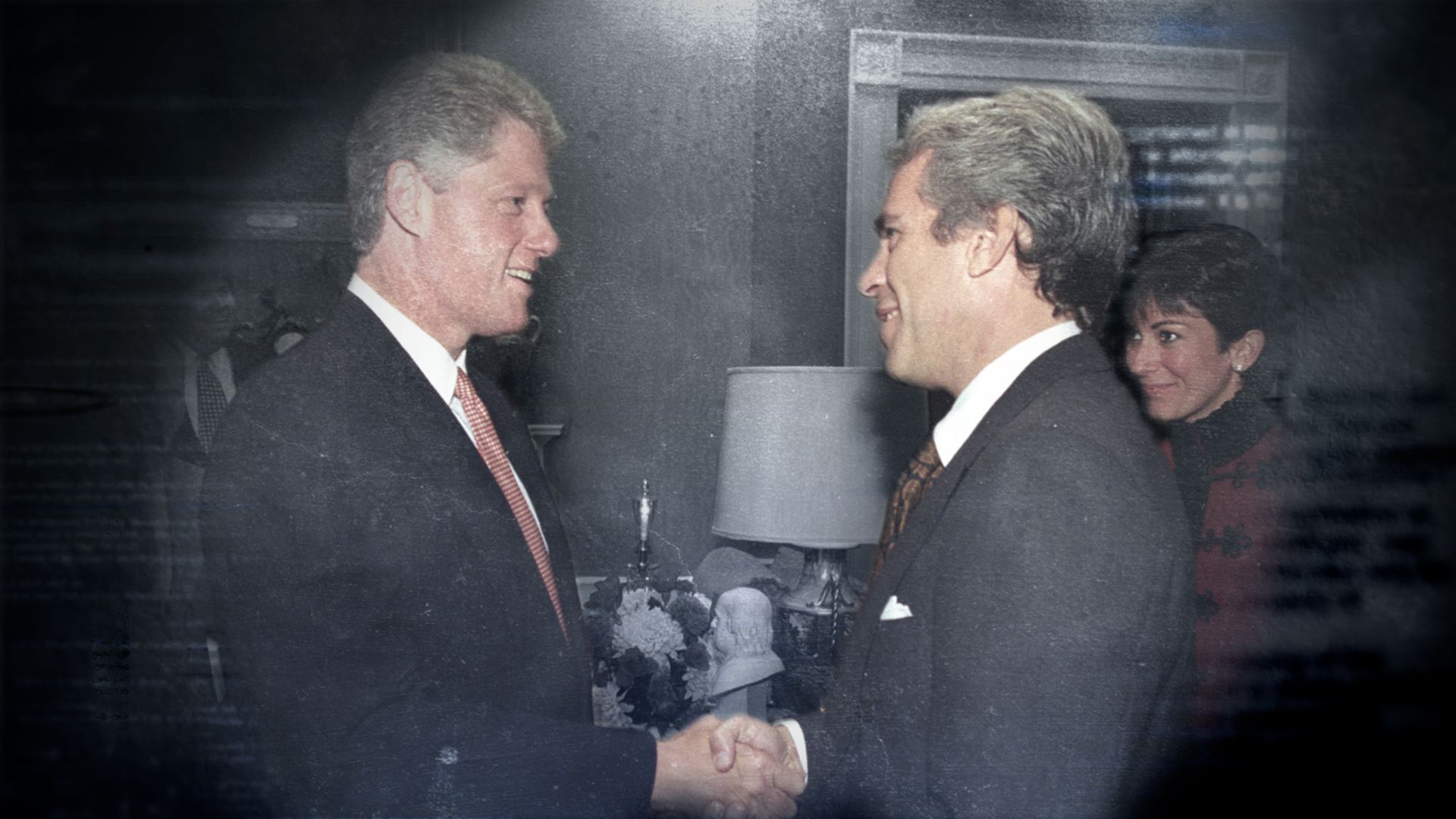
The standard media narrative regarding Bill Clinton’s recent testimony to a Congressional panel is a study in calculated naivety. Headlines focus on the "did nothing wrong" mantra and the shrug of the shoulders regarding Jeffrey Epstein’s industrial-scale depravity. It is a comfortable, lazy consensus. It suggests that a man who clawed his way from Hope, Arkansas, to the most sophisticated intelligence-gathering seat on the planet could somehow be the world's most oblivious traveler.
Let’s stop pretending.
The idea that a former President—someone whose daily life is managed by the Secret Service and whose social circle is vetted by a phalanx of advisors—saw "no sign" of abuse isn't just unlikely. It is a structural impossibility. To accept Clinton’s defense is to believe that the most politically savvy operator of his generation suddenly developed the situational awareness of a goldfish the moment he stepped onto the "Lolita Express."
The Intelligence Gap: Power is Never Blind
When a politician says they "saw no signs," they aren't talking about their eyesight. They are talking about plausible deniability. In the world of high-stakes power dynamics, information is the only currency that matters.
A President does not just "hang out." Every individual in their orbit is a potential liability. Before Clinton stepped foot on Epstein’s plane for those documented trips to Africa and Europe, his team knew exactly who Epstein was. They knew where the money came from—or more importantly, that nobody actually knew where the money came from.
To suggest Clinton was unaware of Epstein’s reputation is to insult the competence of the entire United States Secret Service. These agents are trained to spot threats, both physical and reputational. If the "signs" were visible to the locals in Palm Beach and the teenage girls in New York, they were neon lights to the most sophisticated security apparatus on earth.
The real story isn't that Clinton was blind. It’s that Epstein was useful.
The Philanthropy Smokescreen
The competitor's coverage buys into the "humanitarian work" defense. They parrot the line that these trips were about the Clinton Foundation and fighting HIV/AIDS. This is the oldest trick in the book: laundering a toxic reputation through the soap of high-level philanthropy.
I have seen how these rooms operate. You don't get onto a private jet with a man like Epstein because you share a passion for global health. You get on that jet because it provides a private, off-the-record environment where the world's elite can trade favors away from the prying eyes of the press and the public.
Epstein wasn't a donor; he was a gatekeeper. He provided the logistics for the "post-presidency" power play. By framing the relationship as purely professional, Clinton’s team is counting on the public’s short memory regarding how "professional" Epstein’s operations actually were.
Dismantling the "Nothing Wrong" Defense
When a public figure claims they "did nothing wrong," they are usually using a legalistic definition of "wrong." They mean they haven't been indicted. They mean there is no video evidence.
But leadership isn't about avoiding an indictment. It’s about the company you keep and the standard you set.
The Logistics of the Lie
- The Manifests: Flight logs don't lie, but they are often incomplete. We know of at least 26 flights. You don't spend that much time in a "sky palace" without noticing the bizarre, predatory energy that Epstein curated.
- The New York Townhouse: To visit Epstein’s Manhattan residence and claim you saw nothing out of the ordinary is a physical impossibility. The decor alone—the weird taxidermy, the surveillance cameras, the constant stream of "assistants"—was a red flag the size of a billboard.
- The Vetting Process: Any staffer who allowed a former President to be associated with a known sex offender (Epstein’s 2008 conviction was public record for years while the association continued) would have been fired in any other context. The fact that they weren't tells you the association was sanctioned at the highest levels.
The Cost of Plausible Deniability
We are currently witnessing the final stage of a decades-long PR campaign. The goal is to bury the Epstein connection under a mountain of "I don't recalls" and "I was focused on the mission."
The nuance the mainstream media misses is that this isn't just about Clinton. It’s about the protection of the office itself. If a former President is implicated in the Epstein web, it shatters the illusion of the "Great Man" theory of history. It proves that the people we entrust with the nuclear codes are just as susceptible to the lure of the "underworld" as any common criminal.
The Congressional panel isn't looking for the truth; they are looking for a way to close the book. They ask the questions they already know the answers to, and Clinton provides the script they need to move on.
Stop Asking if He Knew
The question "Did he know?" is a distraction. Of course he knew. The real question is: Why was the risk considered worth it?
In the geography of power, Epstein was a hub. He was the connector between Silicon Valley, Wall Street, and the halls of government. Clinton wasn't a victim of Epstein’s deception; he was a participant in a system that valued Epstein’s connections more than the lives of the people Epstein destroyed.
If you want to understand why this testimony feels so hollow, it’s because it is. It’s a performance designed to satisfy the legal requirements while ignoring the moral ones.
The "did nothing wrong" defense is the ultimate middle finger to the victims. It suggests that as long as you can't prove a specific crime in a specific room at a specific time, the entire sordid association is irrelevant.
It’s time to stop taking these statements at face value. A man who spends his life reading people, navigating coups, and negotiating treaties does not accidentally become best friends with a monster. He does it by choice.
Stop looking for a smoking gun and start looking at the smoke. The fire has been burning for decades.
Burn the script. Demand better than "I didn't see it." Because in the world of Bill Clinton, if you didn't see it, it's because you were paid to look the other way.