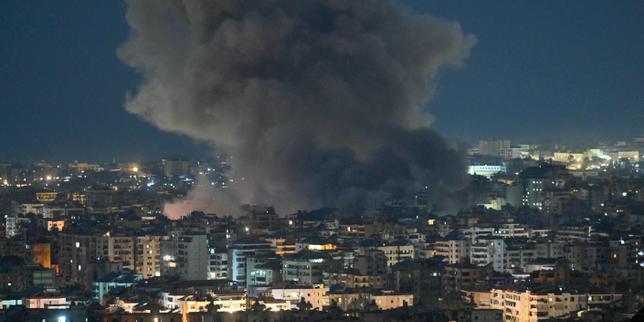
The headlines are screaming about a region on the brink, yet the markets are yawning. If you’re reading reports about "simultaneous strikes" and "embassies under fire" with a sense of impending global doom, you are being sold a narrative designed for clicks, not for comprehension. The current cycle of violence between Israel, Iran, and proxy actors isn't the start of World War III. It is a highly choreographed, high-stakes insurance negotiation played out with ballistic missiles instead of spreadsheets.
Mainstream media loves the "Escalation Ladder." They track every drone like it’s a precursor to the apocalypse. They are wrong. What we are witnessing is the Industrialization of Contained Conflict.
The Logistics of Performance Art
When an embassy is hit or a capital is buzzed, the immediate instinct is to scream "total war." But look at the data. Look at the telemetry. These strikes are rarely designed for maximum lethality; they are designed for maximum visibility.
In modern warfare between state actors like Israel and Iran, "success" isn't measured in bodies. It’s measured in Domestic Signal Strength. Iran needs to show its "Axis of Resistance" that it can still reach out and touch a target. Israel needs to demonstrate that its multi-layered defense—Iron Dome, David’s Sling, and Arrow—is an impenetrable wall that justifies billions in foreign aid and domestic tax spend.
If either side truly wanted to dismantle the other, we wouldn't see one-off drone swarms that take six hours to arrive, giving the entire world time to prep their Twitter feeds. We would see a silent, systemic collapse of the power grid, water supply, and banking sectors. The fact that the lights are still on in Tehran and Tel Aviv tells you everything you need to know about the "intent" behind these strikes.
The Oil Price Lie
Every time a drone enters Saudi or Emirati airspace, pundits crawl out of the woodwork to predict $150 oil. They’ve been saying it for a decade. They were wrong in 2019 during the Abqaiq–Khurais attack, and they are wrong now.
The global energy market has decoupled from Middle Eastern kinetic friction. Thanks to the Permian Basin and the rise of non-OPEC+ production, the "Geopolitical Risk Premium" is a ghost. Traders know that neither Iran nor the GCC can afford a sustained blockage of the Strait of Hormuz. It is their only lung. You don't choke yourself to spite your neighbor.
Stop looking at the maps of missile trajectories. Start looking at the tanker tracking data. Until the VLCCs (Very Large Crude Carriers) stop moving, the "war" is just a violent marketing campaign for defense contractors.
The Embassy Drone Fallacy
Reports of drones hitting the U.S. Embassy in Riyadh are treated as a "Game Over" moment for diplomacy. This fundamentally misunderstands the nature of modern proxy friction.
In the old world, an attack on an embassy was a casus belli—a cause for war. In the 2026 landscape, it’s a Kinetic Tweet. It’s a way for a proxy group to signal to their funders that they are still "active" without actually triggering a regional firestorm that would get them erased from the map.
- Reality Check: The U.S. military presence in the region is now so deeply integrated with local air defenses that "hitting" an embassy often means a small piece of debris fell on a parking lot three miles away after a successful interception.
- The Grift: Local actors use these "attacks" to demand more hardware from Washington. Washington uses these "attacks" to justify a permanent footprint. It is a closed-loop economy of fear.
Why "Stability" is the Real Threat
The "lazy consensus" says that peace is the goal. For the political elites in these regions, peace is a terrifying prospect.
Peace means accountability. It means talking about inflation, failing infrastructure, and youth unemployment. War—or rather, the permanent threat of war—is the ultimate distraction. It allows for the suspension of civil liberties and the centralization of wealth.
Israel’s internal political fractures vanish the moment the sirens wail. Iran’s internal dissent is crushed under the boot of "national security" the moment an Israeli jet breaks the sound barrier over Lebanon. They don't want to destroy each other. They need each other. They are the twin pillars holding up a status quo of controlled chaos.
The Defense Intelligence Gap
Most "intelligence analysts" on cable news are actually just retired generals who are on the boards of the companies making the missiles. They have a fiduciary duty to tell you the world is ending.
When they talk about "simultaneous strikes," they want you to imagine a coordinated, unstoppable wave. In reality, modern electronic warfare (EW) and signals intelligence (SIGINT) make "surprises" almost impossible. We live in an era of Transparent Warfare.
We know when the engines start. We know when the silos open. We know the flight path before the drone clears the fence. The "shock and awe" is purely for the civilian population. The militaries involved are essentially trading moves in a grandmaster chess game where both players have agreed that the game must end in a draw.
Stop Asking "When is the War?"
You’re asking the wrong question. You should be asking: "Who profits from the stalemate?"
The answer is always the same: The military-industrial complexes of the West, the revolutionary guards of the East, and the media outlets that sell you the anxiety in between.
The "Escalation" you see on the news is a controlled burn. It’s designed to prevent a real forest fire while keeping the firefighters employed. If you want to understand the Middle East, stop reading the "Breaking News" banners. Look at the defense budget approvals and the sovereign wealth fund allocations.
The missiles are loud, but the money is quiet. Follow the quiet.
Your fear is their most valuable commodity. Stop exporting it to them for free.