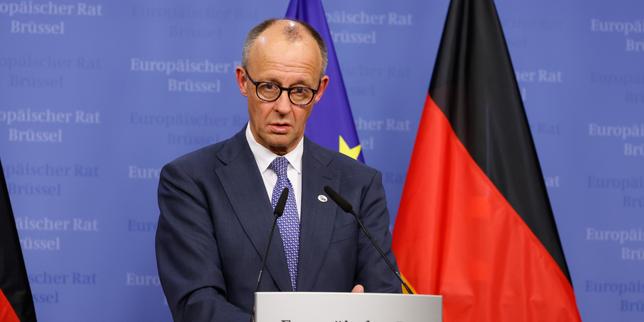
Olaf Scholz is angry. The German Chancellor is currently venting his frustrations to any microphone within reach, labeling Viktor Orbán’s refusal to greenlight a 90-billion-euro loan to Ukraine as "disloyalty." The media is eating it up. They paint a picture of a unified Europe being held hostage by a single, pro-Russian rogue state.
They are wrong.
This isn't about "loyalty" to a flag or a cause. It is about the fundamental, structural rot within the European Union’s financial architecture. Scholz isn't defending democracy; he is defending a precedent of off-balance-sheet spending that would make a Enron executive blush. If you think this is a simple story of a villain blocking a hero, you aren't looking at the ledger.
The 90 Billion Euro Illusion
The mainstream narrative suggests that 90 billion euros is sitting in a vault in Brussels, waiting for a key that Orbán refuses to turn. That is a fantasy. That money doesn't exist. To "unlock" this loan, the EU must once again leverage its collective credit to borrow on the international markets.
When Scholz talks about disloyalty, what he actually means is that Hungary is refusing to sign as a co-guarantor for a debt that the EU has no clear mechanism to repay. After the "NextGenerationEU" pandemic recovery fund, the Union pivoted from a trade bloc into a debt union.
I have seen treasury departments in major corporations get gutted for less risky maneuvers than what the European Commission is attempting now. They are trying to normalize "extraordinary" debt. Orbán knows that if the EU continues to borrow for geopolitical objectives without a direct tax base to service that debt, the individual member states—including the smaller ones—are the ones who will eventually be handed the bill.
Sovereignty Isn't a Bug It is the Feature
The "People Also Ask" section of your search engine is likely filled with queries like "Why can't the EU kick out Hungary?" or "How to bypass the Hungarian veto?"
These questions are fundamentally flawed. They assume the EU is a federal state. It isn't. The veto exists because the EU was designed as a collection of sovereign nations. The moment you "bypass" the veto to fund a war or a massive loan, you have effectively ended the European Union as it was conceived and replaced it with a centralized technocracy.
Scholz’s rhetoric of "disloyalty" is a tactical distraction. By making the conversation about Orbán’s supposed ties to Moscow, he avoids talking about the fact that Germany’s own constitutional court has been breathing down his neck over his government's creative accounting. Berlin is desperate to move spending off the national books and onto the EU’s books. Hungary is simply the convenient scapegoat for a project that is fiscally unsustainable.
The High Price of Moral Grandstanding
Let’s talk about the 90 billion euros specifically. This isn't just a "loan" for bullets and bread. It is a long-term commitment to the reconstruction and stabilization of a state that, even before the war, struggled with deep-seated institutional corruption.
When a bank looks at a loan, it looks at the probability of default. In any other context, lending 90 billion euros to a country in the middle of a high-intensity war with an uncertain outcome would be classified as a junk-grade gamble.
- Risk A: Total territorial loss or frozen conflict.
- Risk B: Lack of a repayment roadmap.
- Risk C: Further devaluation of the Euro against the Dollar as EU debt piles up.
Orbán isn't being "disloyal" to Ukraine; he is being a fiduciary for his own taxpayers. It is an uncomfortable truth that the "pro-European" crowd hates to admit: a leader’s primary duty is to the people who elected them, not to the geopolitical ambitions of a neighbor or the frustrations of a German Chancellor.
The Hidden Cost of the "United Front"
The insistence on "unanimity or bust" has created a premium on dissent. By making every major funding decision a test of "loyalty," the EU has given every member state a reason to weaponize their veto for unrelated concessions.
If Scholz and Macron truly wanted to fund Ukraine without Hungarian interference, they could do it through bilateral agreements. Germany could write a check. France could write a check. They don't want to. They want the EU to do it so the risk is socialized across 27 nations.
They are using the "EU loan" model to hide the true cost of the war from their own voters. If the money comes from the EU, it doesn't show up as a line item in the German national budget that could trigger a political crisis at home. Hungary is simply pointing out that the emperor has no clothes—and no cash.
The Real Danger is Centralization
The push to remove the veto—often framed as "streamlining" or "democratizing" the EU—is a power grab.
If the EU can force a member state to guarantee a 90-billion-euro loan against its will, then the concept of national budgets becomes a suggestion rather than a law. We are watching the birth of a fiscal leviathan that has the power to spend but no direct accountability to the people whose future earnings are being used as collateral.
I’ve watched markets react when transparency disappears. They get jittery. The Euro is already under pressure. Adding massive, contested debt to the pile while calling dissenters "traitors" is a recipe for a long-term currency crisis.
Stop asking why Hungary is blocking the loan. Start asking why the rest of Europe is so eager to borrow money they don't have, to fund a plan they haven't vetted, through a mechanism that bypasses the very sovereignty the Union was built to protect.
The "disloyalty" isn't coming from Budapest. It’s coming from the leaders who are trying to bankrupt the future of the Union to win a news cycle in the present.
Go look at the bond yields. The market doesn't care about Scholz’s feelings. It cares about who is going to pay the 90 billion back. And right now, nobody has an answer.