The headlines are predictable. They scream about "total defeat" and "desperation" as if international relations were a Sunday afternoon football game where the scoreboard tells the whole story. The current narrative suggests that Iran is backed into a corner, its economy is a smoking ruin, and it is begging for a seat at the table. This is more than just a simplification; it is a dangerous misunderstanding of how power actually operates in the Middle East.
If you think a "deal" is the finish line, you haven’t been paying attention to the last forty years of brinkmanship.
The common consensus is that maximum pressure has worked so well that the Iranian leadership has no choice but to surrender. This view assumes that the regime in Tehran operates on the same quarterly-result logic as a Silicon Valley startup. It doesn't. They play a generational game. When a Western leader claims the opposition "wants a deal," they aren't describing a victory; they are describing a tactical pivot by an adversary that has mastered the art of the stall.
The Bankruptcy of the Total Defeat Narrative
Let's dismantle the idea of "total defeat." In traditional warfare, defeat means the inability to project power. In the modern gray zone, Iran has never been more active. While the rial tumbles and inflation spikes, their regional architecture remains largely intact.
- Proxies as Fixed Assets: Hezbollah, the Houthis, and various militias in Iraq are not luxury items. They are the regime's primary insurance policy. You don't sell your house to pay for groceries unless you've truly hit zero. Iran hasn't sold its proxies; it has integrated them further into the regional fabric.
- Shadow Banking: The assumption that sanctions "stop" money is a fallacy I’ve seen play out in every major global conflict. Sanctions simply increase the cost of doing business. They create a "sanction-busting" elite who grow wealthy off the black market, actually strengthening the regime's grip on the internal economy while the middle class suffers.
- The China Pivot: We talk about Iran in a vacuum. We ignore the fact that Tehran has signed a 25-year strategic partnership with Beijing. To call a country "totally defeated" while it is a core node in the Belt and Road Initiative is a failure of basic intelligence.
The High Cost of a Paper Victory
The "deal" everyone seems to want is usually just a temporary freeze. We’ve seen this movie before. A deal provides immediate relief for the Iranian economy, which allows the Islamic Revolutionary Guard Corps (IRGC) to recapitalize their conventional forces.
The status quo is a paradox. The West wants a deal to stop the nuclear program. Iran wants a deal to save its economy. But the moment the economy is saved, the necessity for a deal evaporates.
If you are a business leader or a policy strategist, you need to understand that "wanting a deal" is a negotiation tactic, not a white flag. In the bazaar, the man who says he is desperate is usually the one about to take you for everything you have.
Why Sanctions Don't Buy Loyalty
There is a fundamental misunderstanding of the "people's will" in these scenarios. The "lazy consensus" argues that if we squeeze the economy hard enough, the people will rise up and overthrow the regime.
I’ve watched this strategy fail from Havana to Pyongyang.
Extreme economic pressure often has the opposite effect. It makes the population dependent on the state for basic survival. When the state controls the distribution of subsidized goods, dissent becomes a death sentence—not just from a bullet, but from starvation. The IRGC doesn't fear a shrinking GDP; they fear a losing grip on the distribution networks. As long as they control the ports and the oil bypasses, they are winning.
The Nuclear Brinkmanship Scam
The nuclear program is the ultimate leverage. It is a regenerative asset. You can negotiate it away, get your sanctions relief, and then "discover" new technical hurdles or restart the centrifuges three years later.
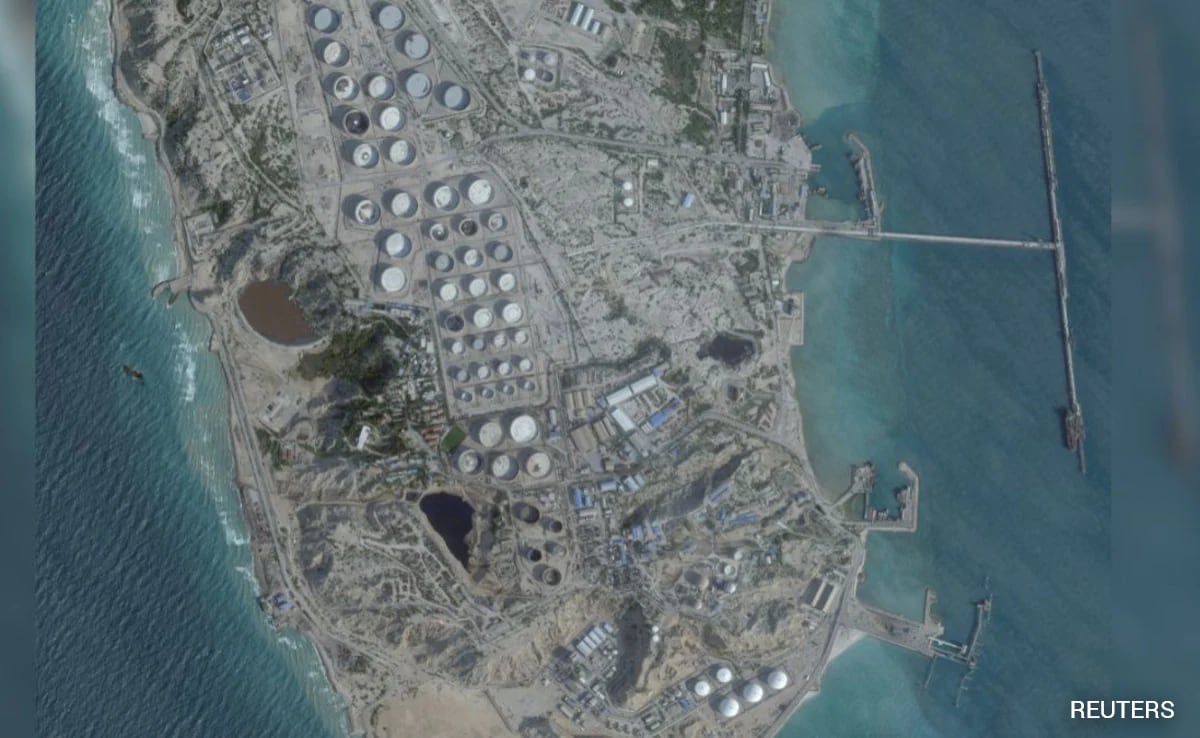
The Western obsession with the nuclear "breakout time" is a distraction. The real threat is the integration of ballistic missile technology with unconventional warfare. Even without a warhead, Iran’s ability to shut down the Strait of Hormuz—where roughly 20% of the world's oil passes—gives them a veto over the global economy.
$$P_{global} \propto \frac{1}{S_{Hormuz}}$$
If $P_{global}$ is global economic stability and $S_{Hormuz}$ is the security of the Strait, the relationship is inversely proportional. Tehran knows this formula better than anyone in Washington or Brussels. They don't need to be "victorious" in a conventional sense; they only need to be capable of inflicting more pain than the West is willing to endure.
The Truth About "Desperation"
When a political leader says an opponent is "desperate," they are usually talking to their own base, not describing reality.
Imagine a scenario where a CEO tells his board that a competitor is "totally defeated" because their stock price is down. Meanwhile, that competitor has just secured a massive line of credit from a rival firm and is currently poaching the CEO's top engineers. Would you buy that CEO's stock? Of course not.
Iran is not desperate for a deal; they are hungry for the legitimacy and the cash flow that a deal provides. They want to move from "rogue state" to "regional hegemon" with the stroke of a pen.
The Strategy of the Thousand Cuts
The status quo isn't a stalemate. It’s an asymmetric war of attrition.
- Cyber Warfare: Low cost, high impact. They don't need to defeat the US Navy if they can disrupt the Colonial Pipeline or a major bank's internal servers.
- Maritime Harassment: Using fast-attack boats to swarm tankers. It’s cheap, it’s effective, and it keeps insurance premiums for global shipping at a permanent premium.
- Diplomatic Delay: Every month spent "negotiating" is a month where the centrifuges spin and the regional proxies dig deeper into the soil of Yemen, Lebanon, and Syria.
Stop Asking if They Want a Deal
The question isn't whether Iran wants a deal. Of course they do. They want the best deal possible that requires the least amount of actual change.
The real question we should be asking is: What are we willing to live with?
If the goal is total regime change, a deal is a setback. If the goal is "stability," a deal is a mirage. Stability in the Middle East is not something you buy with a treaty; it is something you maintain through a permanent, exhausting presence.
The moment we believe the "totally defeated" rhetoric, we stop preparing for the next escalation. We stop innovating our own asymmetric defenses. We become complacent.
The Iranian leadership is many things, but they are not stupid. They have survived a decade of the most intense sanctions in human history. They have survived internal domestic unrest. They have survived the targeted killing of their top generals.
They aren't looking for an exit. They are looking for an opening.
If you are waiting for the "total defeat" to turn into a pro-Western democracy, you will be waiting for a very long time. The "deal" isn't a solution; it’s just the next phase of the conflict.
Stop looking at the scoreboard and start looking at the map. The game hasn't even reached halftime.
Manage your expectations. Prepare for the pivot. Don't be the one left holding the bag when the "totally defeated" opponent strikes back with a fresh infusion of sanctioned-cleared capital.
The deal isn't a victory. It's a re-arming period.
Act accordingly.
Would you like me to analyze the specific economic data of the China-Iran 25-year pact to show where the "maximum pressure" campaign is leaking the most?