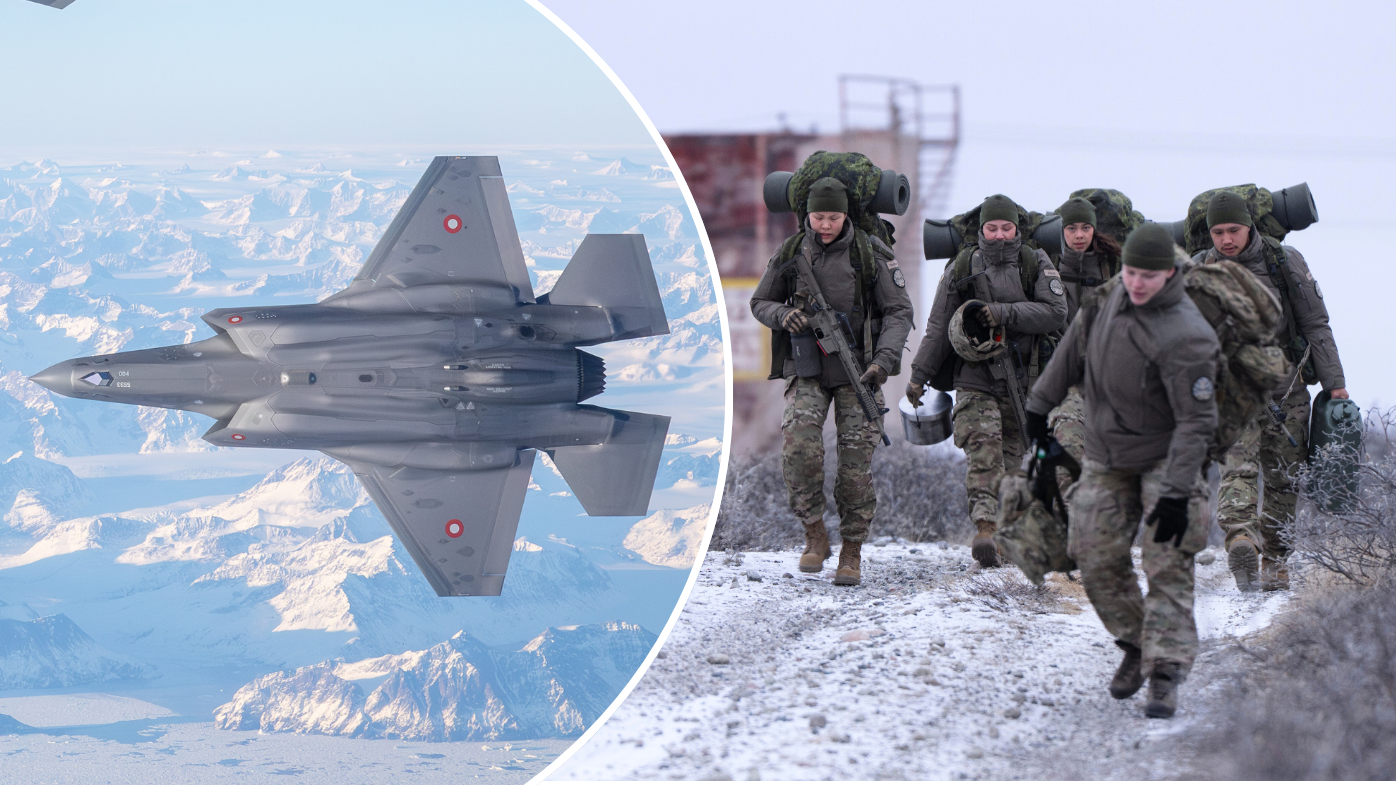
The headlines are dripping with a faux-scandalous nostalgia. "Denmark sent blood and explosives to Greenland to stop a US invasion," they scream. It sounds like a lost chapter of a Tom Clancy novel—a David-and-Goliath struggle where a tiny European kingdom prepares to bite the hand of its superpower protector.
It is a beautiful story. It is also a complete misunderstanding of how geopolitical sovereignty actually functions.
The recent reports declassifying "Operation King's Mirror" and the secret caches of 1951 aren't proof of a Danish-American rift. They are evidence of a desperate, calculated performance of "statehood" by a nation that knew it had already lost the keys to its own front door. If you think a few crates of TNT and some plasma bags were going to stop the United States military from doing whatever it wanted with Thule Air Base, you aren't paying attention to the physics of power.
The Sovereign Delusion
The "lazy consensus" here is that Denmark was being brave. The narrative suggests that by stashing explosives, Copenhagen was ready to fight for Greenland's soil.
Let’s dismantle that immediately.
Denmark wasn't preparing for a shooting war with the Americans. They were preparing for a legal one. In the post-WWII era, the only thing more valuable than territory was the appearance of control over that territory. If the US had moved to formally annex Greenland—a move seriously considered by the Truman administration, which offered $100 million in gold for the island in 1946—Denmark needed to show that it hadn't simply abandoned the post.
In international law, "effective occupation" is the benchmark. If a foreign power moves in and you don't even have a bag of blood or a stick of dynamite to show you were "defending" it, you’ve effectively ceded sovereignty. The explosives weren't for the US Army; they were for the history books. They were a symbolic tripwire designed to force a diplomatic crisis rather than a military one.
The Logistics of a Ghost War
To understand the absurdity of the "resistance" narrative, look at the math. We are talking about a landmass of 2.1 million square kilometers.
The Danish plan involved a handful of Sledge Patrol members and some scattered supplies. To call this a "defense plan" is like saying a "Keep Off The Grass" sign is a defense against a bulldozer.
- The Blood: Plasma has a shelf life. Sending blood to the Arctic in the 1950s wasn't a sustainable medical strategy; it was a psychological one for the soldiers on the ground. It told the Danish hunters, "We expect you to bleed."
- The Explosives: These weren't intended to blow up American carriers. They were meant for "denial of assets." If the Americans—or the Soviets, who were the actual threat the US was worried about—tried to seize specific weather stations or telegraph hubs, the Danes would blow them up. It’s scorched earth on a microscopic scale.
I’ve spent years analyzing defense procurement and "sovereignty theater." I’ve seen governments spend billions on hardware that they know, with 100% certainty, will never be used. Why? Because the act of buying it is the product. Denmark’s "explosive" secret was a low-cost insurance policy to ensure they remained a landlord, even if the tenant was a 300-pound gorilla who didn't pay rent.
The Thule Trap: Why the US Didn't Need to Invade
The competitor article treats a US "invasion" as a looming threat. This is a fundamental misunderstanding of the 1951 Defense Agreement.
The US didn't need to invade Greenland. They already owned the parts that mattered.
By the time these blood crates were being buried in the permafrost, the US was already building Thule Air Base. This wasn't a hidden outpost; it was a massive engineering project involving thousands of troops and the latest Cold War tech.
The "invasion" had already happened via contract. The Danish government was essentially a silent partner in a firm where the US held 99% of the voting shares. The secret caches were a way for Danish officials to look themselves in the mirror and pretend they were still the masters of the North Atlantic.
The Real Risk: Not the US, but the "Gray Zone"
If we want to talk about real history, we have to look at the "Gray Zone." The Danish fear wasn't an American flag flying over Nuuk. It was a "creeping jurisdiction."
Imagine a scenario where a US commander in Thule decides that Danish law doesn't apply within a 100-mile radius of the base because of "security concerns." If Denmark doesn't have a physical presence—even a token one with some TNT—they have no standing to complain at the UN.
This is the nuance the mainstream media misses. Geopolitics isn't always about bullets; it's about precedent.
The Technology of Silence
The most impressive part of "Operation King's Mirror" wasn't the hardware. It was the secrecy. The Danish government managed to keep this a secret from its own parliament and the public for decades.
This highlights a brutal truth about "democracies" during the Cold War: Sovereignty is often maintained by lying to your own people. The Danish public, largely pacifist and wary of superpower entanglement, would have revolted if they knew their government was planting bombs in the Arctic.
The government chose the lie of "peaceful cooperation" while preparing for a "symbolic war." This is the same playbook we see today with undersea cables and Arctic mineral rights. Governments claim everything is fine while quietly mapping out where to cut the lines if things go south.
Stop Asking "Would the US Have Invaded?"
That is the wrong question. It assumes the US cares about "land." Superpowers don't care about land; they care about access and denial.
The US wanted to ensure the Soviets couldn't use Greenland as a jumping-off point for a polar nuclear strike. As long as Denmark allowed the US to build bases, the US was happy to let Denmark keep the flag. The explosives were only relevant if Denmark tried to say "No" to the US. And let's be honest: Denmark was never going to say no.
The Actionable Truth for Modern Sovereignty
What does this mean for us today?
- Symbolism is a Weapon: If you are a smaller player in a tech or resource war, you don't need to win. You just need to make it "expensive" or "legally messy" for the giant to ignore you.
- Infrastructure is Destiny: Denmark lost Greenland the moment they couldn't afford to build their own Arctic infrastructure. If you don't build it, someone else will, and they will bring their own rules.
- The Cache Strategy: Always have a "dead man's switch." In the 50s, it was TNT. Today, it’s data sovereignty and encryption keys.
Denmark’s blood and explosives weren't a defense plan. They were a suicide note written in advance, just in case the Americans decided to stop pretending the Danes were in charge.
The next time you read about a "secret resistance" plan, ask yourself if it was designed to stop an army or just to save a politician's ego. In the frozen wastes of Greenland, the answer was always the latter.
Stop romanticizing the crates in the snow. Start looking at the bases that are still there. The US didn't need to invade because they never truly left.