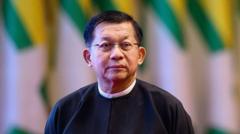
The international media is currently fixated on a wardrobe change. On March 30, 2026, Senior General Min Aung Hlaing was nominated for the presidency of Myanmar, signaling his intent to swap a medal-heavy tunic for the civilian longyi. The "lazy consensus" among analysts is that this is a consolidation of power—a final "checkmate" in a five-year game of blood and chess.
They are wrong. This is not a coronation; it is an evacuation.
By stepping down as Commander-in-Chief and handing the baton to former spymaster Ye Win Oo, Min Aung Hlaing is admitting that the military—the Tatmadaw—can no longer govern Myanmar as a cohesive unit. The move to the presidency is a desperate attempt to build a "bunker of legitimacy" because the front lines are collapsing. The general is not ascending; he is hedging.
The Myth of the "Civilian" Pivot
Most reports frame this as a "sham election" outcome aimed at fooling the West. This assumes the junta cares what Washington or Brussels thinks. They don’t. The real audience for this rebranding is the internal military elite and the handful of regional neighbors—China, Russia, and Thailand—who need a "President" to sign contracts that don't look like war crimes.
I’ve watched the Southeast Asian political machine grind for decades. When a strongman in Naypyidaw shifts titles, it’s usually because the barracks are restless. The 2008 Constitution, which the military itself drafted, bars the President from holding active military command. By vacating the top military spot, Min Aung Hlaing is severing his direct umbilical cord to the rank-and-file.
History in Myanmar is littered with "retired" generals who were purged the moment they lost the gun. Look at the fate of former generals who thought their political titles protected them once they left the War Office. Without the title of Commander-in-Chief, Min Aung Hlaing is now technically a subordinate to his successor in the eyes of the military's internal hierarchy. He is betting his life that Ye Win Oo remains a lapdog. In the history of military juntas, that is a losing bet 90% of the time.
Why the "Election" was a Strategic Failure
The January 2026 elections were widely derided as a farce because they excluded the National League for Democracy (NLD). But the real failure wasn't the lack of democracy—it was the lack of stability.
A successful sham election requires a "peaceful" facade. Instead, the junta held a vote while controlling less than 25% of the country's territory. Resistance forces and ethnic armed groups currently hold nearly 45% of the land. You cannot claim "presidential mandate" when you can't even collect taxes in half of your provinces.
The "People Also Ask" crowd wants to know: Will this bring peace to Myanmar? The answer is a brutal no. In fact, it accelerates the civil war. By formalizing his rule through a rigged parliament, Min Aung Hlaing has closed the door on any residual "neutral" mediation. He has moved from being a "temporary" military administrator to a "permanent" political target.
The Union Consultative Council: The Shadow Cabinet
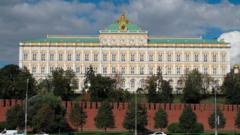
To mitigate his loss of direct military command, Min Aung Hlaing signed a law creating the "Union Consultative Council" (UCC). This is the nuance the mainstream press missed. The UCC is a bypass valve designed to let the President override the new military chief on matters of national security.
Imagine a scenario where the CEO of a company "retires" to become Chairman of the Board, but then creates a new "Steering Committee" that has the power to fire the new CEO at any moment. That is the UCC.
It sounds like a masterstroke. In reality, it creates a dual-power structure that the Tatmadaw—an institution built on absolute, singular command—cannot tolerate. We are now watching the birth of two suns in the same sky. Internal friction between the Presidential Palace and the War Office is now a mathematical certainty.
The Economic Mirage
The business community often hopes that a transition to "civilian" rule, however flawed, leads to sanctions relief.
- Fact: The U.S. and EU sanctions target the individuals and the military-owned conglomerates (MEHL and MEC), not just the title of "Chairman."
- Reality: A "President Min Aung Hlaing" is just as sanctioned as a "General Min Aung Hlaing."
Foreign investors aren't staying away because of the General’s title; they’re staying away because the electricity is off, the banks are broken, and their staff might get abducted by resistance fighters. Changing the letterhead doesn't fix a 2.0% GDP contraction or 20% inflation.
The Institutional Suicide of the Tatmadaw
For 60 years, the Myanmar military's pitch was that it was the "only" institution holding the country together. By turning the state into a personal vehicle for one man’s presidency, the Tatmadaw has destroyed its own institutional mythos. It is no longer "protecting the union"; it is protecting a specific 69-year-old man from an ICC arrest warrant.
The downside to my contrarian view? If Min Aung Hlaing manages to purge his rivals within the next six months and secures a multi-billion dollar energy deal with a regional power, he might buy himself another three years. But the "battle scars" of previous transitions show that the moment the military ceases to be a monolithic entity and starts behaving like a political party, it begins to rot from within.
Min Aung Hlaing didn't win today. He traded his armor for a paper shield. In a country currently defined by drone strikes and urban guerilla warfare, paper doesn't last long.
Would you like me to analyze the specific bios of the new military leadership to identify where the first internal rift is likely to occur?