The recent deaths of two Indonesian UN peacekeepers in Southern Lebanon represent more than a localized tragedy or a statistical anomaly in a long-standing conflict. These casualties signal a fundamental breakdown in the protection of international monitors. For decades, the blue helmet served as a shield of perceived neutrality, a signal to all combatants that the eyes of the global community were present. That shield is now effectively shattered. This specific incident involving the Indonesian contingent of UNIFIL (United Nations Interim Force in Lebanon) highlights a terrifying shift where peacekeeping forces are no longer collateral damage but are increasingly positioned in the direct line of fire within a high-intensity urban and subterranean battlefield.
The Illusion of the Buffer Zone
The mandate of UNIFIL, governed by UN Security Council Resolution 1701, was designed to ensure that the area between the Blue Line—the border between Lebanon and Israel—and the Litani River was free of unauthorized armed personnel and weapons. This was always a diplomatic fiction. In reality, the region evolved into one of the most heavily fortified zones on the planet.
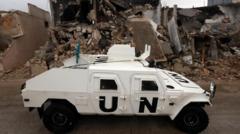
Peacekeepers found themselves in an impossible position. They were tasked with monitoring a ceasefire that existed only on paper, while Hezbollah built an intricate network of tunnels and launch sites, and the Israel Defense Forces (IDF) intensified surveillance and retaliatory strike capabilities. The Indonesian troops, known for their disciplined approach and historical rapport with local populations, were caught in the middle of a kinetic escalation that rendered their monitoring equipment and white-painted vehicles irrelevant.
The explosion that claimed these lives was not a random act of God. It was the result of a combat environment where "precision" is often a relative term used by military spokespeople. Whether the cause was an unexploded ordnance, a targeted strike, or a misidentified movement, the underlying truth is that the UN has lost the ability to guarantee the safety of its personnel in Lebanon.
Why Indonesia Bears the Brunt
Indonesia is currently the largest contributor to UNIFIL. This isn't just about prestige; it’s a core pillar of Indonesian foreign policy. Jakarta uses these missions to project its image as a leading moderate Muslim nation and a non-aligned power capable of talking to all sides.
However, this high level of participation brings a disproportionate share of the risk. Indonesian troops often man the most exposed outposts. They are the boots on the ground in villages where the line between civilian life and combatant infrastructure is non-existent. When the IDF issues evacuation orders for Southern Lebanon, the peacekeepers don't leave. They stay in their bunkers, effectively becoming stationary targets in a landscape of moving parts.
The political fallout in Jakarta is significant. There is a growing domestic outcry questioning why Indonesian sons and daughters are dying for a peace that neither side of the border seems to want. This pressure could eventually lead to a drawdown of troops, which would trigger a domino effect among other contributing nations. If Indonesia leaves, UNIFIL collapses.
The Technological Failure of Modern Peacekeeping
Modern warfare has outpaced the bureaucratic speed of the United Nations. While combatants use AI-driven targeting, autonomous drones, and sophisticated electronic warfare, UNIFIL remains largely reliant on visual observation and outdated communication protocols.
The Problem of Proximity
The tactical reality on the ground makes "neutrality" a physical impossibility.
- Combatant Encroachment: Armed groups frequently operate near UN positions, using them as human shields or tactical anchors.
- Targeting Errors: In the heat of an urban assault, sensors often fail to distinguish between a UN watchtower and a military fortification.
- Fragmented Chain of Command: UNIFIL must coordinate with the Lebanese Armed Forces (LAF), a group that is often under-equipped and politically compromised.
The UN’s insistence on staying in fixed positions during active hostilities is a relic of 20th-century peacekeeping. In a world of hypersonic missiles and loitering munitions, a static watchtower is little more than a liability. The death of these two peacekeepers was a predictable outcome of a strategy that prioritizes "presence" over actual tactical security.
The Geopolitical Fallout
This incident does not exist in a vacuum. It forces a confrontation between the UN and the warring parties. For Israel, the presence of UNIFIL is often viewed as an obstacle to their operational freedom. For Hezbollah, the UN serves as a useful, if temporary, shield against total domestic political accountability.
When peacekeepers die, the standard response is a "sternly worded" statement from the UN Secretary-General. These statements have lost their currency. The international community must face the fact that UNIFIL’s current mandate is a death sentence for the soldiers assigned to it. There is no peace to keep. There is only a war to witness, and witnessing a war from a stationary bunker is an exercise in futility.
The death of the Indonesian peacekeepers should be viewed as the final warning. The choice is now binary. Either the UN grants its forces a mandate that allows for active defense and genuine enforcement, or it must withdraw them before the body count reaches a level that permanently stains the reputation of international diplomacy.
The Strategic Shift No One Wants to Discuss
There is a quiet conversation happening in the corridors of power in New York and Jakarta. It centers on the "unplugging" of UNIFIL. For years, the presence of the mission was seen as a necessary "tripwire" to prevent total war. The logic was that neither side would risk the international condemnation that comes with killing UN troops.
That logic is dead. The "tripwire" has been tripped, the condemnation has been issued, and the fighting continues unabated.
We are entering an era where the sanctity of the United Nations flag is no longer a deterrent. This has massive implications for other missions in Africa and the Middle East. If a well-equipped, highly respected contingent like Indonesia's cannot be protected in a high-profile mission like UNIFIL, what hope is there for smaller missions in even more volatile theaters?
The soldiers who died were professionals. They knew the risks. But they were sent into a situation where the rules of engagement were written for a world that no longer exists. They were victims of a diplomatic refusal to acknowledge that the ground has shifted.
The path forward requires more than just mourning. It requires a brutal reassessment of what we ask these men and women to do. If we continue to send them into active war zones with 1990s-era mandates, we are not promoting peace. We are simply providing targets. The blood on the blue helmets in Lebanon is a stark reminder that when diplomacy fails, the frontline observers are the first to pay the price for the world's collective indecision.
Withdrawal is often seen as a failure, but staying in a burning building without a fire extinguisher is a tragedy of a different order. The international community needs to decide if it values the lives of its peacekeepers more than the comfort of a failing status quo. The families in Indonesia already know their answer.