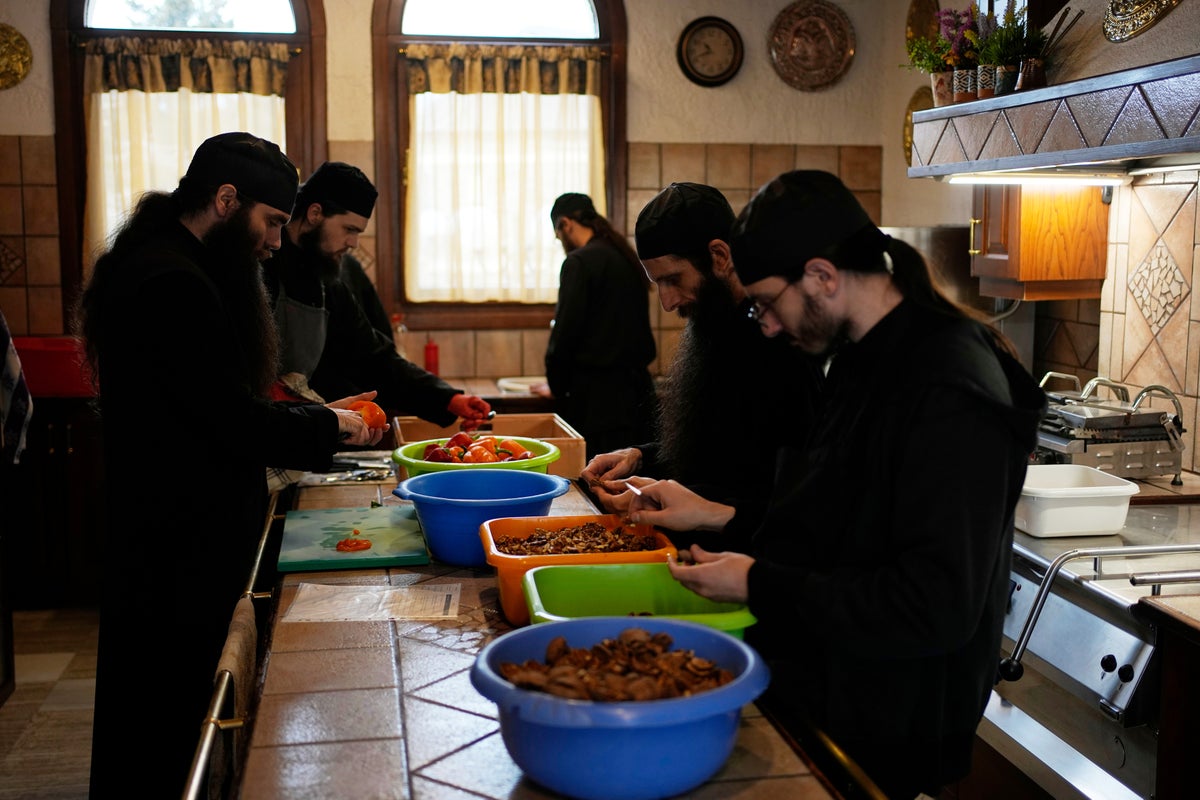
Modern wellness culture sells the lie that health is a product you buy. It’s marketed as a supplement, a subscription, or a vibrant bowl of imported fruit. But tucked away on a rugged peninsula in northeastern Greece, the monks of Mount Athos have spent a millennium proving that vitality is actually a byproduct of what you lack. While the rest of the world grapples with soaring rates of metabolic syndrome and chronic inflammation, these men represent a living anomaly. They don't just live long; they live without the standard western slide into infirmity.
The secret isn't just "clean eating." That’s a superficial term used by influencers to sell meal plans. The reality is far more grueling and scientifically precise. The Athonite system uses a cycle of intermittent caloric restriction and specific macronutrient shifts that trigger biological processes most modern diets never touch. They aren't trying to look good in a mirror. They are engaging in a rigorous protocol of cellular survival.
The Biology of Deprivation
Most people eat to avoid hunger. The monks eat to manage it. Their calendar is split into "fast" days and "feast" days, but even their feasts would look like a penance to the average consumer. On fast days—usually Monday, Wednesday, and Friday—they eliminate olive oil, dairy, and wine. What remains is a plant-based, fiber-heavy intake that keeps insulin levels flat.
This isn't about calories alone. It’s about autophagy. When the body is deprived of external fuel sources, specifically protein and fats, it begins a process of internal housekeeping. It hunts down damaged proteins and dysfunctional mitochondria to use for energy. By cycling their intake so strictly, the monks are essentially running a deep-cleaning cycle on their cells three times a week.
We see the results in the data. Studies on the Athonite population show remarkably low levels of prostate and bladder cancer, and heart disease is nearly non-existent. They aren't avoiding these diseases through advanced medicine. They are avoiding them by never allowing the "metabolic sludge" of constant overconsumption to build up in the first place.
The Mediterranean Myth vs. The Monastic Reality
Commercial interests have diluted the "Mediterranean Diet" into a vague suggestion to eat more hummus and grilled fish. The version practiced on Mount Athos is stripped of the romanticism and the excess. There is no processed sugar. There is no red meat. Even their bread is different—slow-fermented sourdough that breaks down gluten and lowers the glycemic index.
Most people fail their spring health resets because they try to add "superfoods" to a broken foundation. You cannot fix a high-inflammatory lifestyle by eating a handful of blueberries. The monks do the opposite. They remove the triggers. By stripping the diet down to legumes, wild greens, and whole grains, they reset the gut microbiome.
The Fiber Foundation
Wild greens, known as horta, are the backbone of this recovery. These aren't the washed, bagged lettuces from a supermarket. These are bitter, nutrient-dense weeds packed with polyphenols. Bitterness is a signal of chemical complexity. These compounds prime the liver for detoxification and stimulate bile production. In the West, we have bred the bitterness out of our food to make it more palatable, and our digestion has suffered for it.
The Rhythm of the Clock
The timing of their meals is as important as the content. There is no midnight snacking in a monastery. They eat in narrow windows, often twice a day, and the final meal is usually finished before the sun goes down. This aligns with the body’s circadian rhythm.
Eating late at night forces the body to focus on digestion when it should be focused on repair and hormonal regulation. By clearing their digestive tract before sleep, the monks ensure that their growth hormone levels peak correctly. It’s a natural anti-aging mechanism that costs nothing but requires total discipline.
The spring "playbook" often discussed in travelogues is actually a preparation for Great Lent. This is the most restrictive period of their year, lasting seven weeks. It serves as a total metabolic overhaul. While the modern world views this as starvation, the body treats it as a signal to optimize.
The Oil Paradox
Olive oil is often hailed as a miracle fat, and it is. But the monks know that even a good thing can be a burden if used constantly. By omitting oil on fast days, they force the body to utilize stored adipose tissue. This prevents the gradual weight gain that most adults consider an inevitable part of aging.
When they do reintroduce oil, it is raw and high-quality. Heating olive oil to high temperatures can degrade its polyphenols and create polar compounds. The monks typically drizzle it over finished dishes. This preserves the medicinal properties of the oleocanthal, a natural anti-inflammatory agent that works similarly to ibuprofen.
Environmental Mastery
You cannot separate the monk's diet from their physical environment. They are constantly moving. Their "gym" is the steep, rocky terrain of the peninsula. Every calorie they consume is earned through labor—tending gardens, carrying supplies, or standing for hours during vigils.
This creates a high non-exercise activity thermogenesis (NEAT). In our world, we sit for eight hours and then try to "fix" it with 45 minutes at the gym. It doesn't work. The human body is designed for low-intensity, high-frequency movement. The monks are in a state of perpetual metabolic flux.
The Psychology of the Reset
The greatest hurdle to healthy eating isn't a lack of information. It’s the dopamine trap of the modern food industry. Our food is engineered to be hyper-palatable—too much salt, too much sugar, too much fat. This desensitizes our taste buds and creates a cycle of craving.
The Athonite method breaks this cycle through sensory deprivation. When you eat plain beans and wild greens for three days, a simple piece of fruit or a splash of wine on Saturday feels like an explosion of flavor. They have preserved their ability to find satisfaction in simplicity. This is the "renewed" habit that people are actually looking for: the restoration of the brain's reward system.
The Strategy of Elimination
If you want to adopt this "playbook," you have to stop looking for what to add. Look for what to cut. The spring reset isn't a 10-day juice cleanse. It’s a permanent shift in your relationship with scarcity.
Start by identifying the "oil-free" days. Select two or three days a week where you consume no added fats, no dairy, and no animal products. Focus on legumes—lentils, chickpeas, and beans. These provide the protein and fiber necessary to keep the gut moving and the muscles fueled without spiking insulin.
Practical Implementation
- Ditch the breakfast ritual. Most monks don't eat until the mid-morning or afternoon. If you aren't hungry, don't eat.
- Embrace the bitter. Seek out arugula, radicchio, or dandelion greens. These are the internal cleansers that no supplement can replicate.
- The 12-hour rule. Ensure there is at least a 12-hour gap between your last meal of the day and your first meal of the next.
- Source over speed. If the bread has more than three ingredients, it isn't bread. If the vegetable didn't come out of the ground looking like that, don't buy it.
The monks of Mount Athos are not healthy because they have access to a secret fountain of youth. They are healthy because they refuse to participate in the convenient, comfortable slow-suicide of the modern diet. They treat their bodies like a temple, yes, but they also treat them like a machine that requires regular maintenance and periods of downtime.
True health is found in the friction between desire and discipline. The spring reset isn't a destination; it is the re-ignition of a biological furnace that most people have let grow cold. Stop looking for the recipe and start looking for the boundary.
Build the boundary and the health will follow.