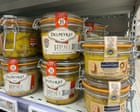
Politics is often described as the art of the possible, but usually, it is just the art of the cowardly. The recent chatter suggests the UK government is preparing to shelve bans on foie gras and fur imports to "grease the wheels" of a trade deal with the European Union. The prevailing logic among the Westminster commentariat is simple: trade is hard, the EU is stubborn, and luxury animal products are a small price to pay for smoother borders.
They are wrong. They aren't just wrong on the ethics; they are wrong on the economics.
By backing down on these bans, the government isn't being "pragmatic." It is signal-boosting its own weakness. It is telling Brussels that British standards—the very things we were told "taking back control" would protect—are actually just bargaining chips to be traded for a 2% reduction in customs checks on car parts.
The Myth of the Luxury Trade-Off
The common argument is that banning these items is a "middle-class obsession" that hurts trade volumes. This is a fundamental misunderstanding of how high-value trade works. Foie gras and fur are not commodities. They are niche, high-margin luxuries that represent a rounding error in the UK-EU trade balance.
When a government retreats on a moral position for a negligible economic gain, it loses its leverage. If you won't stand your ground on a product that literally involves force-feeding birds until their livers fail—a process called gavage—why would the EU believe you’ll stand your ground on data privacy, financial services, or fishing rights?
In my years observing trade negotiations, the parties that win are the ones with "sticky" principles. The parties that lose are the ones who show they are willing to strip-mine their own manifestos at the first sign of a difficult meeting in a grey Brussels boardroom.
The Brussels Effect is a Two-Way Street
We hear constantly about the "Brussels Effect"—the idea that EU regulations become the global default because the market is too big to ignore. The UK’s tactical retreat assumes we are forever victims of this gravity.
But sovereignty is a muscle. If you don't use it, it atrophies. By banning fur and foie gras, the UK has the opportunity to set a gold standard that forces the EU to catch up. Several EU member states already ban the production of these items. Germany and Italy have moved against fur farming; Poland is debating it.
Instead of leading a coalition of progressive European nations to raise the floor of animal welfare, the UK is choosing to sink to the basement. We are effectively saying that our "red lines" are drawn in disappearing ink.
Understanding the True Cost of Gavage
Let’s talk about the science, because the "pro-choice" culinary crowd loves to pretend this is about "terroir" and tradition.
The physiological reality of foie gras production is a state of induced hepatic steatosis. In plain English: it is a diseased organ. To produce the texture that food critics rave about, a duck's liver must swell to roughly ten times its natural size. This isn't "farming." It is a biological assault.
The argument that we should allow the import of something we have already banned the production of is the height of hypocrisy. We’ve told British farmers they cannot do this because it is cruel, but we’re happy to let French farmers do it and profit from British consumers. This isn't "free trade." It’s a middle finger to the British agricultural sector. It creates an uneven playing field where the only thing we export is our conscience.
Why "Smoothing Trade" is a False Prophet
The government claims that dropping these bans will ease negotiations on a Veterinary Agreement or an SPS (Sanitary and Phytosanitary) deal. This is a fantasy.
The EU’s negotiation style is famously legalistic and granular. They do not trade a "move" on foie gras for a "move" on veterinary certificates. That’s not how the European Commission operates. They pocket the concession on animal welfare and then continue to demand full alignment on every other metric.
I’ve watched negotiators give up "small" wins early in the process, thinking it builds goodwill. It doesn't. It builds a reputation for being a pushover.
The Economic Inefficiency of Cruelty
If we look at the data, the global fur market is in a death spiral. Major fashion houses—Gucci, Prada, Burberry—have already exited the market. They didn't do it because of government bans; they did it because the modern consumer views fur as a relic of a less enlightened era.
By protecting the import of fur, the government is hitching its wagon to a dying industry. It is the economic equivalent of fighting to protect the import of typewriter ribbons or whale oil. It is a backwards-looking policy that serves no one but a handful of lobbyists for a sunset industry.
The People Also Ask: A Reality Check
People often ask: "Doesn't a ban infringe on personal liberty?"
The answer is: we infringe on "liberty" every time we pass a safety or ethics law. You aren't free to sell lead-painted toys. You aren't free to sell chlorinated chicken (at least for now). The "liberty" to eat a diseased liver or wear a coat made from a trapped lynx is a bizarre hill for a modern democracy to die on.
Another common question: "Won't this hurt the hospitality industry?"
Let's be real. No restaurant has ever gone bust because it couldn't put foie gras on the menu. A chef who can't create a world-class dish without relying on a controversial, imported, diseased organ is a chef who lacks imagination. The UK’s culinary scene is thriving because of its local, sustainable, and high-welfare produce—not in spite of it.
The Strategy of the Spineless
The real reason for this backdown isn't trade volumes. It's the fear of a headline. The government is terrified of being seen as "obstructive" to a deal. But there is nothing more obstructive than a nation that doesn't know what it stands for.
When you abandon animal welfare to save thirty seconds at a border crossing, you aren't being a "global leader." You are being a clerk. You are prioritizing the logistics of the present over the ethics of the future.
If the UK wants to be a "Science Superpower" or a "Leader in Green Technology," it has to embrace the fact that high standards are an asset, not a liability. High standards drive innovation. They force companies to find better, cleaner, and more ethical ways of doing business. Lowering the bar just to satisfy a French duck-liver lobby is a pathetic admission of defeat.
The trade deal will happen or it won't. But if it happens because we traded away our values, we haven't gained a market. We’ve just sold our soul for a slightly faster truck.
Stop pretending this is about the economy. It’s about a lack of spine.