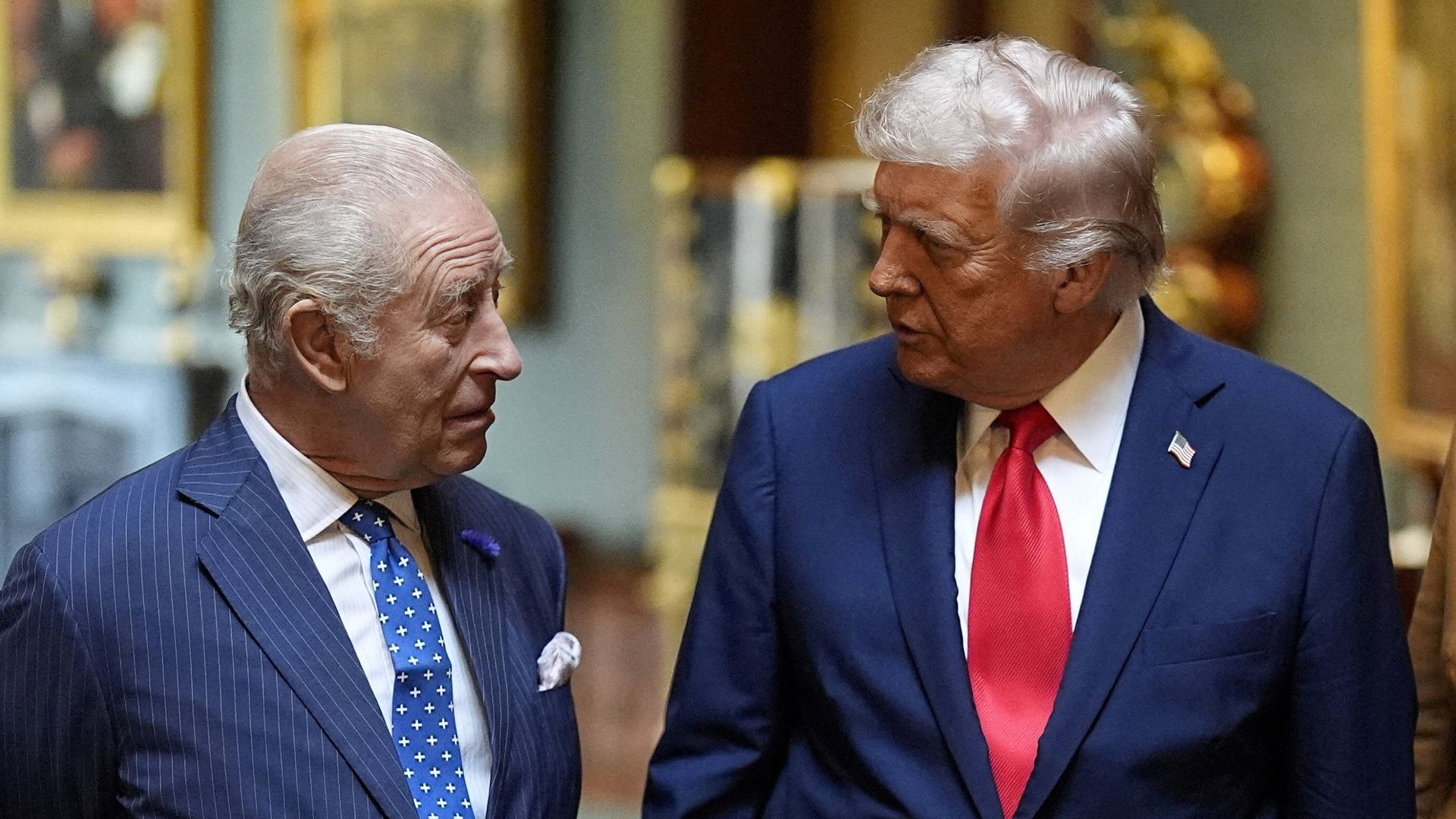
The decision by the British Sovereign to decline a meeting with the victims of Jeffrey Epstein is not a matter of personal preference or scheduling conflict; it is a calculated risk-mitigation strategy designed to protect the institutional integrity of the Crown. In the framework of constitutional law and public relations, the Monarchy functions as a "perpetual corporation" whose primary asset is neutrality. Engaging with victims of a criminal enterprise—specifically one linked to a member of the royal family—introduces a variable of legal and moral liability that the institution is structurally incapable of absorbing.
The strategy rests on three distinct pillars of institutional preservation: jurisdictional boundaries, the precedent of non-adjudication, and the separation of the Sovereign from the individual.
The Jurisdictional Barrier and Legal Neutrality
The Monarchy operates under a strict "no-interference" mandate regarding legal matters. Because the Sovereign is the theoretical source of justice within the British legal system, any direct interaction with victims of a crime—particularly one involving an ongoing or unresolved shadow of litigation—creates a conflict of interest.
- The Executive Limitation: The King acts on the advice of his ministers. For a meeting of this nature to occur, it would require the explicit recommendation of the Home Office or the Foreign, Commonwealth & Development Office. Without this mandate, a meeting becomes a private act with public constitutional consequences.
- The Adjudication Risk: By meeting with victims, the Sovereign implicitly validates a specific narrative. In a legal context, this validation can be interpreted as an extrajudicial endorsement of one party over another. While the guilt of Jeffrey Epstein is a matter of public record, the specific civil and criminal nuances regarding his associates remain a minefield of potential litigation.
- The Sovereignty of the Courts: To step into the space usually reserved for victim support services or the judiciary is to blur the line between the symbol of the state and the machinery of the state.
The Cost Function of Symbolic Interaction
In the economy of royal engagements, every meeting is a transaction of prestige. The "King’s Peace" is a conceptual framework where the Sovereign provides a sense of national unity by remaining above the fray of specific grievances.
The institutional cost of a meeting is calculated by the potential for "associative contamination." If the King meets with victims to discuss the actions of Prince Andrew, he effectively bridges the gap between the individual's alleged misconduct and the institution's formal standing. This creates a bottleneck in the Monarchy’s rebranding efforts.
The primary objective of the current reign is the "Slimmed-Down Monarchy," a lean operational model focused on duty and continuity. Reopening the Epstein file through a formal meeting reverses this trajectory. It forces the institution back into a reactive posture, where it must answer for the failures of an individual rather than the successes of the Crown.
The Separation Principle: Individual vs. Institution
The failure of most media analysis lies in the inability to distinguish between the "Body Natural" and the "Body Politic." While the public sees a brother and a sister-in-law refusing to acknowledge a brother’s victims, the state sees the Head of State refusing to compromise the office.
- The Body Natural: The private person (Charles III) may harbor empathy or a desire for reconciliation.
- The Body Politic: The office of the King cannot apologize for or mediate crimes he did not commit, as doing so would imply the office shares the guilt.
This creates a systemic friction. The public demands human empathy, but the institution requires cold, structural distance. The "Royal Prerogative" does not extend to personal absolution. If the King were to meet these victims, he would be establishing a new standard where the Sovereign is expected to provide emotional or symbolic restitution for any crime committed by a relative. This is a non-scalable and dangerous precedent for an institution that relies on the "magic" of distance.
The Mechanism of the "Grey Suit" Strategy
The refusal to meet is likely managed through what insiders call "The Grey Suits"—the private secretaries and advisors who prioritize the long-term survival of the House of Windsor over short-term public approval ratings. Their logic follows a path of deterministic caution:
First, any meeting would be scrutinized for its "sincerity." If the King does not offer a specific apology or financial reparations, the victims and the media will frame the meeting as a hollow PR stunt. This results in a net-negative outcome where the Monarchy appears both guilty by association and insincere in its response.
Second, the meeting would provide a platform for further discovery. If the victims use the meeting to demand the release of internal documents or the stripping of further titles from Prince Andrew, the King is placed in a position where he must either acquiesce—setting a precedent for external interference in royal honors—or refuse, which leads to a second wave of negative headlines.
The Narrative Trap of Victim Advocacy
The request for a meeting is a strategic move by the victims' legal and PR teams. By framing the refusal as a lack of compassion, they utilize a "moral pincer movement."
- Pincer A: The demand for recognition.
- Pincer B: The threat of public shaming.
The Monarchy’s counter-move is "Total Silence." By not engaging with the request, they prevent the narrative from gaining fresh data points. In the absence of a response, the media is forced to recycle old information, which eventually leads to public fatigue. This is a classic "attrition" strategy used in high-stakes crisis management.
The second limitation of this strategy is the erosion of the "Moral High Ground." While silence protects the legal flank, it weakens the cultural flank. In a post-Me-Too era, the Monarchy’s reliance on Victorian-era protocols of distance appears increasingly out of touch with a public that values transparency and accountability. However, from a consulting perspective, the cultural loss is viewed as a "soft cost," whereas a legal or constitutional crisis is a "hard cost." The institution will always trade the former to avoid the latter.
Tactical Divergence: The Queen’s Role
The inclusion of Queen Camilla in the request adds a layer of complexity. As a consort, she has more latitude for charitable work and emotional outreach. However, her involvement is strictly tethered to the King’s. For her to meet the victims independently would be a breach of protocol and would signal a fractured internal strategy.
The institutional logic dictates that the Queen Consort's platform be used for non-controversial advocacy—literacy, domestic violence awareness, and animal welfare. The Epstein case is "High-Volatility," meaning it carries a high risk of explosive negative coverage that could overshadow her other work. The decision to shield her from this interaction is a protective measure for her individual brand, which has only recently achieved stability in the eyes of the British public.
The Structural Impasse of Restorative Justice
The core of the issue is that the victims are seeking "Restorative Justice" from an entity that can only provide "Symbolic Representation."
Restorative justice requires:
- Acknowledgement of harm.
- Direct communication between parties.
- A plan for transformation and healing.
The British Monarchy is not a participant in the harm; Prince Andrew, as an individual, is the focal point. Because the King cannot speak for his brother’s private life or alleged crimes, the three requirements of restorative justice cannot be met. The Monarchy is a rigid structure designed for the 19th and 20th centuries, trying to navigate a 21st-century demand for radical transparency.
The Risk of Proximity to Litigation
The legal advisors to the Crown are likely monitoring the ongoing civil developments in the United States. Any statement made by the King—even a seemingly benign expression of sympathy—could be subpoenaed or used as "character evidence" or "institutional admission" in future civil suits.
This creates a permanent bottleneck. As long as there is even a 1% chance of further legal action against Prince Andrew or the estate of Jeffrey Epstein, the King’s advisors will mandate a 0% engagement policy. This is not a lack of heart; it is a surplus of caution.
The strategic play here is the long-term isolation of the problem. By keeping the victims at arm's length, the Palace ensures that the "Epstein Problem" remains an "Andrew Problem." The moment the King steps into the room, it becomes a "Crown Problem." In the cold calculus of sovereign survival, the brother is expendable, but the Crown is not.
The institution will continue to rely on the passage of time to act as a natural filter, betting that the public's focus will eventually shift to more contemporary issues of governance and the economy, leaving the Epstein associations to the archives of history rather than the headlines of the present.
The only viable path for the institution is to maintain the current "Cold Stance" while doubling down on unrelated philanthropic efforts that demonstrate "General Compassion" without "Specific Liability." This allows the Monarchy to signal its values broadly while avoiding the specific, dangerous entanglement of the Epstein legacy.