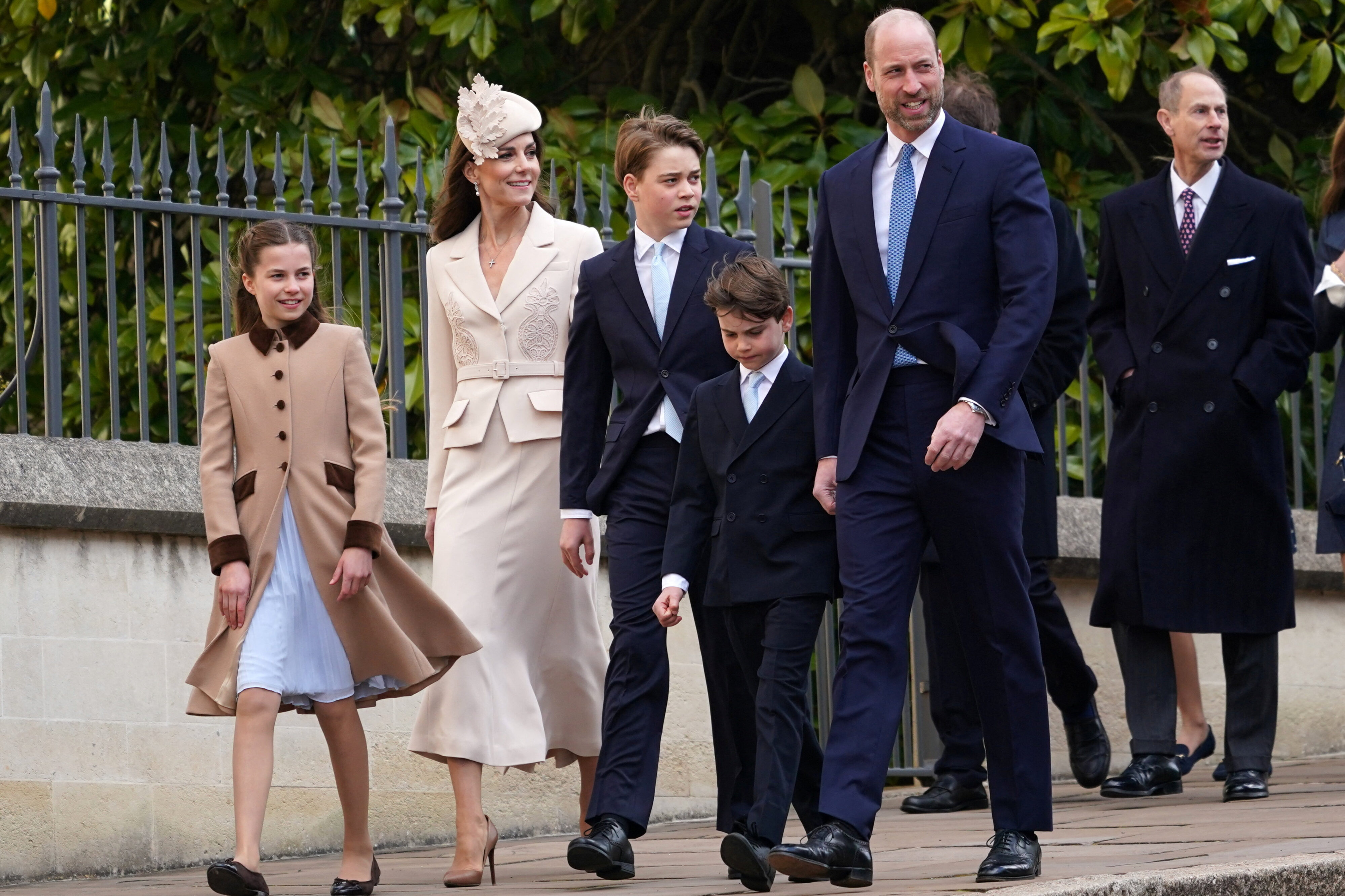
The annual appearance of the British Royal Family at St George’s Chapel for the Easter Matins service functions less as a religious observation and more as a high-stakes deployment of soft power infrastructure. While traditional media focuses on the aesthetic choices of the attendees, a structural analysis reveals a calculated effort to maintain institutional continuity during a period of significant leadership volatility. The 2024 iteration of this event represents a stress test for the monarchy’s "Working Royal" model, a system currently facing a critical labor shortage due to health-related withdrawals from the frontline rotation.
The Three Pillars of Monarchial Continuity
The effectiveness of a public royal appearance relies on the simultaneous execution of three specific functions. If any of these pillars fail, the event shifts from a display of stability to a signal of institutional decay. Recently making headlines recently: Finland Is Not Keeping Calm And The West Is Misreading The Silence.
1. The Validation of Lineal Succession
Visible presence serves as a physical audit of the line of succession. In the context of recent vacancies, the specific composition of the group attending the Easter service acts as a visual manifesto of who remains operational. The presence of the King, despite ongoing medical treatment, is the primary variable in this equation. His participation signals that the head of state remains the functional center of the constitutional apparatus, preventing the perception of a "hollowed-out" executive branch.
2. Traditional Synchronicity
The British Monarchy operates on a cycle of "predictable spectacle." By adhering to the Easter Matins schedule, the institution leverages the Lindy Effect: the idea that the future life expectancy of a non-perishable thing—like a custom or an institution—is proportional to its current age. Each successful replication of the Easter walkabout reinforces the idea that the monarchy is an immutable constant in the British landscape, regardless of the political or social turbulence surrounding it. More details on this are detailed by USA Today.
3. The Management of Public Sentiment
This pillar functions as a feedback loop. The "walkabout"—the period where the family interacts with the public outside the chapel—is a data-gathering exercise. It allows the institution to gauge the temperature of public support in real-time, providing a counter-narrative to digital speculation. The physical proximity between the Sovereign and the citizenry acts as a low-cost, high-impact trust-building mechanism that digital communications cannot replicate.
The Labor Crisis within the Firm
The 2024 Easter service highlighted a fundamental bottleneck in the Royal Family’s operational strategy: the dwindling number of "Working Royals." This term defines family members who carry out official duties on behalf of the Crown, funded by the Sovereign Grant.
The current configuration reveals an aging workforce and a lack of redundant systems. With the Prince and Princess of Wales absent from the 2024 service, the burden of representation shifted heavily onto the King’s siblings. This creates a strategic vulnerability. The "Slimmed-Down Monarchy" model, championed as a cost-saving and modernizing measure, lacks the elasticity required to handle concurrent health crises.
The Cost Function of Visibility
Every public appearance carries an inherent risk-reward ratio. For a monarch undergoing treatment, the physiological cost of a public appearance is high, but the institutional cost of an absence is higher.
- The Absence Penalty: When the monarch is missing from a milestone event, the vacuum is filled by international speculation and market uncertainty regarding the stability of the UK’s constitutional framework.
- The Presence Premium: A brief, controlled appearance provides enough "visual capital" to sustain the institution’s image for several weeks of subsequent private recovery.
Architectural and Symbolic Significance of St George’s Chapel
The choice of venue is never arbitrary. St George’s Chapel at Windsor Castle is not merely a place of worship; it is the spiritual home of the Order of the Garter and a royal mausoleum. This setting provides a "Gravitas Multiplier."
Performing the Easter service here connects the current participants to centuries of previous monarchs. This historical layering masks the temporary frailties of individual family members. The architecture does the heavy lifting, providing a backdrop of permanence that compensates for any perceived weakness in the human participants. The service is a choreographed piece of theater where the script is provided by the Book of Common Prayer, and the stage is a 15th-century Gothic masterpiece. This reduces the need for the participants to "perform" personality, allowing them instead to simply inhabit their roles.
Identifying the Strategic Bottlenecks
The primary threat to the Monarchy's Easter strategy is the intersection of two conflicting goals: the desire for a modern, streamlined organization and the requirement for a ubiquitous public presence.
The Content Vacuum
In the modern media environment, the Monarchy is a content creator. High-profile events like Easter provide the raw imagery required to fuel the Commonwealth's media cycle. When the "A-list" members—the Prince and Princess of Wales—are unable to provide this content, the brand value of the institution experiences a temporary dilution. The reliance on a few key individuals for the majority of the brand’s global "reach" creates a single point of failure.
The Transparency Paradox
There is an increasing tension between the traditional royal mantra of "never complain, never explain" and the modern demand for medical and personal transparency. The Easter service 2024 acted as a compromise. It offered a "visual explanation" without requiring a verbal one. However, this strategy is reaching its limit. The public’s appetite for information has evolved, and the institution’s reluctance to provide detailed data on the health of its principals creates a friction point that can lead to a loss of control over the narrative.
Structural Comparison: 2023 vs. 2024
A comparative analysis of the attendance metrics between the two years illustrates the shifting dynamics:
- Generation Gap: The 2023 service featured a robust representation of the younger generation, including the Wales children. Their absence in 2024 shifted the visual average age of the group upward significantly, altering the perceived "vitality index" of the brand.
- Leadership Centralization: In 2023, the event was a showcase of a collaborative leadership team. In 2024, it became a solo performance by the King, supported by a secondary tier of family members. This centralizes the risk; the entire success of the event rested on the King’s individual performance.
The Mechanism of the Easter Walkabout
The walkabout is a tactical maneuver designed to humanize the institution. It breaks the "Fourth Wall" of royalty. By shaking hands and accepting flowers, the royals engage in a ritual of mutual recognition. This serves a vital psychological purpose for the spectators, transforming them from passive observers into active participants in the monarchial system.
From a security and logistics standpoint, the Windsor walkabout is a controlled environment. Unlike the more chaotic public engagements in London or on overseas tours, the Windsor crowds are often local residents or dedicated supporters. This minimizes the risk of protest or disruption, ensuring that the resulting media coverage remains focused on the intended themes of unity and renewal.
Forecasting the Institutional Trajectory
The Monarchy is currently operating in a "Maintenance Mode." The strategy for the foreseeable future will prioritize high-impact, low-effort appearances. We should expect a continued reliance on the "Big Three" calendar events—Easter, Trooping the Colour, and Remembrance Sunday—to maintain the illusion of a full-strength operation.
To mitigate the current labor shortage, the institution must decide whether to expand the pool of working royals by tapping into the "non-working" members of the family or to further lean into digital and remote forms of engagement. The latter carries the risk of diminishing the "Presence Premium" that makes the monarchy unique.
The immediate strategic move for the Palace is the aggressive curation of the King's public image. Every appearance must be calibrated to show resilience without suggesting a total return to normal duties, which would create unsustainable expectations. The 2024 Easter service was the first successful execution of this "Calibrated Resilience" strategy. It provided enough evidence of life to satisfy the constitutional requirement for a visible head of state while allowing the necessary space for private recovery. This delicate balancing act will define the next eighteen months of the reign.