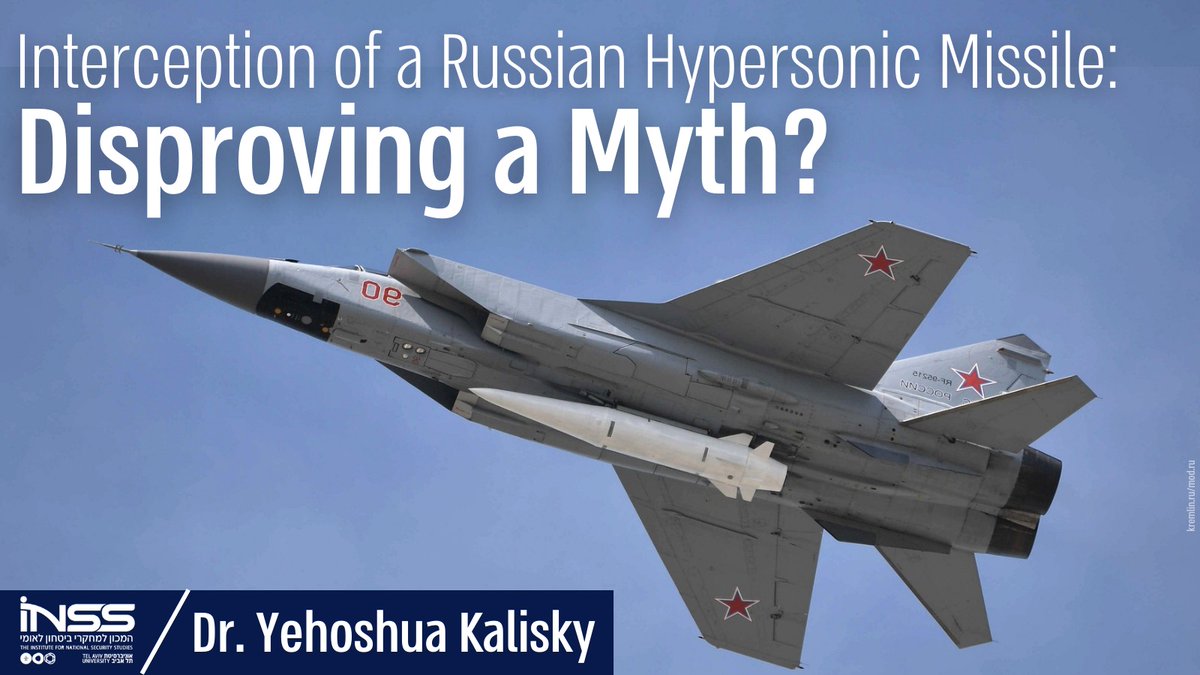
The headlines are screaming about a regional apocalypse. They want you to believe we are witnessing the opening salvo of World War III. They talk about "unprecedented escalations" and "total war."
They are lying to you. For a closer look into similar topics, we recommend: this related article.
What we are actually watching is a high-stakes, multi-billion dollar choreographed dance. Iran’s missile barrages and Israel’s kinetic responses aren't meant to destroy the opponent; they are meant to preserve the domestic credibility of the regimes firing them while ensuring the global oil market doesn't actually go into cardiac arrest. If you’re looking at these red-tinted "Breaking News" maps and seeing a strategic shift, you’ve been blinded by the pyrotechnics.
This isn't warfare. It's calibrated risk management. To get more details on this development, comprehensive reporting can also be found at Associated Press.
The Mathematical Impossibility of Surprise
The most pervasive lie in the current news cycle is the notion of a "surprise attack." In an era of pervasive satellite surveillance and signals intelligence, moving thousands of pounds of solid-fuel propellant into firing position is about as subtle as a parade.
When Iran launches, the "enemy" knows before the boosters even clear the silos. We see it in the thermal signatures captured by SBIRS (Space-Based Infrared System) satellites. We see it in the frantic diplomatic cables sent through Swiss backchannels hours before the first siren wails in Tel Aviv.
The goal isn't lethality. The goal is "perceived lethality."
If Iran wanted to inflict maximum damage, they wouldn't use slow-moving Shahed drones that take six hours to arrive—giving the world’s most advanced air defense network half a workday to prepare. They would saturate specific coordinates with high-speed ballistic volleys in a concentrated "window of vulnerability." Instead, they choose breadth over depth. They fire enough to look scary on a TikTok feed, but not enough to actually collapse the target's infrastructure.
The Iron Dome Is a Budgetary Trap
Conventional wisdom says Israel’s multi-layered defense—Iron Dome, David’s Sling, and Arrow—is a miracle of modern engineering. It is. But it’s also an economic albatross that the media refuses to quantify.
Let’s look at the math of attrition. An Iranian-made drone might cost $20,000. A Tamir interceptor missile costs roughly $50,000. When you move up to ballistic missiles, the disparity gets ugly. An Arrow-3 interceptor can cost upwards of $3 million.
"I’ve seen defense contractors salivate over these 'escalations' because they know the replacement cycle is the real profit center. We aren't fighting a war; we are subsidizing an industrial complex under the guise of security."
When "live" coverage tracks 200 projectiles being intercepted, they aren't showing you a victory. They are showing you a massive transfer of wealth. The aggressor wins by forcing the defender to spend 100x the cost of the attack just to maintain the status quo. This is "Economic Kinetic Warfare." The goal isn't to kill people; it's to bankrupt the treasury.
The Oil Price Paradox
If this were a real war, the Strait of Hormuz would be closed, and Brent crude would be trading at $150 a barrel.
It isn't.
The markets are smarter than the pundits. Traders know that neither Tehran nor Washington can afford a true disruption of energy flows. Iran needs the black market revenue to keep its crumbling economy on life support. The U.S. needs stable gas prices to avoid political suicide during election cycles.
Every time a missile is fired, the "Geopolitical Risk Premium" spikes for 48 hours, then settles. Why? Because the players involved are following a script. They hit "military targets" in the desert. They hit empty warehouses. They telegraph their targets through intermediaries to ensure the body count stays low enough to avoid a mandatory "Total War" response.
Why "Proportionality" Is a Scam
The media loves the word "proportional." It implies a sense of justice or balance. In reality, proportionality is just a code word for "keeping the theater manageable."
In true military doctrine, the objective is to eliminate the enemy’s will or capacity to fight. Proportionality does the opposite—it ensures the enemy survives to play their part in the next season of the conflict. By responding "proportionally," Israel and Iran are essentially agreeing to a set of rules that keep the defense industry humming and the hardliners in power, without ever risking the survival of their respective states.
The Intelligence Failure Narrative
You will hear analysts claim these strikes represent an "intelligence failure."
This is a fundamental misunderstanding of how modern signals intelligence (SIGINT) works. There is no failure. There is only "managed awareness."
Imagine a scenario where a state knows an attack is coming but allows a certain percentage of it to land to justify a pre-planned counter-strike. This isn't a conspiracy theory; it’s standard geopolitical positioning. If you intercept 100% of the threats, you look like a bully when you retaliate. If you let a few hit a parking lot or an airbase runway, you have the "moral authority" to launch your own multi-million dollar fireworks display.
Stop Asking if it Will Escalate
The "People Also Ask" section of your search engine is filled with: "Will Iran and Israel go to war?"
The question is flawed. They are already at war, but it’s a 21st-century war that doesn't look like 1944. It’s a war of attrition, optics, and electronic signatures.
- Cyber over Kinetics: While missiles make for good TV, the real damage is happening in the servers of water treatment plants and electrical grids.
- Proxies over Patriots: Why risk a regime-ending direct conflict when you can pay someone else to do it for 10% of the cost?
- Optics over Objectives: If the footage looks good on the evening news, the mission is a success, regardless of whether a single strategic asset was destroyed.
The danger isn't a deliberate escalation to World War III. The danger is a "Fat Finger" event—a technical glitch or a mid-level commander who misses the memo and accidentally hits a high-value civilian target or a hospital. The system is designed for a controlled burn, but the more fuel you throw on, the higher the chance of a stray spark hitting the wrong valve.
The Harsh Reality for Investors and Observers
If you are making life decisions or financial moves based on the "Live" tickers of these missile strikes, you are the mark.
- Ignore the "Breaking" Banners: They are designed to trigger cortisol, not provide context.
- Follow the Cargo Ships: If the tankers are still moving, the "war" is a rehearsal.
- Watch the Currency Markets: The Rial and the Shekel tell a truer story than any government spokesperson.
We are living in an era of "Simulated Conflict." The missiles are real, the explosions are hot, and the deaths—when they happen—are tragic. But the strategic intent is not conquest. It’s a violent form of negotiation.
Stop waiting for the "big one." This is it. This constant, simmering, expensive, and highly televised loop of strike and counter-strike is the new permanent reality. It’s not an escalation; it’s an industry.
The moment you stop viewing this as a military event and start viewing it as a brutal, kinetic form of diplomacy is the moment you actually understand the Middle East. Everything else is just noise designed to keep you watching the screen while the real players move the money behind the curtain.
Put down the remote. The world isn't ending; it's just being billed for another round of ammunition.