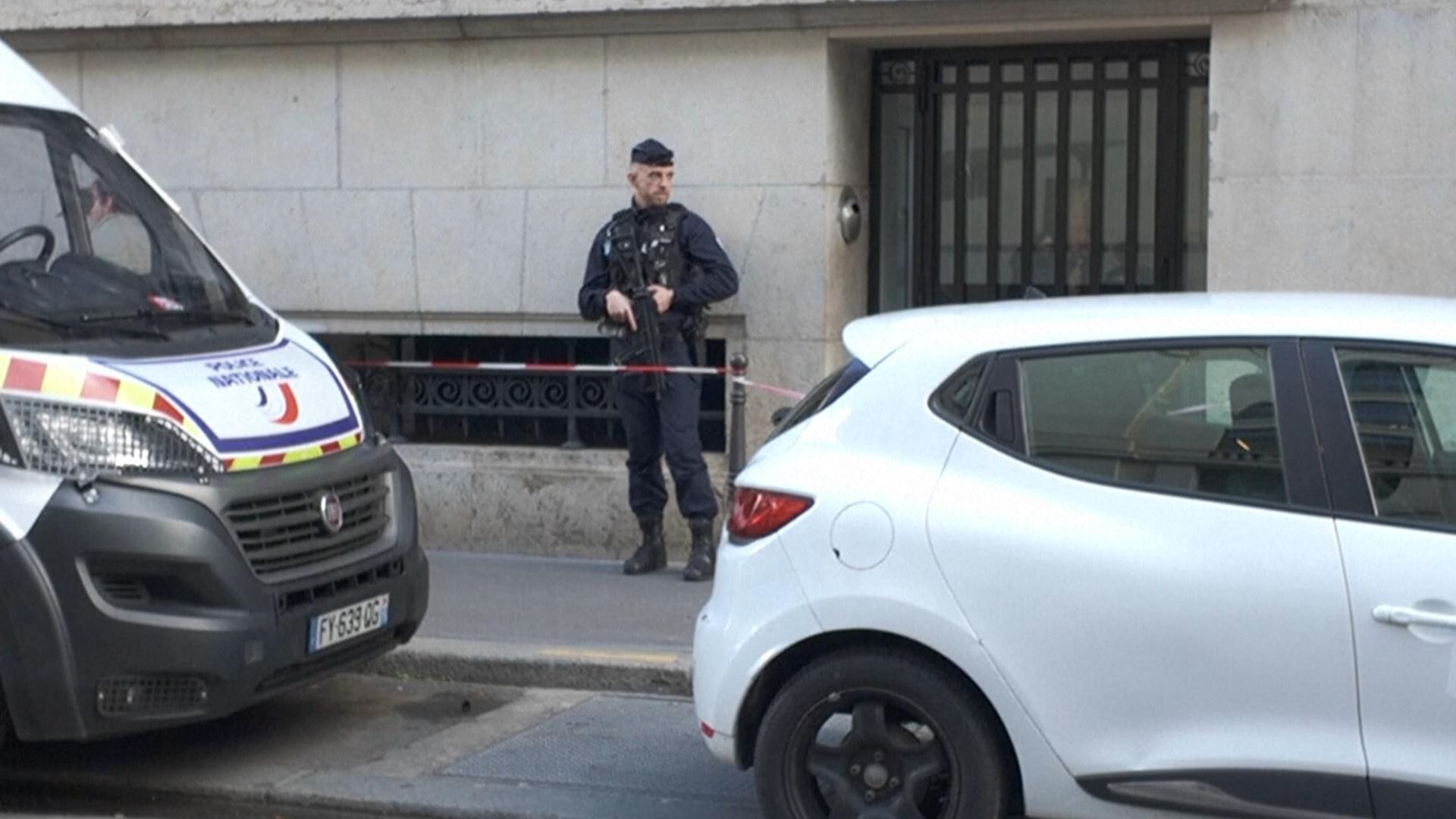
The coffee in the 8th Arrondissement is usually better than what the night shift officers at the local commissariat were drinking that morning. It was roughly 4:00 AM. In the heart of Paris, this is the hour of ghosts and delivery trucks. The golden lights of the Champs-Élysées hit the wet pavement, reflecting off storefronts that house more wealth than some small nations. Somewhere in that quiet, between the rhythmic hum of a street sweeper and the distant sirens that never truly stop, something sat waiting on the sidewalk.
It wasn't a suitcase left by a distracted tourist. It wasn't a pile of trash. It was an improvised explosive device, tucked neatly outside the Bank of America building.
Most people view global finance through the lens of digital tickers and green percentages. We see banks as monoliths of glass and steel, indestructible symbols of a world order that moves at the speed of light. But that morning, the entire weight of that system sat inches away from a crude mixture of chemicals and wire. The distance between "business as usual" and a catastrophic breach of the peace was the thickness of a patrolman’s glove.
The Anatomy of a Near Miss
French police officers on routine patrol are trained to spot the "off" note in the city’s symphony. They noticed the package. They didn't just walk by. When you live in a city that has been scarred by the memory of the Bataclan or the Charlie Hebdo offices, "routine" is a word used by people who don't carry a badge.
The immediate area was cordoned off. Shadows stretched long against the limestone facades as the bomb disposal unit arrived. Imagine the silence. Every city has a heartbeat, but in those moments, Paris held its breath. The technicians moved with a deliberate, agonizing slowness. They are the only people who truly understand the physics of a second. To them, time isn't a concept; it's a resource that burns away with every breath.
They found a device that was sophisticated enough to be lethal. It wasn't a prank. It was a statement. The target was specific. Bank of America isn't just a financial institution; it is a pillar of American economic influence sitting on French soil. To strike it is to attempt to sever a cord of international stability.
The Invisible Stakes of a Concrete Jungle
If that device had detonated, the headlines would have focused on the blast radius and the shattered glass. But the real impact would have been felt in the invisible layers of our daily lives. Security isn't just about guards at a door. It's about the psychological contract we sign with our environment every time we step outside. We assume the sidewalk is safe. We assume the institutions that hold our livelihoods are beyond the reach of a stray bag.
When a bomb is found in front of a bank, it sends a ripple through the global market that has nothing to do with currency exchange rates. It's a tax on the soul. It forces the world to tighten. More fences. More cameras. Fewer smiles in the lobby. The terrorists, or whoever placed that device, don't necessarily need the explosion to succeed. They only need to plant the seed of doubt. They want you to look at every discarded backpack on the Metro with a flash of heat in your chest.
Consider a hypothetical bank employee—let's call her Camille. Camille wakes up at 6:30 AM. She kisses her partner, worries about the rent, and walks toward the 8th Arrondissement with a croissant in her hand. She walks past the very spot where, two hours earlier, men in heavy armor were kneeling over a potential death sentence. She enters the building, logs into her computer, and starts her day. She is entirely unaware that her morning routine was preserved by a stranger who decided to check a suspicious shadow.
This is the fragility of the modern world. We are all Camille. We all live on the grace of the people who watch the world while we sleep.
The Logic of the Target
Why a bank? Why now?
Geopolitics is often discussed in high-level abstractions—treaties, sanctions, and summits. But the physical reality of these tensions often manifests in the streets of European capitals. Targeting a major American bank in Paris is a way of hitting two birds with one stone. It challenges the security apparatus of the French state while simultaneously threatening the economic symbols of the United States.
The investigation is now a hunt through a digital maze. Investigators are scouring thousands of hours of CCTV footage. They are tracing the "digital breadcrumbs" left by burner phones and encrypted messages. In 2026, a bomb isn't just made of gunpowder; it’s made of data. Where was the material bought? Who looked at the blueprints? Who gave the order?
France has become a master of this specific type of defense. Since the mid-2010s, the country has lived under various states of heightened security. It has become a society that is both incredibly free and intensely watched. This paradox is the only way to survive in an era where the front line of a war can be the front door of a commercial office.
The Weight of What Didn't Happen
There is no Pulitzer Prize for the disaster that didn't occur. We don't build monuments to the buildings that stayed standing. Yet, the thwarting of this attack is a victory of the highest order. It represents the quiet triumph of competence over chaos.
The officers who found the device went back to their precinct, drank more bad coffee, and eventually went home to their families. They didn't give a press conference. They didn't trend on social media. They simply did the job of standing between a peaceful morning and a nightmare.
The Bank of America building still stands. The glass is intact. The transactions continue to flow through the servers. But the air around the building feels different for those who know. It serves as a reminder that our peace is a managed state. It is a garden that requires constant weeding.
Behind every "suspected bombing thwarted" headline is a group of people who looked into the abyss and refused to blink. They dealt with the chemicals, the timers, and the cold metal so that the rest of us could keep arguing about politics, or sports, or the price of bread. They kept the world turning by stopping one small part of it from blowing up.
The sun eventually rose over the Seine, burning away the morning mist. The cordon was lifted. The sirens faded. Paris resumed its frantic, beautiful, and loud existence. For the millions of people who walked those streets that day, it was just another Tuesday. They had no idea how close they came to a different kind of history.
In a world obsessed with the loud and the violent, there is a profound beauty in the silence of a bomb that never went off. It is the silence of a city saved by the eyes of a midnight patrol. It is the sound of a wire that stayed whole.