The air inside the King Abdulaziz International Airport terminal carries a specific, heavy stillness. It is the scent of recycled oxygen, industrial floor wax, and the quiet, vibrating anxiety of five hundred people who have been waiting for a miracle. For the blue-collared workers sitting on their upturned suitcases, home isn't just a destination. It is a lifeline.
Recent headlines might tell you that IndiGo, India’s largest budget carrier, has operated four special repatriation flights from Jeddah and is preparing another for Muscat. They might mention flight numbers, logistics, or operational efficiency. But those numbers are hollow. They don't capture the sound of a plastic phone case hitting the linoleum as a father finally hears a dial tone from Kerala. They don't explain what it feels like to hold a one-way ticket when your entire world has been suspended in a foreign land.
The Weight of a Boarding Pass
A repatriation flight is not a vacation. There are no excited tourists snapping photos of their meal trays. These are "mercy missions," though the industry prefers the sterilized term "special operations."
Consider a man we will call Aarav. He is a composite of a thousand stories currently unfolding across the Middle East. Aarav hasn't seen his daughter in three years. He moved to Saudi Arabia to build the steel skeletons of skyscrapers, sending every riyal back home until a global shift—economic, political, or viral—left him stranded. His visa expired. His company folded. For months, he lived in the gray space of international bureaucracy.
When IndiGo’s sharklet-winged A321 touches down on the Jeddah tarmac, it isn't just a piece of aviation machinery. To Aarav, it is a rescue vessel.
The logistics behind these four flights are staggering. To the casual observer, flying a plane from Point A to Point B seems routine. It isn't. Not when the borders are tight and the paperwork is a labyrinth. Every seat filled on those four flights represented a diplomatic negotiation, a health clearance, and a logistical triumph. The airline had to coordinate with the Ministry of External Affairs and the Civil Aviation authorities of two different nations, all while maintaining a low-cost structure that keeps these tickets reachable for the people who need them most.
Why Jeddah Matters Now
Jeddah serves as a gateway, a massive funnel for millions of Indian expatriates. When the gears of global travel grind to a halt or stutter, this city becomes a pressure cooker. The four flights already completed were not enough to drain the reservoir of those waiting, but they acted as a crucial vent.
The choice of IndiGo for these missions is a calculated one. You don't send a luxury liner for a rescue; you send a workhorse. The airline’s fleet is built for high-utilization and quick turnarounds. In the world of repatriation, speed is the only currency that matters. Every hour a plane sits on the ground is an hour someone stays trapped in a transit lounge or a crowded dormitory.
The announcement of a fifth flight, this time targeting Muscat, suggests that the "hubs of distress" are shifting. Oman has long been a secondary pillar for the Indian workforce. By pivoting toward Muscat, the airline is acknowledging a growing backlog of human stories waiting for an ending.
The Invisible Stakes of the Muscat Run
Muscat is different from Jeddah. It’s quieter, but the desperation is just as loud if you know where to listen. For the laborers and service staff in Oman, the news of a repatriation flight spreads through WhatsApp groups like a wildfire. It creates a frantic scramble for documentation.
Let’s look at the mechanics of the "Muscat Plan."
Unlike a scheduled commercial flight where you book a week in advance for a wedding, these flights are often announced with a ticking clock. The airline must mobilize a crew willing to fly into high-stress environments, often under strict health protocols that require them to stay sealed in the cockpit or wear stifling protective gear for hours.
The pilots don't see the passengers as "revenue units." They see them through the cockpit door as a responsibility. There is a specific kind of silence that falls over a repatriation cabin during takeoff. It is the sound of five hundred people simultaneously holding their breath, waiting for the wheels to leave the ground, because only then is the promise of home real.
The Economics of Mercy
Critics often ask why these flights aren't free, or why a private corporation like IndiGo is the one leading the charge rather than a state-owned entity. The reality is that the state often lacks the sheer volume of aircraft necessary to move thousands of people in a window of days.
IndiGo’s involvement is a marriage of necessity and brand survival. By positioning themselves as the "carrier of the people," they secure a loyalty that no marketing campaign could ever buy. When a worker returns home on a blue-and-white jet after the hardest year of their life, they don't forget the logo on the tail.
However, the cost is real. Operating empty "ferry" flights to pick up passengers, paying premium landing fees in restricted airspaces, and the grueling schedule for crews take a toll. This isn't a "game-changer" for the balance sheet; it's a holding action. It's about keeping the blood flowing through the veins of international travel when the heart is barely beating.
What the Numbers Forget
The four Jeddah flights moved approximately 800 to 1,000 people. The Muscat flight will likely move another 200. In a country of 1.4 billion, these figures look like rounding errors.
But statistics are the enemy of empathy.
If you are the one person on that flight, the percentage doesn't matter. The totality of your world is contained within that cabin. The "facts" of the Jeddah operation are simple: IndiGo flew, people boarded, the plane landed. The "truth" is far more complex. It’s the story of a grandmother who finally got to hold her grandson before she passed. It’s the story of a young man who lost his job but kept his dignity because he didn't have to beg for a way out.
The Arrival
The most poignant moment of these operations doesn't happen in the air. It happens at the arrivals gate in Kochi, Delhi, or Mumbai.
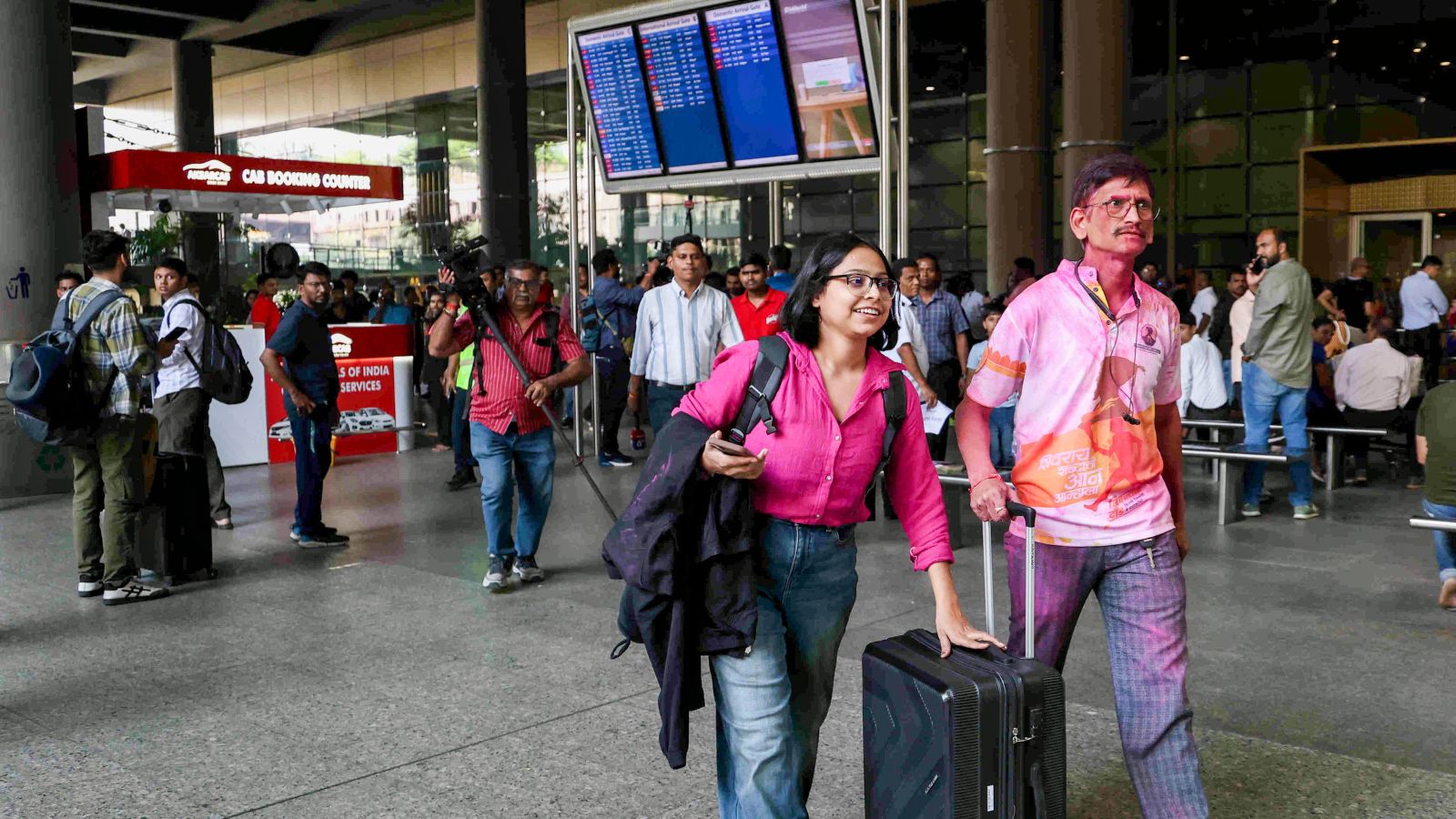
There is a specific transformation that occurs when the passengers step off the plane. The "repatriated" become "citizens" again. The slumped shoulders straighten. The grip on the tattered carry-on bag loosens. They are no longer a problem to be solved by a foreign consulate; they are home.
As the fifth flight prepares to depart for Muscat, the cycle begins again. The ground crews are checking the fuel levels. The cabin crew is counting the bottled water. Somewhere in a cramped room in Muscat, someone is checking their phone, waiting for the confirmation that their name is on the list.
The blue-and-white planes will keep flying because the demand for home is the only market that never crashes. The Jeddah flights were a test of endurance. Muscat will be a test of consistency. Behind every seat number is a life that was paused and is now being handed back its "play" button.
When the last passenger deplanes and the cabin lights finally dim, the plane stands empty on the tarmac, a silent witness to a thousand sighs of relief. It will be cleaned, refueled, and sent back out to do it all over again. Because as long as there is a gap between a person and their home, someone has to build a bridge in the sky.
The jet engines cool with a rhythmic clicking sound, a metallic heartbeat fading into the humid Indian night.