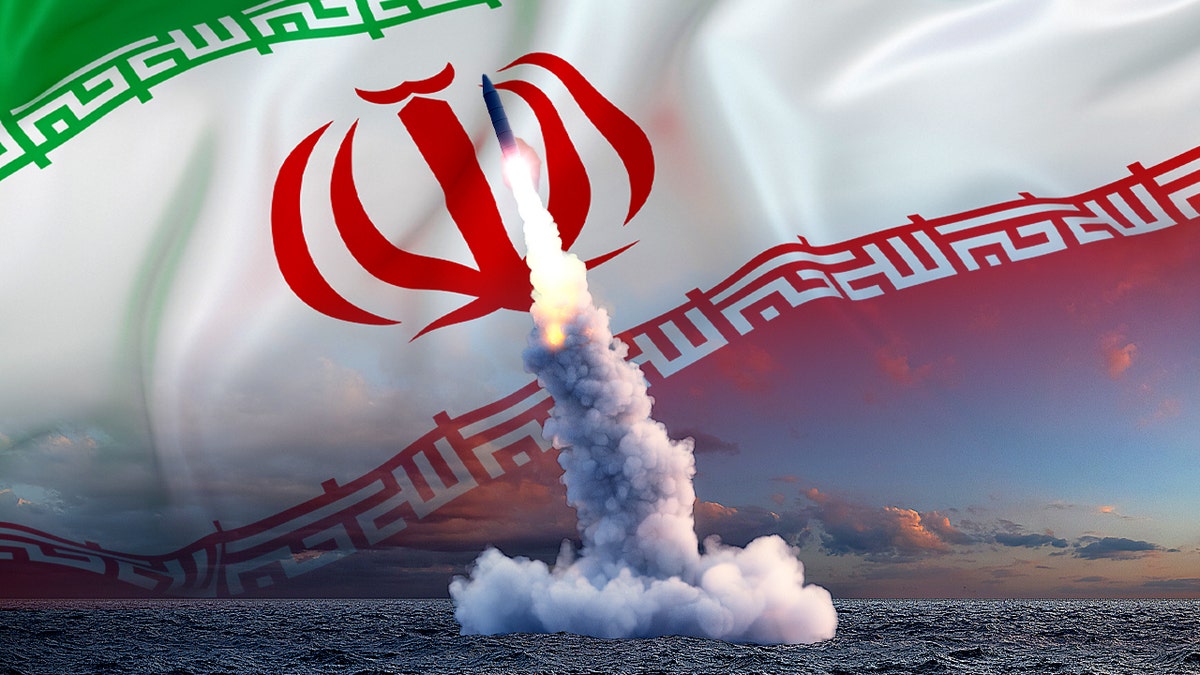
The regional analysts are panicking again. They look at the centrifugal spin rates in Natanz, they track the enrichment levels of uranium-235, and they scream that we are on the precipice of "a war with no exit." They treat the prospect of a nuclear-armed Iran as the ultimate fail-state for global diplomacy. They are wrong.
The "lazy consensus" suggests that nuclear proliferation in the Middle East is a one-way ticket to Armageddon. It’s a comfortable lie that allows the foreign policy establishment to keep collecting paychecks for "containment" strategies that haven't worked since the 1990s. The reality is far more jarring: the current era of conventional "shadow wars" is infinitely more dangerous than a nuclear-armed standoff.
We have spent decades watching a slow-motion car crash of proxy conflicts in Yemen, Syria, Lebanon, and Gaza. Why? Because the cost of conventional warfare is still low enough for every regional power to afford. It’s a series of "mini-wars" that never end because nobody has the ultimate "off" switch.
The Stabilization Paradox
The dirty little secret of the Cold War was that the Bomb actually worked. The United States and the Soviet Union didn't avoid a direct hot war because of a shared "holistic" worldview or "synergy" in their diplomatic circles. They avoided it because the cost of escalation was absolute. They were forced into a stable, if terrifying, peace.
Kenneth Waltz, a towering figure in international relations theory, argued for years that "more may be better." His logic was simple: nuclear weapons are the ultimate instruments of caution. When the stakes are total annihilation, the reckless adventurism we see in the Middle East—the drone strikes, the cyber-sabotage, the proxy militias—becomes a liability.
Look at the current landscape. We have a "managed" conflict that kills thousands every year. Israel and Iran are locked in a cycle of "tit-for-tat" strikes that could accidentally spiral into a regional firestorm at any moment. The absence of a nuclear deterrent in Iran’s hands actually increases the risk of a miscalculated conventional invasion.
The Myth of the Mad Mullah
The most common "People Also Ask" query regarding Iran is some variation of: "Can the Iranian regime be trusted with a nuclear weapon?" This question is rooted in a flawed premise. It assumes the Iranian leadership is fundamentally irrational or suicidal.
Forty-five years of the Islamic Republic’s survival proves the opposite. They are survivors. They are cold, calculating actors who have navigated decades of sanctions, internal unrest, and external threats. They want to keep power. Suicidal actors do not spend forty years building a sophisticated regional network of influence. They do not negotiate complex international agreements like the JCPOA unless they are interested in the preservation of their state.
History shows that once a nation gets the Bomb, its behavior tends to moderate. Think about Mao’s China. In the 1960s, Western analysts viewed Mao as a radical, unpredictable fanatic. Once China tested its first nuclear device in 1964, the "revolutionary" fervor didn't vanish, but the state's strategic behavior became more predictable. They joined the club. They had something to lose.
Why Israel Actually Needs a Nuclear Iran
This is the take that gets you kicked out of the think-tank circuit: Israel’s security would be improved if it were forced to deal with a nuclear-armed peer.
Currently, Israel operates under a doctrine of "Begin’s Doctrine"—the idea that no enemy state in the region will ever be allowed to acquire weapons of mass destruction. This has led to the Osirak strike in Iraq and the Al-Kibar strike in Syria. But Iran is not 1980s Iraq. Its nuclear program is decentralized, deeply buried, and redundant.
By continuing to chase the ghost of "zero enrichment," Israel is trapped in a state of permanent mobilization. It’s a strategy of "mowing the grass" that never actually stops the grass from growing.
If Iran achieves a "breakout" and becomes a nuclear state, the ambiguity ends. The "shadow war" becomes too dangerous to maintain. Both sides would be forced to establish direct lines of communication, much like the "Red Phone" between Washington and Moscow. Transparency becomes a survival mechanism.
The Fallout of the "No Exit" Narrative
The competitor article claims we are in a "war with no exit." They imply that the only way out is more sanctions, more "robust" containment, or a "pivotal" shift in Iranian domestic politics.
I’ve seen this movie before. In the 2000s, I watched the same "experts" claim that North Korea’s nuclear program would lead to an immediate war in East Asia. It didn't. Instead, it created a tense, static status quo that—while unpleasant—has prevented a second Korean War for nearly two decades.
The danger isn't the weapon itself. The danger is the transition period. The "Zone of Vulnerability" is where the real risk lies. This is the window where a state has almost reached nuclear status but hasn't yet secured its second-strike capability. During this window, opponents have an incentive to strike first.
The West’s current policy of "maximum pressure" actually prolongs this Zone of Vulnerability. By making the Iranian regime feel that its very existence is at stake, we are forcing them to sprint toward the finish line. We are creating the very crisis we claim to be preventing.
Stop Trying to Solve the Wrong Problem
We are obsessed with "non-proliferation" as an end in itself. We should be obsessed with "conflict management."
If you want to stop the "war with no exit," you have to change the math of the actors involved. Right now, the math favors low-level, high-frequency conflict. A nuclearized Middle East changes that math to high-level, zero-frequency conflict.
The downsides are obvious and ugly. A nuclear arms race could break out. Saudi Arabia would likely buy a "turnkey" solution from Pakistan. Turkey might reconsider its own options. Egypt could follow.
But consider the alternative: a Middle East where conventional wars are fought with increasingly precise and lethal technology, where "gray zone" warfare is the norm, and where every few years a major city is leveled by rockets or drones because nobody is afraid of the "ultimate" consequence.
Is a nuclear-armed Saudi Arabia or Iran ideal? No. But is it more stable than a region where the threshold for war is so low that a single drone strike on a refinery can spark a global energy crisis? Absolutely.
The Brutal Truth About "Containment"
Sanctions are the ultimate "feel-good" policy for politicians who don't want to actually make a choice. They don't stop nuclear programs; they just make the population miserable and the regime more paranoid. North Korea has the Bomb. Pakistan has the Bomb. India has the Bomb. None of them were "contained" by economic pressure.
In the case of Iran, we are dealing with a nation that views its nuclear program as the ultimate insurance policy against the fate of Muammar Gaddafi or Saddam Hussein. They’ve seen what happens to "rogue states" that give up their WMD programs. They won’t be the next ones to make that mistake.
Instead of chasing a "nuclear-free" Middle East that hasn't existed since Israel built its first reactor in the 1960s, we should be looking at how to build the infrastructure of deterrence.
We need to stop asking "How do we stop Iran from getting the Bomb?" and start asking "How do we ensure that a nuclear Iran doesn't result in a nuclear war?"
The answer involves more than just diplomacy. It involves acknowledging that the 19th-century concepts of "spheres of influence" and "balance of power" are the only things that actually prevent 21st-century catastrophes.
The Tactical Reality
Modern nuclear deterrence is a mathematical problem. It requires:
- Survivability: The ability to absorb a first strike and hit back.
- Credibility: The belief that you will actually use the weapon if pushed.
- Communication: Clear signals to ensure no "accidental" launches.
The current chaos in the Middle East is the result of a lack of these three things. There is no survivability for the regional players because they are constantly under conventional threat. There is no credibility because "red lines" are crossed every day. There is no communication because we treat engagement as "appeasement."
The Last Misconception
The biggest lie being sold to the public is that a nuclear-armed Iran is a "game-changer" that ends in fire.
The real "game-changer" is the realization that the current model of perpetual, low-intensity warfare is the most destructive force on the planet. It bleeds nations dry, creates endless refugee crises, and radicalizes entire generations.
If it takes the terrifying prospect of Mutual Assured Destruction to finally bring these regional powers to a negotiating table that actually matters, then that is a price we should be prepared to pay.
Stop mourning the death of the "non-proliferation" dream. It died years ago. Start preparing for a Middle East where the stakes are finally too high for anyone to play the fool.
The exit to the "war with no exit" isn't more sanctions. It's the Bomb.
Accept the reality. Prepare for the deterrence. Anything else is just theater for the terminally naive.