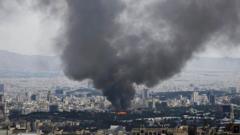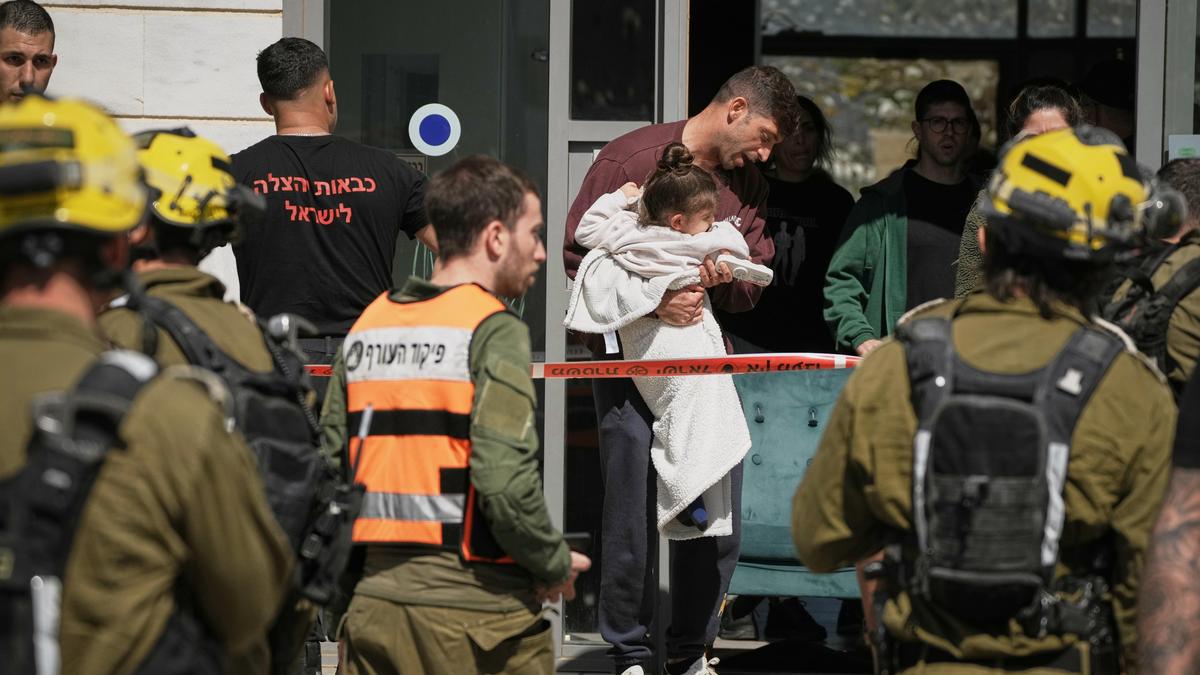
The sirens didn't just warn of incoming missiles. They signaled the end of a decades-long shadow war. For years, the world watched a deadly game of chess played through proxies, cyberattacks, and "unattributed" maritime explosions. That's over. When the decision was made for a direct U.S. and Israel strike on Iran, the geopolitical map of the Middle East didn't just shift—it shattered.
You’ve probably heard the talking heads on cable news calling this a "measured response." It isn’t. We're witnessing a fundamental breakdown of regional deterrence. If you're looking for the simple reason why this is happening now, look at the math of drone technology and nuclear enrichment. Iran’s "breakout time" became too short for Washington to ignore, and Jerusalem decided that waiting for a diplomatic miracle was a luxury they could no longer afford.
This isn't just another headline in a crowded news cycle. It’s a moment where the global economy, energy security, and the risk of a third world war intersect at a single point on the map.
The End of Strategic Patience
For a long time, the U.S. policy toward Tehran was defined by "strategic patience." The idea was simple: sanction them until they have no choice but to talk. It didn't work. Instead of collapsing, the Iranian regime diversified its "axis of resistance," fueling groups from the Levant to the Gulf of Aden.
The shift to kinetic action—actual bombs hitting actual targets on Iranian soil—represents a massive failure of 21st-century diplomacy. I’ve talked to analysts who argue that the U.S. was backed into a corner. When your allies in the region feel you're no longer a reliable security guarantor, they start making their own plans. Israel’s plans have always been clear. They view a nuclear-capable Iran as an existential threat, not a political one.
When those two interests—American regional stability and Israeli survival—finally aligned on a target list, the outcome was inevitable. We aren't just talking about a few radar sites. We're talking about the infrastructure that allows a nation to project power across three continents.
What the Strike Actually Targeted
The specific nature of these strikes tells a story that the official press releases won't. This wasn't a carpet-bombing campaign. It was surgical, designed to blind and then de-fang.
- Air Defense Suppression: Before any main targets were hit, the integrated air defense systems (IADS) had to go. Reports indicate that S-300 and newer domestic Iranian systems were the first to be neutralized.
- Drone Manufacturing Hubs: The Shahed drones that have caused havoc in Ukraine were a primary focus. By hitting these plants, the U.S. and Israel aren't just protecting the Middle East; they're impacting the war in Eastern Europe.
- Command and Control: You don't just kill the soldiers; you kill the ability of the generals to talk to them. Fiber optic nodes and satellite uplink stations were high on the list.
The message is clear. "We can see you, we can reach you, and you can’t stop us." This level of penetration suggests a massive intelligence failure within the Iranian Islamic Revolutionary Guard Corps (IRGC). You don't hit these targets without someone on the inside—or some very sophisticated digital backdoors.
The Oil Myth and Global Economic Reality
Everyone panics about the Strait of Hormuz the second a spark flies in the Persian Gulf. "Oil will hit $200 a barrel," they say. It’s a terrifying thought. But look at the data. The world is much less dependent on that single waterway than it was in the 1970s.
Saudi Arabia and the UAE have pipelines that can bypass the Strait. The U.S. is a net exporter of energy. Yes, a spike in Brent Crude is certain, but the "global collapse" narrative is often overstated by speculators looking to profit from fear. The real economic danger isn't the price of gas at your local station. It's the cost of insurance for global shipping and the disruption of trade routes that are already stressed.
If Iran decides to mine the Strait in retaliation, they aren't just hurting the West. They're hurting China, their biggest customer. Tehran knows this. It’s a suicidal move, and while the regime is many things, it's rarely suicidal when it comes to its own wallet.
Why Diplomacy Failed So Badly
We have to be honest about why we're here. The JCPOA (the Iran Nuclear Deal) was a band-aid on a gunshot wound. One side saw it as a path to peace; the other saw it as a way to buy time and get sanctions relief.
The biggest mistake Western diplomats made was separating the nuclear issue from the ballistic missile and proxy issue. You can't treat a country's nuclear program like it exists in a vacuum. While the world was arguing over centrifuge counts, the IRGC was building a missile park that could reach Southern Europe.
The U.S. and Israel strike on Iran is a direct result of that myopia. When you ignore the smaller threats for long enough, they grow into a singular, massive threat that only force can address. It’s a grim lesson in international relations.
The Response From the Shadows
Don't expect a conventional naval battle in the Persian Gulf. Iran knows it can't win a "fair" fight against the U.S. Navy. Their response will be asymmetric.
Think cyberattacks on Western infrastructure. Think sleeper cells in European capitals. Think a massive escalation of rocket fire from Hezbollah in Lebanon. This is where the "world holds its breath" part comes in. The strike was the opening move, but the counter-move might not happen on a battlefield. It might happen in your digital banking app or a water treatment plant in a mid-sized American city.
The IRGC has spent decades preparing for this specific scenario. They have a "gray zone" playbook that is designed to make the cost of victory higher than the West is willing to pay.
Moving Past the Rhetoric
The rhetoric coming out of Tehran is predictable: "Great Satan," "Zionist Entity," "crushing response." Ignore the adjectives. Look at the troop movements. Look at the diplomatic cables to Moscow and Beijing.
Iran’s biggest fear isn't just the bombs; it’s internal instability. The Iranian people are exhausted. They've lived under sanctions and oppression for a long time. A major military defeat or a showing of extreme vulnerability by the regime could be the catalyst for the kind of internal unrest that a morality police squad can’t fix.
The U.S. and Israel are betting that by hitting the regime hard, they can trigger a shift in the internal power dynamics. It’s a high-stakes gamble. If it fails, you have a wounded, angry, and still-functional regime with nothing left to lose.
What You Should Watch For Next
The next 72 hours are the most critical. If we see a massive, coordinated response from Hezbollah, we're in a full-scale regional war. If we see "limited" retaliatory strikes on empty desert patches or minor merchant vessels, it means Tehran is looking for an off-ramp.
Keep an eye on the following signals:
- Cyber Readiness Levels: Look for warnings from the CISA (Cybersecurity and Infrastructure Security Agency) regarding increased Iranian activity.
- The Price of Gold: When uncertainty hits, "paper" assets fail. Gold and silver are the world's fear barometers.
- Regional Flight Paths: When commercial airlines start canceling flights to Amman, Doha, and Dubai, the intelligence community knows something we don't.
You need to stay informed, but don't fall for the "World War III" clickbait that's going to flood your social media feed. This is a cold war that just turned hot, but both sides still have a lot of reasons not to let the whole house burn down.
Monitor the news from verified ground sources and avoid the pundits who haven't updated their Middle East maps since 2003. The situation is moving fast. Be ready for the "quiet" periods—that's usually when the most dangerous moves are being planned behind closed doors.