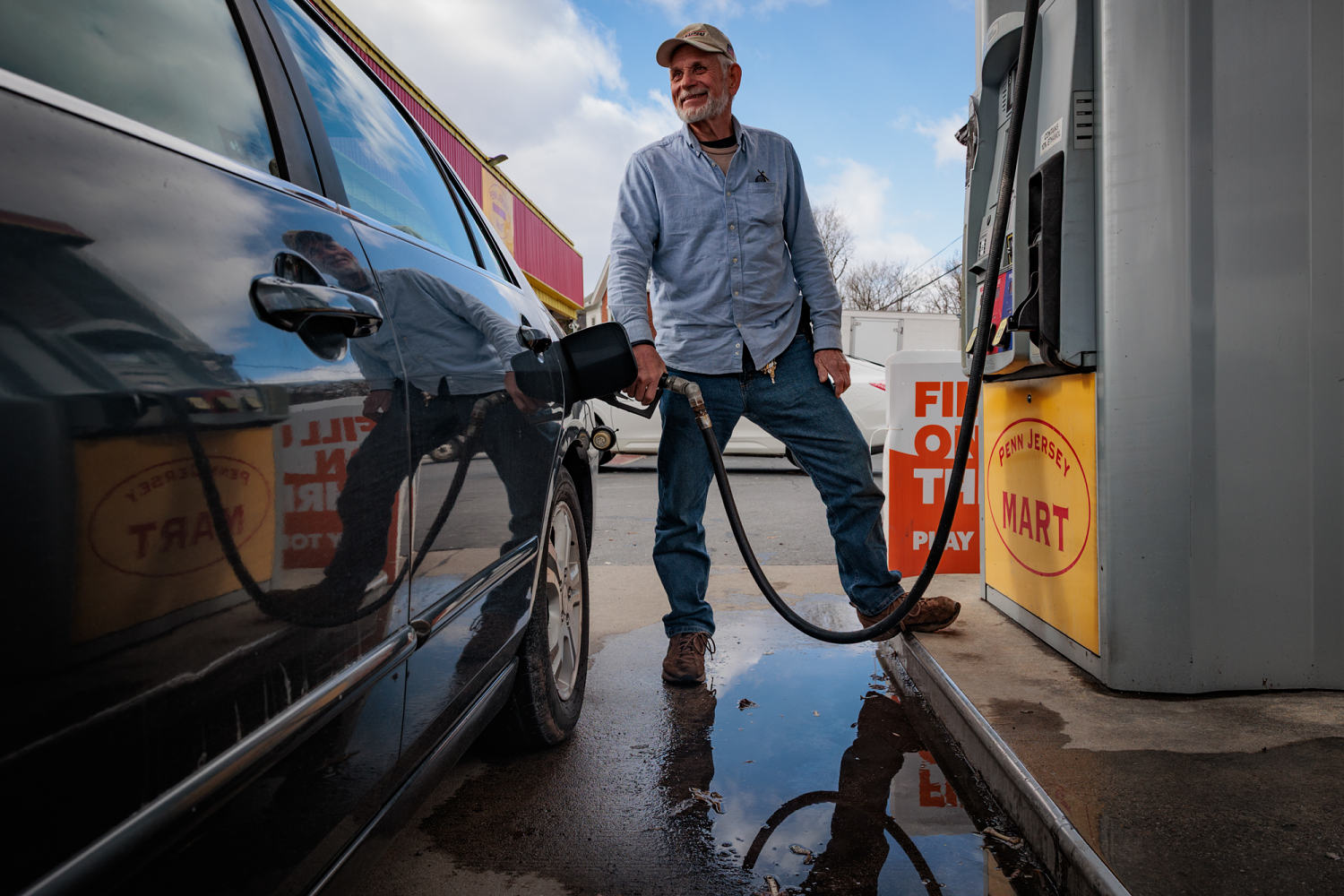
The gas station serves as a rare point of convergence where macroeconomic policy translates into immediate, tangible household friction. In Pennsylvania, a critical swing state with a high dependency on vehicle-based logistics and commuting, the price at the pump functions as a real-time sentiment barometer. While national polling often focuses on abstract ideological alignment, the transaction at a fuel terminal forces a binary choice: the absorption of increased operational costs or the reduction of discretionary spending. This friction point reveals a specific hierarchy of voter priorities that traditional surveys often overlook.
The Elasticity of Political Approval
Voter sentiment in the Rust Belt is non-linear and heavily influenced by the "felt economy." In Pennsylvania, the relationship between fuel prices and incumbent approval ratings can be modeled through the lens of consumer price sensitivity. When gasoline prices exceed a psychological threshold—historically around $4.00 per gallon—the political cost of incumbency rises exponentially.
- The Proximity Bias: Voters attribute price fluctuations to the nearest visible authority. Despite the global nature of crude oil markets and the complexity of OPEC+ production quotas, the domestic political executive carries the burden of "price at the pump" accountability.
- Frequency of Interaction: Unlike housing costs or insurance premiums, which are typically monthly or annual stressors, fuel is a high-frequency purchase. This constant reinforcement of inflation creates a persistent negative feedback loop for the party in power.
- The Regressive Tax Effect: Lower-income brackets spend a disproportionate percentage of their after-tax income on energy. In rural and peri-urban Pennsylvania, where public transit is non-existent, fuel is a mandatory expense, effectively acting as a variable tax that fluctuates based on geopolitical instability.
Structural Divergence in Voter Concerns
The divide at the gas station mirrors the geographic and socioeconomic split of the Commonwealth. By categorizing interactions into three distinct tiers of concern, we can map the likely trajectory of the midterms more accurately than by looking at top-line GDP numbers.
The Cost of Basic Mobility
For the working-class demographic in counties like Luzerne or Erie, the primary concern is the erosion of the "surplus dollar." When a tank of gas costs $15 more than it did eighteen months prior, that capital is extracted directly from the local service economy. This creates a secondary wave of economic resentment that targets the perceived mismanagement of the energy sector.
The Regulatory Friction Point
Small business owners and independent contractors—truckers, landscapers, and delivery drivers—view the gas station through a logistical lens. They do not just see high prices; they see a regulatory environment that they perceive as hostile to domestic production. The "Politics Desk" observation of these voters often highlights a desire for energy independence, which is functionally a demand for price stability through increased supply.
The Social Policy Trade-off
Conversely, in the affluent suburbs of Philadelphia and Pittsburgh, the gas station is less of a financial threat and more of a moral theater. For these voters, the price of gas is weighed against climate objectives and social issues. This creates a structural tension within the state: one side sees high fuel prices as a failure of basic governance, while the other views it as a necessary, if painful, transition toward a post-carbon economy.
The Mechanism of Choice Displacement
The "Pocketbook Vote" is rarely about the absolute value of a dollar; it is about the displacement of choices. Analysis of consumer behavior at Pennsylvania gas stations suggests that as fuel costs rise, the "impulse buy" inside the station’s convenience store drops. This is a leading indicator of broader retail contraction.
Voters experiencing this displacement develop a "survivalist" political mindset. They prioritize candidates who promise immediate relief over those offering long-term systemic change. This shift favors the opposition party in a midterm cycle, as the incumbent is trapped by the lag time required for energy policy to impact retail prices.
The Myth of the Informed Voter in Energy Markets
There is a significant gap between the actual drivers of fuel prices and the voter’s perception of those drivers. This gap is where political messaging operates most effectively.
- Refinery Capacity vs. Executive Orders: While voters often point to the cancellation of pipelines or federal leasing pauses, the immediate constraint on Pennsylvania’s fuel prices is often regional refinery capacity and seasonal blends. However, "Refinery Throughput" is a poor campaign slogan.
- The Global Crude Baseline: Pennsylvania’s Brent and WTI exposure means that a conflict in Eastern Europe or a demand spike in East Asia dictates the price in Scranton. The political failure lies in the inability of the incumbent to communicate this complexity without sounding dismissive of the voter’s pain.
- State-Level Taxation: Pennsylvania has historically maintained some of the highest state fuel taxes in the country. This creates a localized "floor" for prices that makes the state more sensitive to national spikes than its neighbors.
The Strategic Pivot of the Midterm Campaign
The data suggests that the midterms will not be decided by who has the "best" energy plan, but by who successfully defines the cause of the current price.
For the opposition, the strategy is the "Correlation of Misery": linking every gallon pumped to a specific legislative or executive action. By making the gas station a polling booth, they bypass complex policy debates and move directly to the emotional core of the voter’s financial anxiety.
For the incumbent, the strategy is "The Externalization of Blame": attributing costs to corporate greed (price gouging) or unavoidable global events. This strategy, however, faces a "Proof of Life" problem. If the prices do not descend significantly 45 days before the election, the narrative of external blame collapses under the weight of the daily transaction.
Operational Variables for the Pennsylvania Electorate
To quantify the risk for candidates, one must look at the Commuter Pain Index (CPI). This index tracks the intersection of average commute time by county and the percentage of household income spent on fuel. In "T-bone" Pennsylvania (the central and northern regions), the CPI is currently at a ten-year high.
The logistical reality of the state dictates that any candidate who ignores the physical reality of the fuel pump will see a corresponding dip in "likely voter" turnout among their base. The gas station is the only place where the voter is forced to look at a literal, digital ticker of their diminishing purchasing power.
The Final Strategic Alignment
The winning campaign will treat the Pennsylvania gas station as a data-rich environment for micro-targeting. The messaging must move beyond the "high prices are bad" platitude and address the specific displacement occurring in the voter's life.
The most effective tactical move is the De-escalation of Macro-Rhetoric. Instead of discussing "Green Energy Transitions" or "National Sovereignty," candidates must speak to the Unit Cost of Living. In a state where the margin of victory is often less than 1%, the election is won by the candidate who can convincingly promise to reduce the friction of a 20-gallon fill-up. The party that fails to acknowledge that the gas station is a site of recurring economic trauma will find themselves on the wrong side of the Commonwealth's ledger.
Shift the campaign's focus from television airwaves to the geographic clusters where the Commuter Pain Index is highest. Deploy hyper-local digital ads within a 5-mile radius of high-volume truck stops and commuter hubs, focusing on specific, actionable plans for immediate fuel tax holidays or supply-side incentives. This bypasses the filter of national news and meets the voter exactly where their frustration is being quantified in real-time.