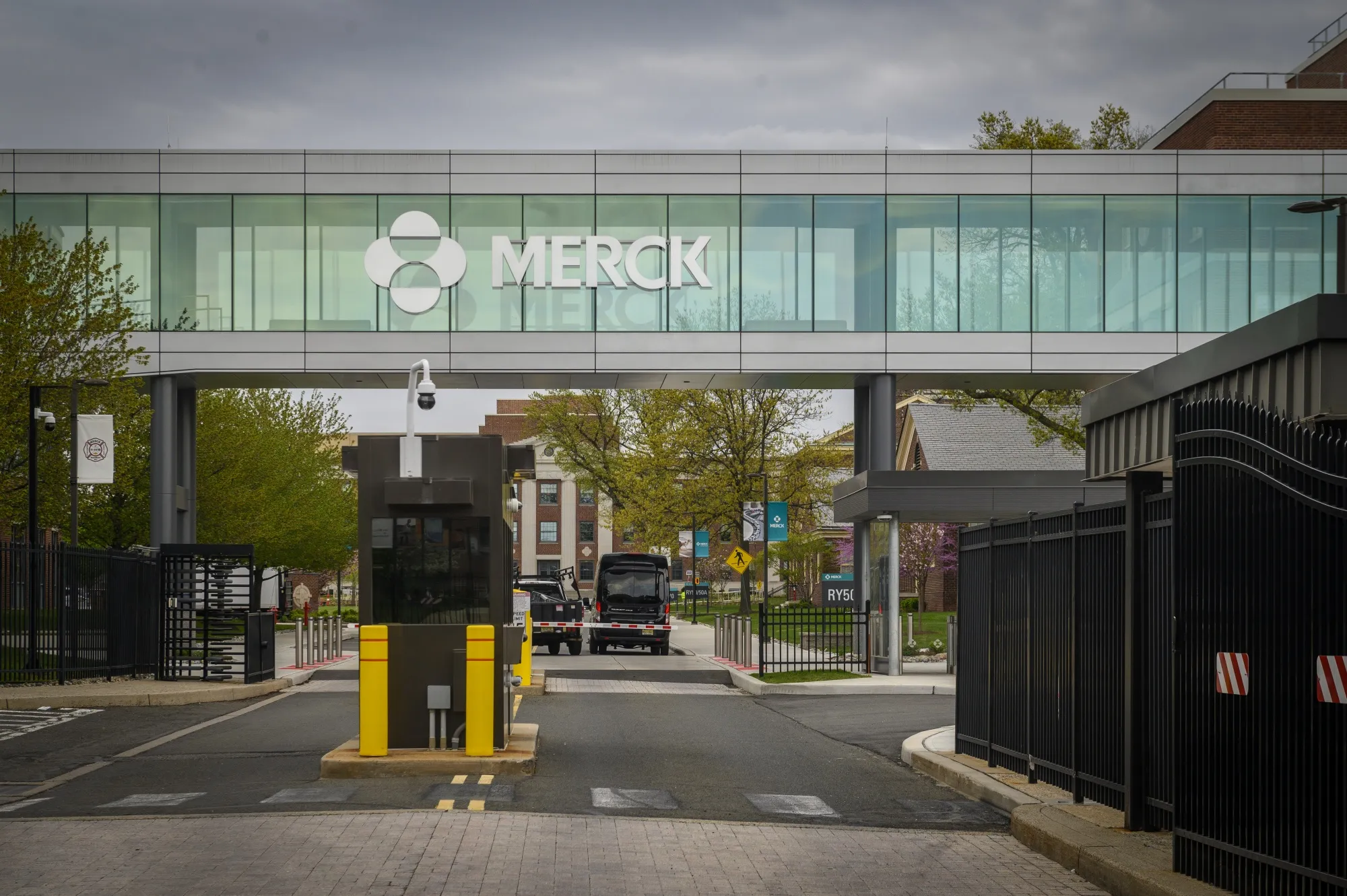
Wall Street is cheering. The PR desks are humming. Merck just dropped $5.7 billion on another biotech acquisition to "bolster" its oncology pipeline, and the industry is nodding along like a bobblehead on a bumpy road. They call it strategic growth. I call it an admission of internal failure.
When a pharmaceutical giant spends billions to acquire a mid-stage asset, they aren't buying innovation. They are buying a life raft because their own R&D labs are sinking. For decades, the Big Pharma playbook has shifted from "discover and develop" to "wait and buy." This isn't a sign of strength; it’s a symptom of a terminal lack of imagination that is costing patients and shareholders more than they realize.
The Patent Cliff Panic
The narrative you’ll read in the trade rags is simple: Merck needs to diversify away from Keytruda. It’s the world’s top-selling drug, but it hits the patent cliff in 2028. The "lazy consensus" says that buying up-and-coming biotechs is the only way to fill that revenue hole.
That’s a lie. It’s the easiest way, not the only way.
By spending $5.7 billion on an external deal, Merck is effectively telling its own scientists that their work isn't worth the investment. It is a vote of no confidence in the $14 billion they already spend annually on internal research. If your internal engine worked, you wouldn't need to pay a 100% premium to scavenge someone else's garage.
We are witnessing the "Financialization of Healing." Big Pharma has become a collection of hedge funds with attached manufacturing plants. They don't take risks on biology anymore; they take risks on M&A.
The Myth of the Synergy Premium
Every time one of these deals happens, the CFO gets on a call and talks about "operational efficiencies." This is corporate-speak for "we’re going to fire the people who actually discovered the drug and replace them with our middle managers."
Data from the last decade shows that most large-scale biotech acquisitions fail to return the cost of capital. You pay $5.7 billion for a company valued at $2.8 billion. To break even, that drug doesn't just need to work; it needs to be a blockbuster. But in the current regulatory environment, the "blockbuster" is a dying breed.
We are moving toward precision medicine—targeting niche biomarkers in specific patient populations. You cannot justify a $5.7 billion price tag on a niche drug unless you plan to price it so high that the healthcare system buckles.
- The Math of Failure: If a drug has a 20% chance of clearing Phase III, and you paid a 50% premium for the company, you are gambling with a negative expected value.
- The Innovation Tax: Large organizations are where good ideas go to die under the weight of "alignment meetings" and "compliance reviews."
I’ve sat in the boardrooms where these deals are inked. The conversation is rarely about the protein-ligand interaction or the clinical trial design. It’s about the "earnings per share" (EPS) impact in 2029. We are trading long-term scientific progress for short-term balance sheet stability.
Why "Diversification" is a Trap
The competitor's article claims this deal "boosts the cancer pipeline." Let's look at the nuance they missed: the pipeline is already clogged.
Adding more assets to an overcrowded oncology department doesn't lead to more cures. It leads to internal competition for resources. Every dollar Merck spends integrating this new acquisition is a dollar taken away from a moonshot project that might have actually changed the treatment standard.
The industry is obsessed with "me-too" drugs. If one company has a successful ADC (Antibody-Drug Conjugate), every other titan rushes to buy their own. This isn't progress; it’s a high-stakes game of "Follow the Leader." While everyone is chasing the same three or four mechanisms of action, the truly transformative areas—like synthetic biology or radical gene editing—remain underfunded because they don't fit the quarterly reporting cycle.
Stop Asking if the Deal is "Good"
People keep asking: "Is this a good deal for Merck?"
That is the wrong question. The right question is: "Why can't a company with $60 billion in annual revenue discover its own drugs?"
If you look at the ROI on internal R&D across the top 10 pharma companies, it has been trending toward zero for years. In some cases, it is negative. It is actually more profitable for these companies to fire their entire research staff and just buy biotechs.
But there’s a catch.
When you stop being a scientific organization and start being an acquisition machine, you lose the ability to judge the quality of what you’re buying. You lose the "muscle memory" of discovery. You become a "dumb money" investor in a lab coat.
The Counter-Intuitive Reality of Biotech Valuations
The secret truth that nobody in the C-suite wants to admit? These biotechs are often selling because they know their data won't hold up under closer scrutiny.
Imagine a scenario where a biotech has a "promising" Phase II signal. They know that a larger, more rigorous Phase III trial has a high probability of failure. The smartest move for the biotech’s VCs is to sell now, while the hype is at its peak.
Merck isn't buying a "breakthrough." They are buying a lottery ticket that has already been scratched a little bit. And they’re paying the highest possible price for it.
The High Cost of Playing it Safe
This $5.7 billion could have funded 500 independent, high-risk, high-reward pilot studies. Instead, it’s being used to buy a slightly better version of something that already exists.
This "de-risking" strategy is the riskiest thing a company can do. By avoiding the possibility of failure in the lab, they are guaranteeing a slow, expensive decline in the market. They are becoming the Sears of healthcare—too big to pivot, too slow to innovate, and eventually, too expensive to exist.
We need to stop celebrating these massive deals as "wins" for the industry. They are a white flag. They are proof that the giants have lost their way and are now just scavengers in an ecosystem they used to lead.
If you want to know which companies will actually solve cancer, don't look at who’s buying. Look at who’s building.
Stop cheering for the M&A. Start mourning the loss of the lab.