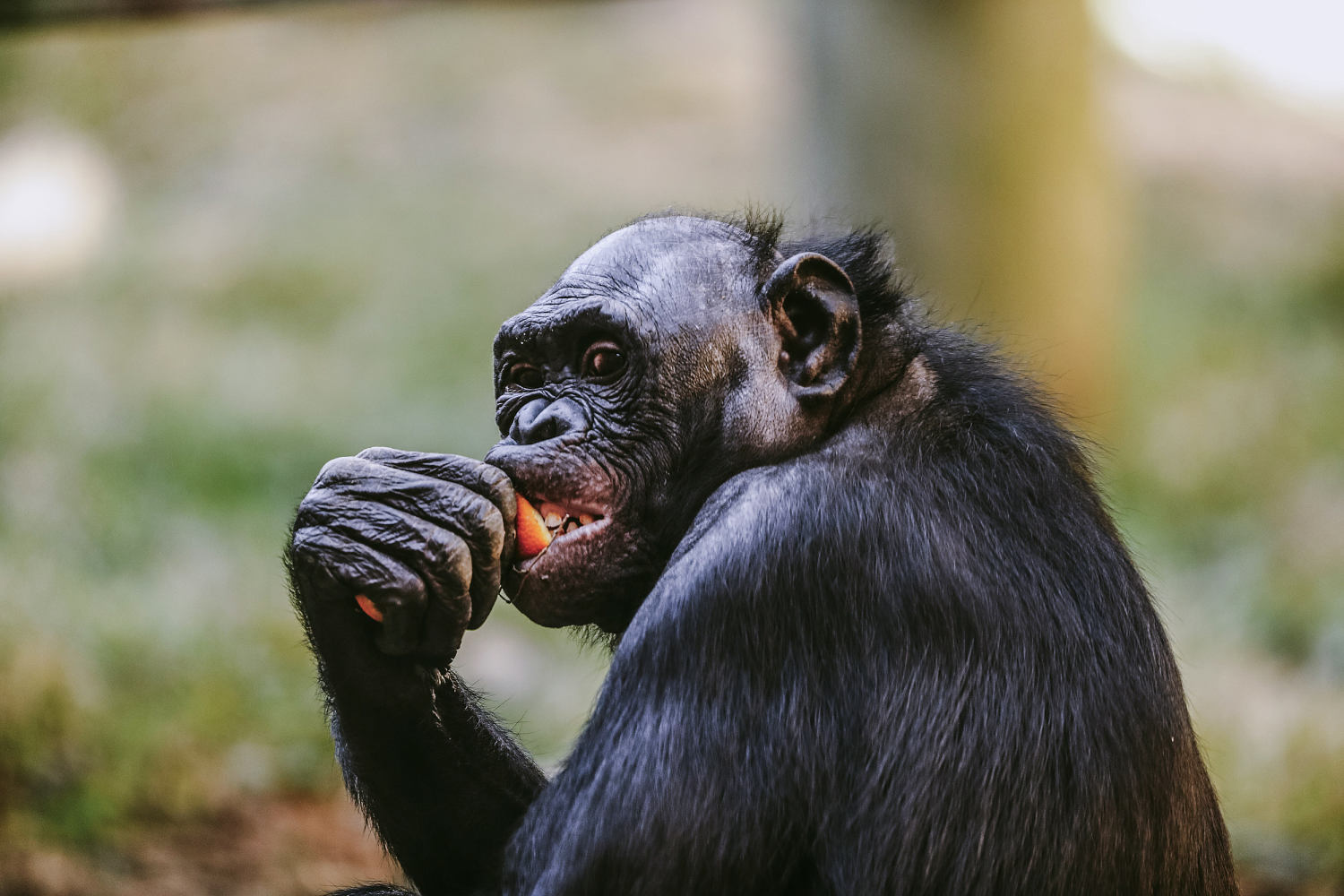
When a silverback gorilla at the Memphis Zoo charged the glass of its enclosure this week, the resulting spiderweb of cracks sent visitors scrambling and social media into a frenzy. To the casual observer, it was a terrifying moment of animal aggression. To those who have spent decades tracking the intersection of public entertainment and wildlife management, it was a predictable failure of engineering meeting the raw physics of a frustrated primate.
The incident involved a Western lowland gorilla named Kojo. Witnesses captured the moment the massive ape launched himself toward the viewing area, slamming his weight into the reinforced barrier. The glass held, as it is designed to do, but the visible fracture served as a jarring reminder: the line between "educational exhibit" and "dangerous proximity" is thinner than the industry likes to admit. Also making headlines lately: The Kinetic Deficit Dynamics of Pakistan Afghanistan Cross Border Conflict.
The Engineering of a Near Miss
Zoo exhibits rely on a psychological trick. They want the visitor to feel as if they are standing in the middle of a Rwandan forest while keeping them behind three inches of laminated safety glass. This material is typically a sandwich of tempered glass and polycarbonate layers. It is designed to flex. It is designed to absorb impact. But it is not indestructible.
In the Memphis case, the glass performed its primary job by preventing a breach, yet the "failure" of the outer layer points to a deeper issue in zoo architecture. These barriers are rated for specific foot-pounds of pressure. A mature male gorilla can weigh 400 pounds and move with explosive speed. When that animal decides to use its body as a projectile, the margin of safety shrinks rapidly. Additional insights into this topic are covered by USA Today.
Most modern enclosures use a "sacrificial layer" system. The idea is that the first pane takes the hit and shatters, dispersing the energy so the internal structural panes remain intact. However, once that first layer goes, the entire unit is compromised. The zoo had to move the gorillas to an internal holding area immediately. This isn't just a maintenance headache; it’s a total shutdown of the facility's primary draw, proving that a single moment of animal agency can overrule millions of dollars in infrastructure.
Why the Glass Shattered Now
We have to look past the hardware and at the inhabitant. Gorillas are not naturally "angry" animals, but they are intensely territorial and status-conscious. In the wild, a display of strength—chest-beating, charging, throwing objects—is a communication tool used to maintain hierarchy or ward off threats. In a zoo, the "threat" is a rotating cast of thousands of humans staring, shouting, and occasionally banging on the other side of the window.
Veterinary behaviorists have long argued that the constant visual stimulus of crowds creates a low-grade, chronic stress environment for great apes. While zoos provide "enrichment"—puzzles, hidden food, climbing structures—nothing replaces the ability to truly retreat from the public eye. When a silverback like Kojo charges the glass, he isn't trying to "break out" in the sense of a prison escape. He is attempting to exert control over a space where he is constantly watched but has no privacy.
The Memphis Zoo has maintained that their animals are well-cared for and that this was an isolated display of "natural behavior." That assessment is technically true but ignores the context. Charging a rival in a forest results in the rival running away. Charging a human behind glass results in the human staying put, or worse, laughing and taking a video. This creates a feedback loop of frustration for the animal. The glass didn't just crack because of a physical impact; it cracked because the social contract of the exhibit failed.
The Cost of the Close Encounter Trend
Over the last twenty years, the trend in zoo design has shifted toward "immersion." The old iron bars and concrete pits of the 1960s are gone, replaced by glass-fronted viewing portals that bring toddlers inches away from apex predators. This sells tickets. It also creates a safety liability that keeps insurance underwriters awake at night.
The Memphis incident isn't an anomaly. We saw a similar event at the Henry Doorly Zoo in Omaha, where a young girl’s chest-beating gesture triggered a massive silverback to shatter the display glass. In that instance, as in Memphis, the zoo's response was to emphasize the strength of the glass.
Security vs. Visibility
| Barrier Type | Benefit | Risk |
|---|---|---|
| Laminated Glass | Unobstructed views; high engagement | Vulnerable to surface fractures; requires frequent replacement |
| Moats/Deep Pits | Naturalistic look; physical distance | Animals can fall in; harder for visitors to see clearly |
| Hedges and Mesh | Softens the look; breathable | Less "thrilling" for the public; easier for debris to be thrown in |
Zoos are caught in a pincer movement. They need the revenue from these "face-to-face" encounters to fund conservation programs and daily operations. However, the more they shrink the "flight distance"—the space an animal needs to feel safe from a threat—the more they invite these violent outbursts.
The Broken Infrastructure Reality
There is a quieter crisis happening in American zoos that the Memphis glass crack highlights: aging infrastructure. While the glitzy new entrances and gift shops get the headlines, the bones of many Tier-1 zoos are decades old. Maintaining specialized habitats is an astronomical expense.
The glass panels used in gorilla exhibits can cost upwards of $20,000 to $50,000 per sheet, not including the specialized cranes and labor required to seat them into the steel frames. When an animal breaks a window, it isn't just a 24-hour repair. It often involves sourcing custom-tempered glass that can take weeks or months to arrive. During that time, the animals are often kept in "night rooms"—smaller, indoor concrete enclosures. This secondary period of confinement often leads to more behavioral issues, creating a cycle of agitation that makes another strike more likely once they are released back into the main habitat.
Managing the Human Element
If we want to stop the glass from breaking, we have to talk about the people standing in front of it. The Memphis Zoo, like most, has rules against screaming, tapping on the glass, or using flash photography. These rules are almost impossible to enforce effectively when the zoo is at capacity.
There is a documented phenomenon where humans, shielded by a barrier they perceive as invincible, lose their sense of empathy for the animal on the other side. They treat the gorilla like a character on a television screen rather than a 400-pound sentient being. When the glass finally cracks, the "screen" is gone, and the reality of the situation hits with terrifying clarity.
Some facilities have begun experimenting with "one-way" glass, allowing visitors to see in while the animals see a reflected forest or a neutral wall. This reduces the stress of the "goldfish bowl" effect. Others are implementing mandatory "quiet zones" around sensitive species. The Memphis Zoo has an opportunity to lead on this, but it requires moving away from the "spectacle" model of zoo management and toward a more defensive, animal-centric design.
The Myth of Total Control
The narrative following these events usually involves a zoo spokesperson reassuring the public that "everyone was safe" and the "systems worked." This is a comforting half-truth. The systems worked this time. But every time a primate of that size strikes a barrier, they are testing the limits of the material.
Material fatigue is real. Micro-fractures from previous unrecorded strikes, temperature fluctuations, and chemical degradation of the bonding agents all play a role. To claim that the public is never in danger is to ignore the fundamental unpredictability of biological forces.
The Memphis incident shouldn't be filed away as a "crazy animal video." It should be viewed as a warning shot. As long as we prioritize the "unobstructed view" over the psychological comfort of the animal, we are essentially betting on the glass. And as Kojo proved this week, even the strongest glass has a breaking point.
Go to the Memphis Zoo website and look at their incident report logs for the primate canyon over the last five years. You’ll find that "glass maintenance" and "behavioral adjustments" appear more often than the public is told. Keep that in mind the next time you're standing inches away from a silverback. Be silent, give him space, and remember that the barrier between you is only as strong as his patience.