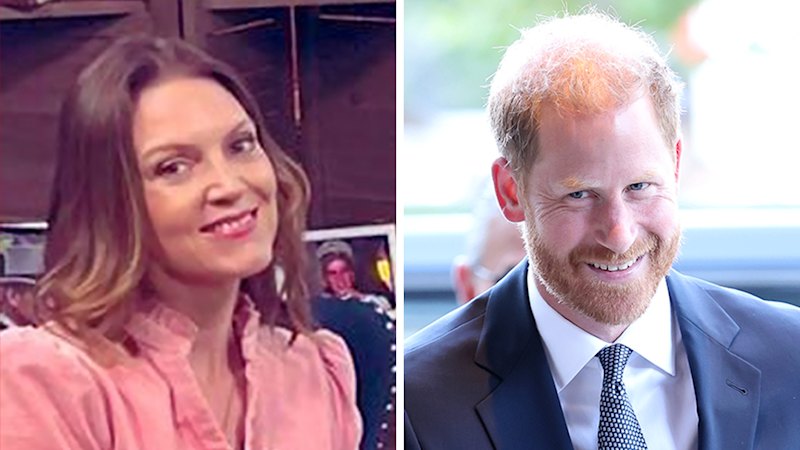
The tabloid industrial complex is starving. It has been for a decade. When the "bombshell" reports surfaced detailing Prince Harry’s supposedly scandalous texts and "movie snuggles" with a reporter, the collective yawn from anyone with a pulse on actual power dynamics was deafening. The legacy media wants you to believe this is a story about a prince’s lack of discretion or a reporter’s "exclusive" access.
It isn't. It’s a case study in the desperate, symbiotic rot of modern celebrity journalism.
The competitor narrative is lazy. It frames these interactions as "revealed secrets," as if we’ve stumbled upon a hidden truth about Harry’s character. In reality, what we are seeing is the standard operating procedure for a dying medium. They take a decade-old interaction, wrap it in suggestive adjectives like "flirty," and present it as a moral failing or a shocking breach of protocol.
Let’s dismantle the premise that this is news. It is a manufactured distraction.
The Myth of the Insider Scoop
Journalism used to be about the friction between the press and the powerful. Today, specifically in the royal beat, it has devolved into a high-school cafeteria dynamic. When a reporter brags about "movie snuggles" or "cheeky" messages from a royal, they aren't reporting; they are LARPing as part of the inner circle.
I have watched outlets burn six-figure budgets chasing "personal" angles like this while ignoring the actual machinery of the Royal Family’s PR office. Why? Because it’s easier to sell a flirtation than it is to explain the constitutional nuances of the Duchy of Cornwall.
The "lazy consensus" here is that Harry was being reckless. The nuance you’re missing? These interactions are often managed, sanctioned, or at the very least, expected by the systems surrounding these figures. A "flirty" text is a currency. It’s a way for a public figure to build a soft alliance with a member of the press. It’s a defensive maneuver, not a romantic one. To frame it as a "scandal" is to fundamentally misunderstand how influence is traded in London.
The Gendered Trap of "Movie Snuggles"
Look at the language used in these reports. "Movie snuggles." It’s designed to infantilize the participants and sensationalize a mundane human interaction. If two high-level executives at a tech firm watched a film together while discussing a profile, we’d call it networking. Add a Prince and a female reporter, and suddenly it’s a bodice-ripper.
The press uses this framing because it works on a primal level. It triggers the "betrayal" reflex in the reader. How could he do this to the Crown? How could she compromise her integrity? The truth is much colder: integrity was never on the table. The reporter wanted a career-defining proximity, and the Prince wanted a sympathetic ear in a room where he wasn't being treated like a museum exhibit.
Stop Asking if it’s True and Start Asking Why Now
People always ask: "Are these messages real?"
That is the wrong question. Of course they are likely real. People text. People hang out. People are occasionally charming. The real question—the one the tabloids hope you don't ask—is: Why is this being packaged as "news" years after the fact?
The timing is never accidental. This isn't a "revelation." It’s a tactical leak or a desperate scrap pulled from a memoir’s cutting-room floor to drive traffic during a slow news cycle. By focusing on the "flirtation," the media avoids discussing the more uncomfortable reality of their own obsolescence. They are clinging to the "Golden Age" of royal reporting when a single blurry photo of a phone screen could fund a newsroom for a month.
Those days are gone. Harry has bypassed them with Netflix and his own publishing deals. These "flirty message" stories are the media’s way of screaming, "We were there! We mattered!"
The Professional Price of Proximity
There is a cost to this kind of reporting that no one admits. I’ve seen reporters lose their entire professional identity because they got too close to the sun. Once you become the story—once your snuggles and your texts are the headline—you are no longer a journalist. You are a character in the soap opera.
This destroys the E-E-A-T (Experience, Expertise, Authoritativeness, Trustworthiness) of the entire industry. When the public sees reporters boasting about their personal closeness to their subjects, the wall between the observer and the observed vanishes.
- Trustworthiness dies when the reporter becomes a participant.
- Expertise is replaced by "vibe checks."
- Authoritativeness is sacrificed for clicks.
If you’re a consumer of this content, you aren't being informed. You’re being sold a parasocial fantasy. You are being invited to judge Harry’s "loyalty" while the media outlet laughs all the way to the bank on your ad impressions.
A Better Way to Process Royal "Scandals"
If you want to actually understand the Sussex/Royal saga, you have to look past the "cheeky" anecdotes.
Imagine a scenario where the press treated the Royals like they treat a CEO of a Fortune 500 company. We wouldn't care about their "movie snuggles." We would care about their impact on public policy, their use of taxpayer funds, and their lobbying efforts.
But that’s "boring." It doesn't get the "People Also Ask" hits.
The unconventional advice? Ignore the messages. Ignore the snuggles. Look at the transaction.
- What did the reporter gain? (Prominence, a book deal, a bump in followers).
- What did the Prince gain? (A momentary sense of normalcy or a strategic leak of his own).
- What did the reader gain? (Absolutely nothing but a hit of dopamine and a distorted view of reality).
The False Narrative of the "Victimized" Press
The competitor's piece often subtly paints the reporter as a confidante who was "left behind" or "part of a secret world." This is a classic narrative arc used to justify the invasion of privacy. If they were "friends," then the "betrayal" of publishing the messages is somehow mitigated by the "history" they shared.
This is nonsense. It’s a justification for tabloid voyeurism.
The media isn't a victim of Harry’s shifting moods, and Harry isn't a victim of the media's curiosity. They are both active participants in a game of mutual exploitation. The only victim is the reader who believes they are getting a glimpse behind the curtain. In reality, you’re just looking at a different curtain, one painted with more "flirty" colors to keep you from noticing how thin the material has become.
The Harsh Reality of Royal Relevance
We need to stop pretending that Harry’s text messages have any bearing on the future of the Monarchy or the state of modern Britain. The fixation on these trivialities is a symptom of a culture that has traded substance for "snaps."
The media focuses on these stories because they are cheap to produce and impossible to disprove. It’s a "he said, she said" where both sides benefit from the noise.
If you want to be a sharp observer of the industry, stop biting the bait. Every time you click an article about "movie snuggles," you are voting for more of it. You are telling editors that you don't want deep dives into the institutional failures of the palace; you want to know what Prince Harry’s texting style looks like.
The industry isn't going to change until the audience demands better. But as long as "flirty messages" can outperform actual investigative work, expect the "snuggles" to keep coming.
The media doesn't want to inform you about Prince Harry. They want to sell you a version of him that fits into a 30-second scroll. They’ve turned a man’s life into a series of push notifications, and the "flirty messages" are just the latest ping in a vacuum of meaning.
Stop reading the messages. Start reading the room.