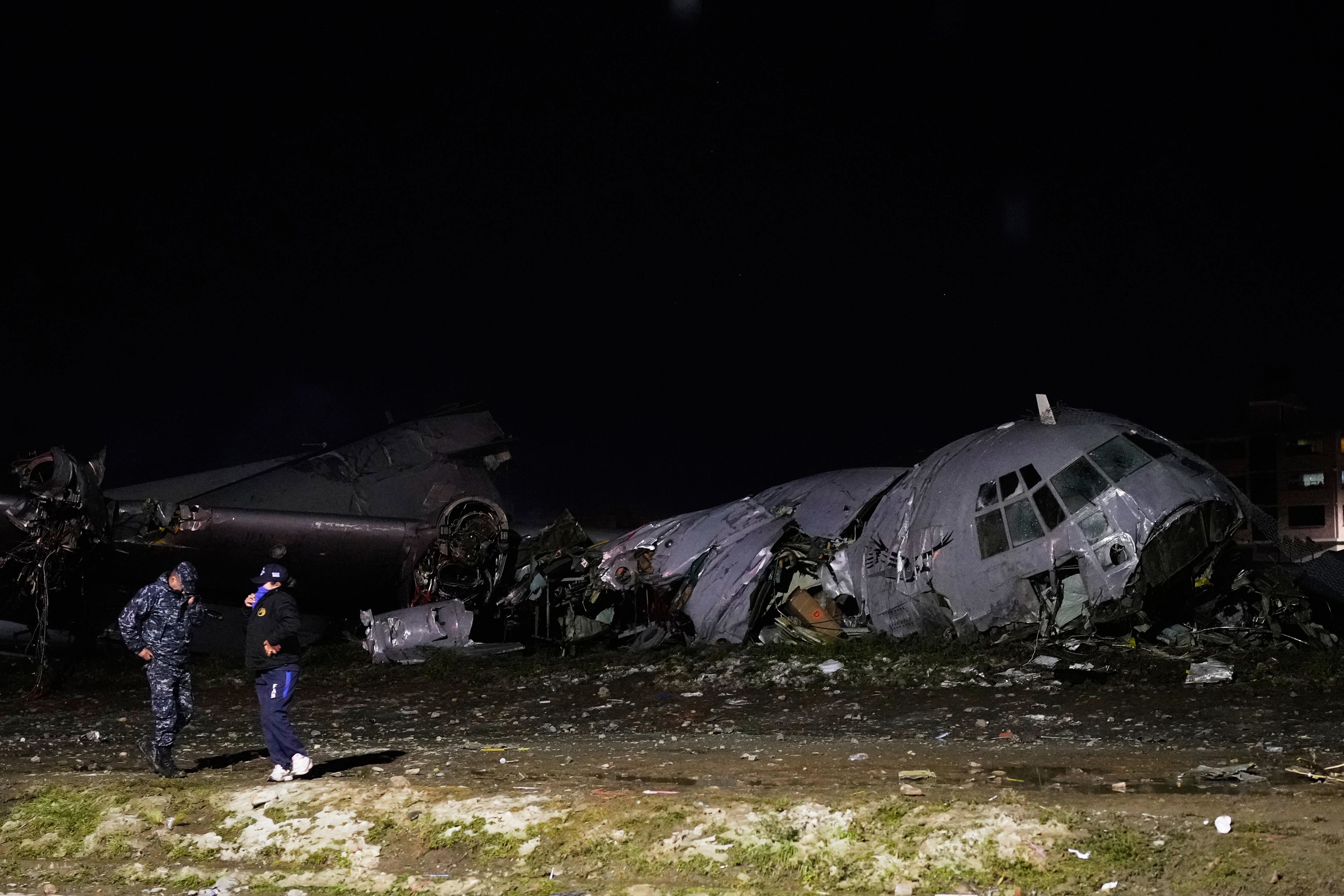
The intersection of high-altitude aeronautics and high-value asset transport creates a risk profile where the margin for mechanical or human error is effectively zero. When a cargo aircraft transporting currency crashes in the Amazonian or Andean regions of Bolivia, the event is not merely a tragedy; it is a systemic failure of the Aviation Safety Triad: airworthiness, environmental navigation, and operational security. The reported death toll of at least 15 suggests a dual-use or non-standard configuration of the aircraft, as traditional cargo freighters of the size typically used for inland currency transport—such as the Fairchild Swearingen Metroliner or the Beechcraft 1900—rarely carry such a high complement of personnel. This discrepancy indicates the presence of an extensive security detail, highlighting the extreme risk premium associated with physical wealth transfer in underdeveloped infrastructure.
The Tripartite Risk Architecture of Bolivian Aviation
To understand the failure of a specific flight, one must first deconstruct the structural constraints of the operating environment. Bolivia presents three specific "force multipliers" that degrade aircraft performance and increase the probability of a hull loss. You might also find this connected coverage useful: Strategic Asymmetry and the Kinetic Deconstruction of Iranian Integrated Air Defense.
1. High-Density Altitude Dynamics
Bolivia’s geography is dominated by the Altiplano, where airports like El Alto sit at elevations exceeding 13,000 feet. In these conditions, the air is significantly less dense. This physical reality dictates two unavoidable aerodynamic consequences:
- Reduced Lift Generation: Wings must move faster through the air to generate the same lift required at sea level.
- Engine Performance Degradation: Internal combustion and turbine engines suffer from "aspiration starvation." Without sufficient oxygen, the power-to-weight ratio drops precipitously, leaving the aircraft with limited "climb-out" capability during an emergency.
When an aircraft is loaded with "money"—typically dense, heavy pallets of currency—it often operates near its Maximum Takeoff Weight (MTOW). A heavy aircraft in a high-density altitude environment possesses zero redundancy. If an engine fails or a microburst occurs, the physics of the environment preclude recovery. As extensively documented in detailed coverage by The New York Times, the results are worth noting.
2. The Cargo Security Paradox
Transporting large sums of physical currency necessitates a heavy security presence. However, every additional "body" on the manifest adds to the Zero Fuel Weight (ZFW), which in turn reduces the available fuel load or increases the stall speed. The reported 15 fatalities suggest the aircraft was likely a larger regional turboprop or a modified military transport. The decision to pack a cargo hold with both high-weight currency and a double-digit number of personnel creates a center-of-gravity (CG) challenge. If the load shifted during a steep climb or a sudden atmospheric shift, the aircraft would enter an unrecoverable "power-on stall."
3. Infrastructure and Navigational Decay
The Bolivian interior, particularly the transition zones between the Andes and the Amazon basin, suffers from a lack of Ground-Based Augmentation Systems (GBAS). Pilots frequently rely on Visual Flight Rules (VFR) in terrain that demands the precision of Instrument Flight Rules (IFR). When "scud running"—flying low to stay beneath cloud cover—in mountainous terrain, the "Controlled Flight Into Terrain" (CFIT) risk increases by an order of magnitude.
The Cost Function of Physical Currency Logistics
The reliance on aerial transport for currency in Bolivia exposes a failure in the digital financial infrastructure. In a modernized economy, the movement of value is a bit-flip in a ledger; in a localized, cash-reliant economy, it is a logistical burden.
The Kinetic Risk of "Hard Assets"
Currency is an inefficient cargo. It is heavy, sensitive to moisture and pressure, and requires a disproportionate amount of kinetic security. The "Security-to-Payload Ratio" in these missions is often skewed, where 30% of the aircraft’s weight capacity is dedicated purely to the personnel required to protect the other 70%.
Insurance and Underwriting Volatility
The loss of 15 lives and a significant cargo of currency triggers a complex insurance reclamation process involving:
- Hull War and Strategic Risk: If the flight was diverted or targeted, standard hull insurance is voided.
- Specie Insurance: This covers the physical loss of the currency. Unlike standard cargo, "specie" requires proof of "absolute destruction" or "recovery failure" to pay out.
- Liability Caps: The Montreal Convention governs international air travel liability, but domestic flights in Bolivia operate under local civil aviation laws, which often lack the robust compensation frameworks found in the EU or North America.
Mechanical Forensics: Identifying the Failure Point
While the investigation is ongoing, the evidence of a high-fatality crash in this specific region points toward three primary mechanical hypotheses.
Structural Fatigue and Maintenance Cycles
Bolivia’s secondary air-cargo market often utilizes "end-of-life" airframes sourced from North American or European boneyards. These aircraft have high cycle counts (takeoffs and landings). In a pressurized environment, the constant expansion and contraction of the fuselage lead to metal fatigue. A mid-air structural failure, while rare, would explain a sudden "vertical impact" profile that leaves no survivors.
The "Hot and High" Stall
As established, the thin air requires higher speeds. If the aircraft encountered a "down-draft" while heavily laden, the pilot’s instinct to pull back on the yoke would increase the Angle of Attack (AoA) beyond the critical point. In thin air, the recovery from a stall requires significantly more altitude than is typically available during the approach or departure phases.
Powerplant Asymmetry
In a twin-engine turboprop, the loss of one engine creates "asymmetric thrust." The aircraft wants to yaw and roll toward the dead engine. At high altitudes, the remaining engine cannot produce enough "emergency power" to maintain altitude. The pilot is forced into a "descending turn" that, in the rugged terrain of the Amazonian foothills, almost inevitably ends in a collision with the canopy or mountainside.
Strategic Implications for Regional Asset Movement
The failure of this mission necessitates a total re-evaluation of how sovereign or private entities move high-value assets across the Andean corridor. The current model—relying on aging turboprops and high-density personnel manifests—is unsustainable.
Hardening the Supply Chain
The transition from physical currency to encrypted digital credits for regional bank settlements would eliminate the "kinetic target" entirely. However, where physical cash remains a necessity, the logistics must shift toward:
- Unmanned Cargo Platforms: Utilizing heavy-lift VTOL (Vertical Take-Off and Landing) drones to remove the human life variable from the risk equation.
- Bifurcated Transport: Separating the security detail from the cargo. Using a "chase plane" or a decentralized ground-air coordination model reduces the ZFW of the primary transport, increasing its performance margins.
Operational Redundancy Requirements
Aviation authorities must mandate a "Performance Class A" requirement for all currency transports, ensuring that the aircraft can maintain a positive climb gradient even with a critical engine failure at MTOW. Operating "Class B" or "Class C" aircraft for high-value missions in high-density altitude environments is an actuarial negligence that will continue to result in total hull loss and high fatality rates.
The immediate move for stakeholders is the implementation of a Terrain Awareness and Warning System (TAWS-A) across all regional fleets, combined with a strict "No-Fly" protocol during the tropical convective windows (typically 14:00 to 18:00 local time) when atmospheric instability is at its peak. Failing these technical upgrades, the cost of human life and capital will remain an unavoidable line item in the Bolivian logistics ledger.