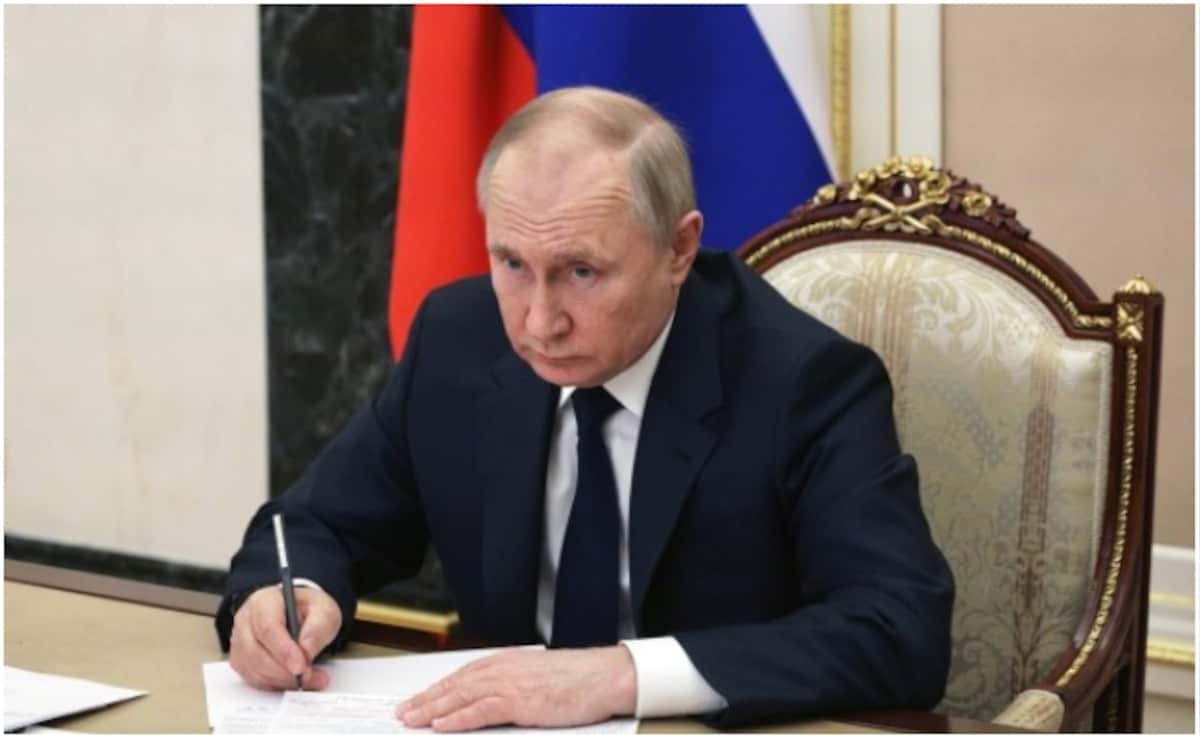
Russia’s diplomatic maneuvering in the Persian Gulf is not an act of humanitarian altruism; it is a calculated exercise in Strategic Arbitrage. By positioning Vladimir Putin as the primary intermediary between the Gulf Cooperation Council (GCC) and Tehran, the Kremlin is attempting to monetize its unique "omni-directional" access to convert regional instability into geopolitical equity. This strategy functions through three distinct mechanisms: the preservation of energy price floors, the displacement of Western security guarantees, and the management of the "Escalation Ladder" to prevent a total systemic collapse that would render Russian influence obsolete.
The Tri-Polar Power Dynamics
To understand the efficacy of Russian mediation, one must first define the three distinct nodes of power currently in friction:
- The GCC Bloc (Led by Saudi Arabia and the UAE): Focused on the "Vision 2030" economic diversification, these states require a low-volatility environment to attract foreign direct investment.
- The Iranian Axis: Utilizing "Forward Defense" through proxies to offset conventional military inferiority.
- The Russian Federation: Acting as the "Swing Diplomat" that maintains high-level military and intelligence channels with both sides—a capability the United States currently lacks due to the absence of formal ties with Iran.
The Architecture of the Russian Mediation Framework
Russia's approach to de-escalation is built on a framework of Segmented Engagement. Unlike Western diplomacy, which often links security cooperation to human rights or democratic norms, Moscow employs a strictly transactional model.
1. The OPEC+ Synergy Constraint
The most immediate driver for Putin’s "close contact" with Gulf leaders is the stability of the global oil market. Russia and Saudi Arabia are the twin pillars of the OPEC+ alliance. Any kinetic conflict in the Persian Gulf—specifically near the Strait of Hormuz—would trigger a price spike that, while temporarily profitable, would eventually destroy global demand and accelerate the transition to renewables. Moscow’s mediation serves as a protective layer for the Brent Crude Price Floor. By signaling that it can restrain Iranian retaliation, Russia ensures that Saudi Arabia remains committed to production quotas that favor Russian fiscal requirements.
2. The Vacuum Displacement Theory
The United States has historically been the "Security Guarantor" of the Gulf. However, the perceived "Pivot to Asia" and the inconsistent application of American power have created a security deficit. Putin fills this deficit not with aircraft carriers, but with Strategic Ambiguity. By maintaining "close contact," Russia demonstrates that it is the only Great Power capable of walking into a room with both Mohammed bin Salman and Ebrahim Raisi. This creates a psychological dependency on Moscow as a "Hotline" for crisis management.
3. Proxy Management and the Escalation Ladder
The primary risk in the Gulf is not a planned war, but a Miscalculation Feedback Loop. Russia’s role is to act as a dampener on this loop.
- Tactical De-confliction: Sharing intelligence regarding proxy movements (e.g., Houthis in Yemen) to prevent a strike that would necessitate a massive GCC response.
- Threshold Negotiation: Communicating the "Red Lines" of each party to the other in a non-public, high-trust environment.
Quantifying the Risks of the Mediator Role
Every strategy has a cost function. For Russia, the role of mediator carries significant "Reputational Liability." If Moscow promises to restrain Tehran and fails—resulting in a catastrophic strike on Gulf infrastructure—the Kremlin’s influence in Riyadh and Abu Dhabi would evaporate overnight.
The limitations of Russian mediation are defined by:
- The Agency Problem: Iran is a sovereign actor with its own internal hardliner factions; Moscow’s influence is persuasive, not coercive.
- Resource Overstretch: The ongoing conflict in Ukraine limits the physical military assets Russia can deploy to back its diplomatic threats.
- Financial Divergence: While Russia wants high oil prices to fund its war chest, the Gulf states are increasingly focused on long-term price stability to fuel their domestic transformations.
The Strategic Value of the "Non-Western" Alternative
The Gulf leaders—specifically the younger generation of royals—view the international order as increasingly multipolar. Utilizing Russia as a facilitator allows these states to practice Strategic Hedging. By engaging with Putin, they signal to Washington that they have other options, thereby increasing their bargaining power for advanced Western weaponry or civil nuclear cooperation. Russia provides the "Alternative Platform" for de-escalation that does not come with the domestic political baggage of the U.S. Congress.
Intelligence Sharing as a Currency
The "close contact" cited by the Kremlin often involves the exchange of Non-Kinetic Intelligence. This includes:
- Early warning signals of regional domestic unrest.
- Back-channel assurances regarding the scope of military exercises.
- The coordination of humanitarian corridors in third-party conflict zones (e.g., Sudan or Syria) where both Russian and Gulf interests overlap.
This creates a "Trust Infrastructure" that is difficult to dismantle. Even if the U.S. remains the superior military partner, Russia is becoming the superior information partner for crisis prevention.
The Displacement of the "Rules-Based Order"
Moscow’s facilitation represents a shift toward Realpolitik Multilateralism. This model prioritizes the survival of regimes and the stability of markets over the promotion of values. In the eyes of Gulf leadership, this makes Russia a more predictable—and therefore more reliable—partner in high-stakes de-escalation scenarios. The logic is simple: a partner who only cares about the balance of power is less likely to surprise you with a policy shift based on domestic electoral cycles.
Operationalizing the Russian Blueprint
The immediate tactical maneuver for Gulf states involves integrating Russian diplomatic channels into their broader "360-degree" security architecture. They are not choosing Moscow over Washington; they are using Moscow to manage the variables Washington cannot touch.
The next phase of this engagement will likely see the formalization of a Regional Security Concept proposed by Russia, which emphasizes a "collective" approach. This would involve a transition from bilateral "hotlines" to a multilateral forum where Russia sits as a permanent observer and guarantor.
For the global observer, the signal is clear: the ability to prevent a war in the Persian Gulf now flows through Moscow. This reality forces the West into a strategic paradox: they must either tolerate Russian influence in the energy heartland or risk a regional conflagration that the U.S. is currently ill-equipped to de-escalate through diplomacy alone. The move is now on the GCC to leverage this Russian "channel" to extract maximum security concessions from both Tehran and Washington simultaneously.