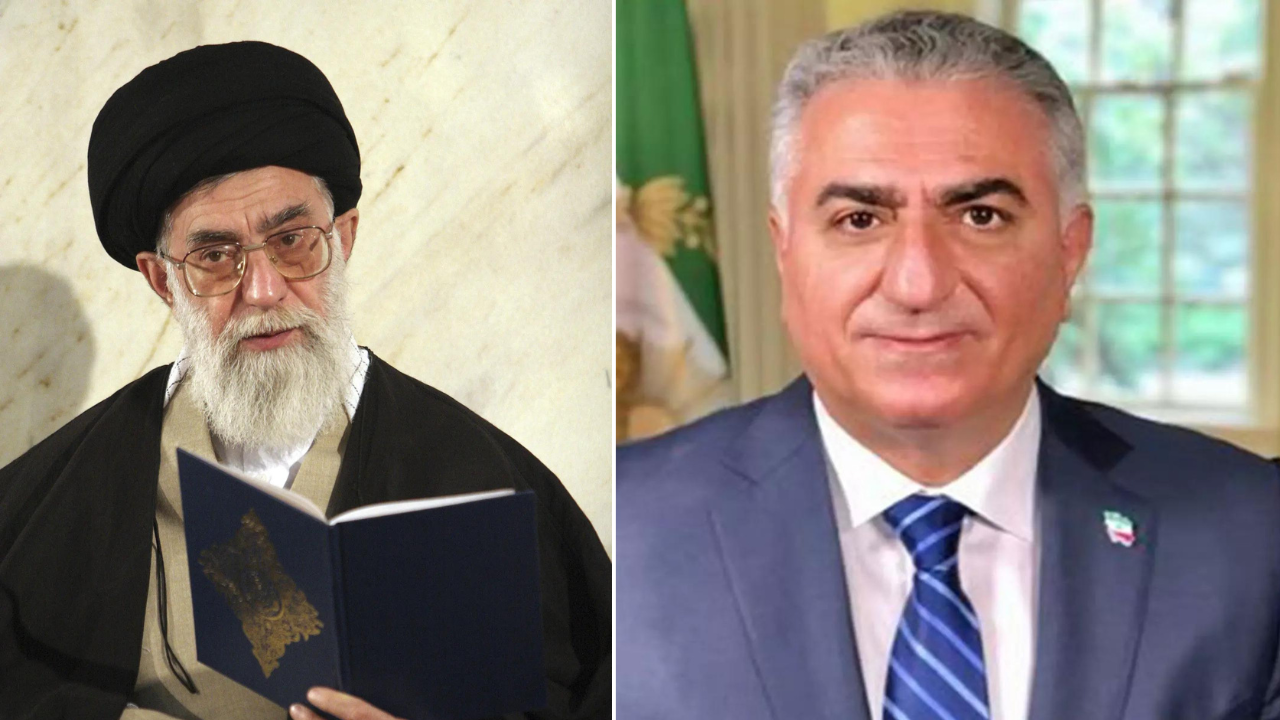
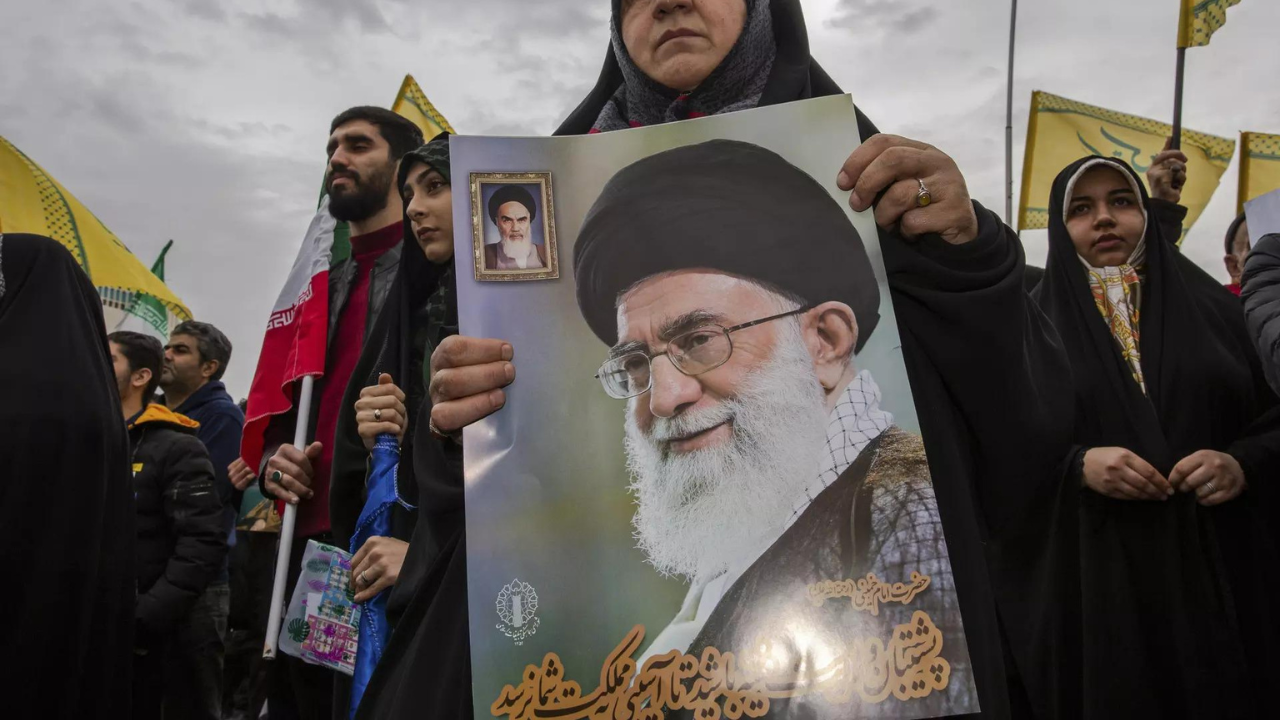
The stability of the Iranian state during its first systemic leadership transition in over three decades depends not on popular consensus, but on the successful calibration of three internal power vectors: the Assembly of Experts, the Islamic Revolutionary Guard Corps (IRGC), and the Office of the Supreme Leader (Beit-e Rahbari). While external analysis often fixates on the specific identity of Ali Khamenei's successor, the survival of the Velayat-e Faqih (Guardianship of the Jurist) system is a function of institutional alignment and the management of elite factional competition.
The transition process is governed by Article 107 of the Iranian Constitution, yet the legal framework provides only a skeletal outline. The actual transfer of power will be determined by the informal negotiation of "veto players" who prioritize the continuity of their economic and security interests over strict adherence to constitutional aesthetics.
The Institutional Triad of Succession
Succession in Iran is not a singular event but a multi-stage structural realignment. To understand the likely trajectory, one must quantify the influence of the three primary stakeholders.
1. The Assembly of Experts: The De Jure Gatekeeper
This body of 88 clerics holds the formal authority to elect the Supreme Leader. However, its role has shifted from a deliberative council to a vetting mechanism. The assembly’s primary constraint is its aging membership and its total dependence on the Guardian Council for candidate qualification. This creates a circular dependency: the Supreme Leader appoints the Guardian Council, which in turn ensures the Assembly of Experts remains ideologically homogenous.
2. The IRGC: The Praetorian Stakeholder
The IRGC has evolved from a paramilitary force into a sprawling conglomerate with deep integration into the Iranian economy, estimated to control between 20% and 40% of the GDP. For the IRGC, the next Supreme Leader must serve as a reliable guarantor of their budgetary autonomy and ideological primacy. If the Assembly of Experts selects a candidate perceived as a threat to IRGC interests, the military-industrial complex possesses the kinetic and logistical capacity to bypass the clerical process entirely.
3. The Office of the Supreme Leader: The Administrative Hub
The Beit-e Rahbari manages the daily operations of the state, overseeing a network of representatives embedded in every government ministry and provincial administration. This office holds the "institutional memory" of the regime. The successor must be someone capable of maintaining the loyalty of this vast bureaucratic apparatus, which functions as a shadow government.
The Cost Function of Ideological Continuity
The regime faces a fundamental trade-off: Legitimacy vs. Securitization. Choosing a successor with high religious credentials (a Marja or "Source of Emulation") could bolster the regime’s flagging domestic legitimacy. However, high-ranking clerics often maintain a level of independence that makes them difficult for the IRGC to control. Conversely, a politically "convenient" successor—one who lacks deep theological standing—necessitates a heavier reliance on the security apparatus to enforce compliance. This shift transforms the Islamic Republic from a theocratic-republican hybrid into a more standard military autocracy with a religious veneer.
This transition involves specific operational risks:
- The Information Vacuum: During the immediate hours following a vacancy, the absence of a clear heir creates an opening for factional maneuvering. The speed at which the Assembly of Experts announces a successor is inversely proportional to the risk of internal coup or civil unrest.
- The Competency Gap: Ali Khamenei has spent 35 years consolidating power. A new leader will lack the personal patronage networks required to balance the competing interests of the traditional clergy, the conservative "Principlist" politicians, and the technocratic elite.
- The Economic Bottleneck: Any period of perceived instability risks triggering massive capital flight and a collapse of the Rial, which would likely catalyze the very street protests the regime fears most.
The Successor Profile Matrix
Current political dynamics suggest the search for a successor has narrowed to individuals who fit a specific "stability profile." The variables in this matrix include:
- Proximity to the Current Center: Evidence of direct mentorship by Khamenei.
- Security Clearance: A history of cooperation with the IRGC and the Ministry of Intelligence (MOIS).
- Theological Minimums: Possession of the rank of Ayatollah, or at least a path to rapid promotion to that rank through the Qom seminary system.
The elimination of Ebrahim Raisi from the succession equation due to his death in 2024 removed the most "vetted" candidate, forcing a recalcretion of the short-list. The remaining viable paths involve either the promotion of Mojtaba Khamenei—the current leader’s son—or a "Dark Horse" candidate from within the judiciary or the Assembly of Experts.
The promotion of a dynastic successor (Mojtaba) carries the highest risk-reward ratio. While it ensures maximum continuity for the Beit-e Rahbari, it contradicts the founding anti-monarchical principles of the 1979 Revolution. This hypocrisy would be a gift to the opposition, potentially alienating the regime's traditionalist base.
Strategic Deficits in the Transition Logic
The primary error in current geopolitical forecasting is the assumption that the transition will be a binary choice between "Hardline" and "Reformist" paths. In reality, the Iranian political spectrum has narrowed significantly. The true friction point is between Global Integrationists and Fortress Economy Advocates.
The second deficit is the underestimation of the "Leadership Council" provision. Article 107 originally allowed for a council of leaders if a single successor could not be found. Although this was removed in the 1989 constitutional revision, it remains a theoretical fallback for the IRGC. A three- or five-man council would be inherently weaker than a single Supreme Leader, allowing the security apparatus to exercise "de facto" rule while maintaining the clerical facade.
Regional and Global Feedback Loops
The transition does not occur in a vacuum. The IRGC’s "Axis of Resistance"—comprising proxies in Lebanon, Iraq, Yemen, and Syria—serves as a secondary power base. A successor who lacks a rapport with these external actors risks a breakdown in Iran’s regional deterrence strategy.
Furthermore, the timing of the transition relative to US electoral cycles and the progress of the nuclear program creates a volatility window. If the transition occurs during a period of high external pressure, the regime is statistically more likely to coalesce around a hardline security-first candidate to prevent the appearance of weakness.
The structural reality is that the next Supreme Leader will inherit a state with high institutional inertia and low public trust. The transition is less about choosing a leader and more about renegotiating the contract between the mullahs and the generals.
The IRGC will likely permit a clerical successor only if that successor agrees to formalize the IRGC’s role in the Supreme National Security Council and grants them expanded control over the strategic industries (oil, gas, and telecommunications). This move would effectively complete the transition of the Islamic Republic from a theocracy to a military-dominated state where the clergy serves as the "Ideological Department."
Western policy must anticipate a period of "Strategic Paralysis" during the first 12 to 18 months of a new leadership. The successor will be focused internally, purging rivals and consolidating the patronage network. During this window, major shifts in nuclear policy or regional alignment are improbable, as any move toward "opening" would be perceived by rivals as a sign of vulnerability. The most likely outcome is an intensification of domestic repression to signal strength, regardless of the individual who takes the seat.
The final strategic play for international observers is to monitor the Qom-Tehran axis. If the leading grand ayatollahs in Qom remain silent or critical during the appointment, the new leader will be forced to lean entirely on the IRGC, accelerating the regime's evolution into a post-clerical military autocracy. The degree of religious endorsement is the lead indicator for whether the transition is a survival tactic or a fundamental transformation of the state.
Would you like me to analyze the specific economic holdings of the IRGC to further map their influence on this process?