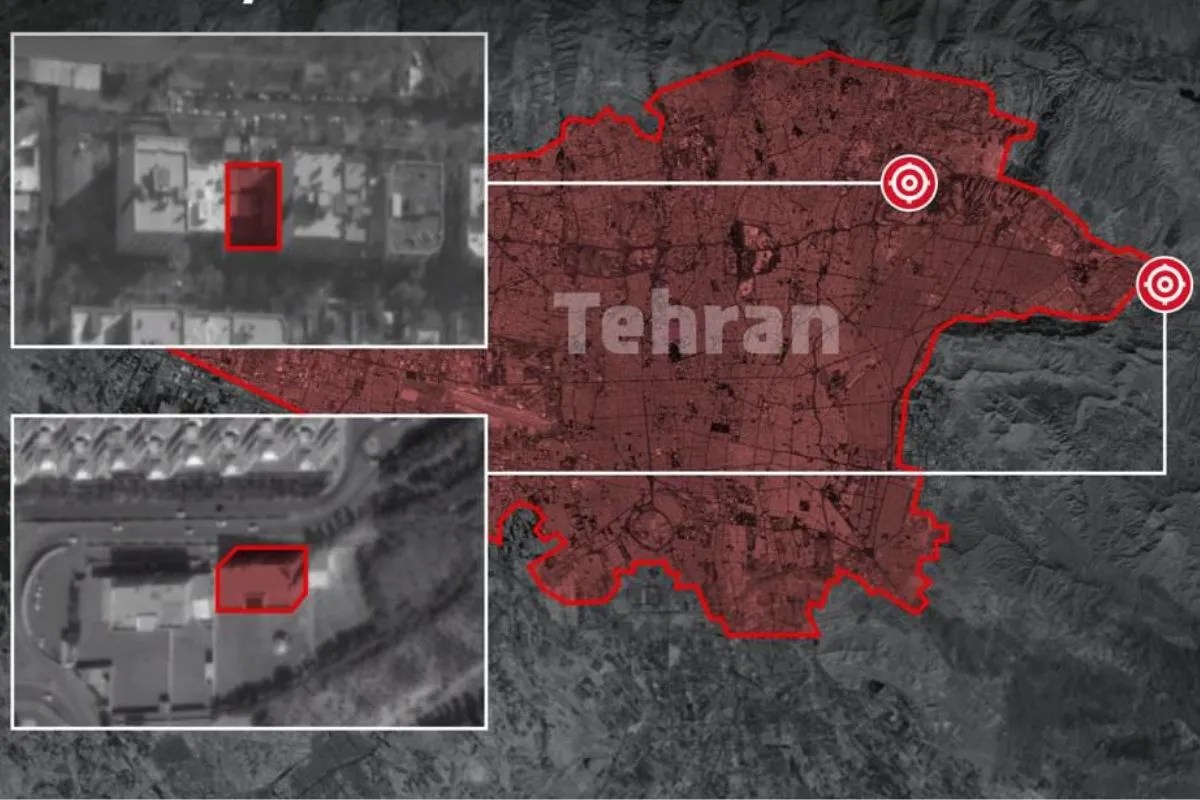
The strategic objective of the Israeli Air Force (IAF) strikes on Iranian soil on October 26, 2026, was not the destruction of political leadership or the immediate elimination of nuclear facilities, but rather the systematic degradation of Iran’s long-range projection capabilities. By focusing on the "planetary mixers" used for solid-fuel propellant production and the air defense nodes protecting them, Israel executed a counter-force operation designed to create a multi-year bottleneck in Iran’s missile inventory. This operation shifted the regional balance of power from a contest of intent to a contest of industrial capacity.
The Architecture of Tactical Suppression
Israel’s operation followed a sequenced suppression and destruction model. The first phase targeted S-300 and S-400 long-range surface-to-air missile (SAM) batteries across Iran, Iraq, and Syria. This was not merely about clearing a path; it was about stripping the Iranian regime of its "eyes" and its ability to contest its own airspace.
The removal of these assets achieved two functional outcomes:
- The Blindness Factor: By destroying radar arrays (specifically the 91N6E and 92N6E variants), Israel forced Iranian command and control into a state of information asymmetry.
- Freedom of Maneuver: It established a permissive environment for subsequent waves of manned aircraft and UAVs to loiter over high-value targets without the risk of high-altitude interception.
This phase demonstrated a critical failure in the integrated defense systems provided by Russian technology, suggesting that the electronic warfare (EW) suites onboard Israeli F-35I "Adir" jets successfully neutralized the frequency-hopping capabilities of the Iranian-operated radars.
Propellant Bottlenecks: The Industrial Chokepoint
The center of gravity for this strike was the Parchin and Khojir military complexes. These sites house the specialized industrial equipment necessary for manufacturing solid-fuel ballistic missiles, such as the Kheibar Shekan and Fattah-1. Unlike liquid-fuel rockets, which are volatile and require extensive pre-launch preparation, solid-fuel missiles are mobile, easily concealed, and can be launched on short notice.
The destruction of approximately 12 to 20 "planetary mixers" represents a strategic masterstroke in industrial warfare. These mixers are sophisticated pieces of machinery used to blend high-viscosity fuel components into a stable, uniform solid mass.
- The Procurement Barrier: These mixers are highly regulated dual-use items. Iran cannot easily replicate them domestically due to the precision engineering required for the internal blades and vacuum-sealed chambers.
- The Lead-Time Constraint: Replacing these units involves navigating clandestine procurement networks or relying on third-party states like China or Russia, both of whom face increased scrutiny under international monitoring.
- Production Stagnation: Without these mixers, Iran’s ability to replenish its stocks of advanced solid-fuel missiles is effectively frozen. If Iran depleted a significant portion of its inventory in its October 1st barrage, the IAF has ensured that the "burn rate" of Iranian munitions exceeds their replacement rate for at least 12 to 24 months.
Kinetic Precision vs. Symbolic Damage
Reporting often conflates "damage" with "destruction." In military analysis, the distinction is vital. Israel utilized small-diameter bombs (SDBs) and precision-guided munitions (PGMs) to hit specific rooms within larger buildings. This surgical approach suggests high-fidelity intelligence—likely human intelligence (HUMINT) combined with signals intelligence (SIGINT)—identifying exactly where the critical machinery was bolted to the floor.
The strike on the Talyan building at Parchin is a case in point. While the building was formerly associated with "Amad Plan" nuclear testing, its current utility likely revolved around the integration of warheads or specialized electronics. By hitting these specific nodes, Israel neutralized the functional output of the facility while minimizing the structural debris that would typically characterize a "carpet bombing" approach. This minimizes the risk of collateral damage while maximizing the "return on investment" per kilogram of explosive used.
The Triad of Deterrence Erosion
The strike has fundamentally altered the three pillars of Iranian regional strategy:
- The Proxy Shield: By demonstrating that it can strike the Iranian heartland with impunity, Israel has signaled to Hezbollah and the Houthis that the "head of the snake" is vulnerable. If Tehran cannot protect its own missile production, its ability to supply its proxies is compromised.
- The Missile Threat: Iran’s primary deterrent is its massive missile arsenal. By targeting the production line rather than just the launch pads, Israel has attacked the "future tense" of the Iranian threat.
- The Air Defense Myth: The failure of Iran’s domestic "Bavar-373" system and imported S-300s to intercept a single Israeli aircraft has created a domestic psychological crisis for the IRGC. It proves that Iran’s airspace is currently "open" to Israeli penetration.
Logistical and Economic Cascades
The economic cost to Iran is not limited to the price of the machinery destroyed. The "Cost of Denial" includes:
- Opportunity Cost: Resources must now be diverted from offensive development to rebuilding defensive infrastructure.
- Supply Chain Rupture: The destruction of specialized components at Parchin disrupts the workflow of hundreds of smaller sub-contractors who provide parts for the missile programs.
- Insurance and Risk: The perceived risk of operating military-industrial sites in Iran has skyrocketed, likely forcing the regime to decentralize production. Decentralization, while safer, is significantly less efficient and increases the time required for final assembly.
Strategic Forecast
Iran now faces a binary choice characterized by high-risk variables. They can respond kinetically, using their remaining liquid-fuel inventory (which is easier to track and intercept), or they can absorb the blow and accelerate their nuclear program as a final deterrent. However, the destruction of the air defense nodes makes any Iranian nuclear site—such as Natanz or Fordow—vastly more vulnerable to a follow-up strike.
The immediate tactical priority for the Iranian military will be a frantic effort to repair or acquire planetary mixers through gray-market channels. For Israel, the priority shifts to "mowing the grass"—using intelligence assets to monitor these procurement attempts and intercepting the machinery before it reaches Iranian soil.
The October 26 strike was a demonstration of a "limited war" philosophy: using high-end technology to break the enemy's industrial will without triggering a total regional conflagration. The regional hegemony now rests on who can rebuild faster—or who can prevent the other from rebuilding at all. Israel has effectively placed Iran’s missile program in a state of managed decline. Any future Iranian escalation must now be weighed against a severely diminished capacity for replenishment.