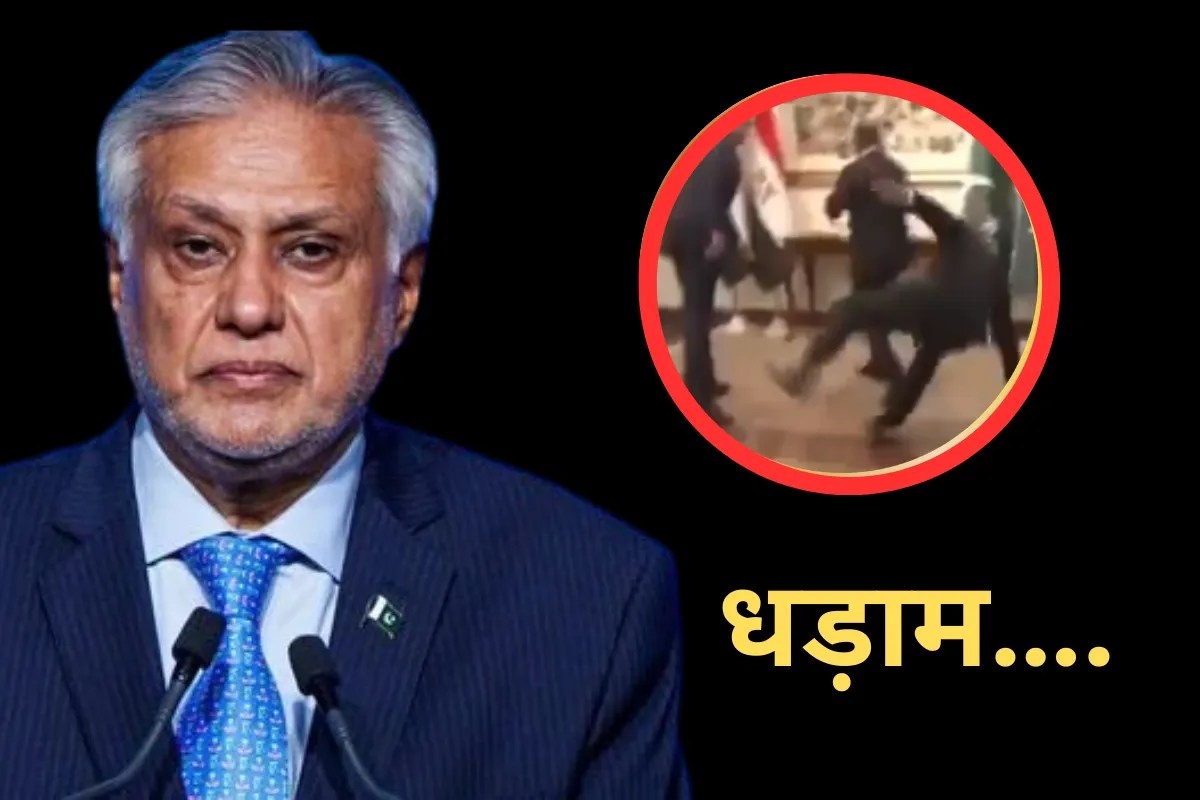
The failure of middle-power mediation in the Iran-United States standoff is rarely a result of singular events but rather a compounding of misaligned incentives, lack of institutional leverage, and the physical breakdown of diplomatic optics. When a state actor attempts to bridge the gap between two adversarial superpowers, they operate within a high-stakes "credibility corridor." Any deviation—whether through policy inconsistency or public loss of composure—shatters the illusion of the neutral arbiter. The recent attempt by Pakistani leadership to intervene in the Tehran-Washington axis provides a raw case study in how the physics of diplomacy reacts when the symbolic authority of a messenger collapses before the message is even delivered.
The Triad of Mediation Viability
For a third-party state to successfully moderate a conflict between asymmetric powers, three structural pillars must remain intact. If any pillar is compromised, the mediation effort transitions from a strategic asset to a geopolitical liability. For a different perspective, consider: this related article.
- Sovereign Parity of Respect: The mediator must be viewed as an entity capable of enforcing or at least guaranteeing the terms of a preliminary "cooling-off" period.
- Information Symmetry: The mediator must possess unique insights or channels that the two primary combatants cannot access directly.
- Optic Professionalism: In high-context cultures, particularly in the Middle East and South Asia, the physical presentation and perceived "dignity" of the diplomatic envoy are proxies for the stability of the state they represent.
The incident involving the Pakistani Foreign Minister’s physical stumble during a high-profile diplomatic mission serves as more than a momentary embarrassment. In the rigorous world of international relations, physical vulnerability in a public forum triggers a "perception tax." It signals a lack of internal coordination and situational awareness. When an official falls in front of their peers and the cameras, the narrative shifts from the complexity of nuclear enrichment or regional hegemony to the individual’s—and by extension, the state's—readiness for the global stage.
The Asymmetric Incentive Gap
The core friction in Iran-US relations is governed by an asymmetric incentive structure. Washington seeks "behavioral modification" through economic strangulation (the maximum pressure legacy), while Tehran seeks "regime preservation" through strategic defiance and regional proxy influence. Further coverage on this trend has been published by The New York Times.
A mediator like Pakistan enters this fray with a specific set of domestic pressures:
- Economic Dependency: The need to balance Saudi-aligned financial aid with the necessity of a stable western border.
- Security Paradox: The risk of Iranian-backed insurgency spillage versus the risk of US-led sanctions if trade with Iran becomes too robust.
When these internal pressures are high, the diplomatic mission is already operating under a heavy cognitive load. A physical slip-up becomes a metaphor for the precarious balancing act of the nation’s foreign policy. It suggests that the weight of the "middle-man" role is exceeding the structural capacity of the mediator’s diplomatic infrastructure.
The Physics of Diplomatic Optics
Diplomacy is a performance of power. The "handshake," the "walk-and-talk," and the "bilateral seating arrangement" are encoded signals. When these signals are disrupted by an unplanned physical event—a fall, a stutter, or a breach of protocol—it creates a "signal noise" that drowns out the policy substance.
- The Gravity of Perception: In the hyper-analyzed environments of Tehran and Washington, every movement is scrutinized for signs of weakness. A fall is interpreted not as an accident, but as a lack of "gravitas."
- The Viral Feedback Loop: In the digital age, a diplomatic failure is quantified by its shareability. The moment the Foreign Minister’s fall became a viral clip, the mission’s strategic goals were nullified. No amount of white papers or policy memos can counteract a visual narrative of instability.
Structural Bottlenecks in the Pakistan-Iran-US Triangle
The attempt to mediate was fundamentally flawed by three specific bottlenecks that no amount of diplomatic grace could have solved:
1. The Authorization Deficit
Pakistan’s foreign policy is a dual-track system where the civilian leadership often lacks the final "sign-off" on deep-state security matters. When a civilian Foreign Minister leads a mediation effort, the counterparts (especially the IRGC in Iran) question if they are talking to the real decision-maker. The physical stumble reinforces the perception of the civilian wing as a "lightweight" participant in a "heavyweight" security conversation.
2. The Currency of Trust
Iran views any mediator with close ties to the US or Saudi Arabia with inherent suspicion. To overcome this, the mediator must display absolute competence. Any lapse—even a physical one—provides the skeptics in Tehran with the necessary justification to dismiss the mediation as a distracted or insincere effort.
3. The Zero-Sum Trap
In the Iran-US conflict, a win for one is often perceived as a total loss for the other. A mediator must be able to create "expandable value." This requires intense intellectual labor and a commanding presence. If the messenger appears physically compromised, the intellectual weight of their proposal is devalued by 50% or more in the eyes of hardline negotiators.
The Cost Function of Diplomatic Embarrassment
We can quantify the impact of a diplomatic blunder using a simple cost-benefit analysis of the mission's "Reputational Equity."
$$E = (P \cdot C) - (N \cdot S)$$
Where:
- $E$ is the Net Equity of the mission.
- $P$ is the Policy Substance (the actual deal on the table).
- $C$ is the Credibility of the envoy.
- $N$ is the Noise (the viral embarrassment).
- $S$ is the Speed of information travel.
In this specific case, while $P$ remained static, $C$ plummeted while $N$ and $S$ increased exponentially. The result is a negative $E$, meaning the mission actually left the diplomatic relationship in a worse state than if it had never occurred. The "stumble" did not just happen to a man; it happened to a sovereign strategy.
Institutional Resilience vs. Individual Error
The mark of a robust diplomatic corps is the ability to "buffer" individual errors. In high-functioning departments, a physical mishap is immediately countered by a pre-planned "strategic distraction" or a rapid pivot to a high-value announcement. The fact that the Pakistani delegation was left exposed to the fallout of this event suggests a lack of "crisis communications" integration within their foreign ministry.
This creates a vacuum where the opposition—both domestic and international—can define the narrative. For the US, it justifies a "wait and see" approach, viewing the mediator as too unstable to carry a sensitive message. For Iran, it confirms the suspicion that their neighbor is not yet ready to facilitate a grand bargain.
The Strategic Redirection
To salvage the mediation role, the mediator must move beyond "person-to-person" diplomacy and shift toward "system-to-system" engagement. This involves:
- De-personalizing the Channel: Moving negotiations to a lower, more technical level where physical optics are secondary to data exchange.
- Hard-Power Signalling: Re-establishing "gravitas" through military-to-military cooperation or tangible trade agreements that exist independent of the US-Iran friction.
- Narrative Reclamation: Acknowledging the human element of the error while doubling down on the "unmatched" geographic necessity of the mediator's position.
The immediate move is not a public apology or a televised explanation, but a silent, high-impact policy shift that forces the media to change the subject. Success in this realm is found in the transition from being the "subject of the news" to being the "architect of the outcome." The mediator must now demonstrate that while a representative can fall, the state's strategic intent remains upright and unmovable. This requires an immediate infusion of technical expertise into the diplomatic pipeline, ensuring that the next engagement is defined by the density of the proposal rather than the frailty of the proponent.