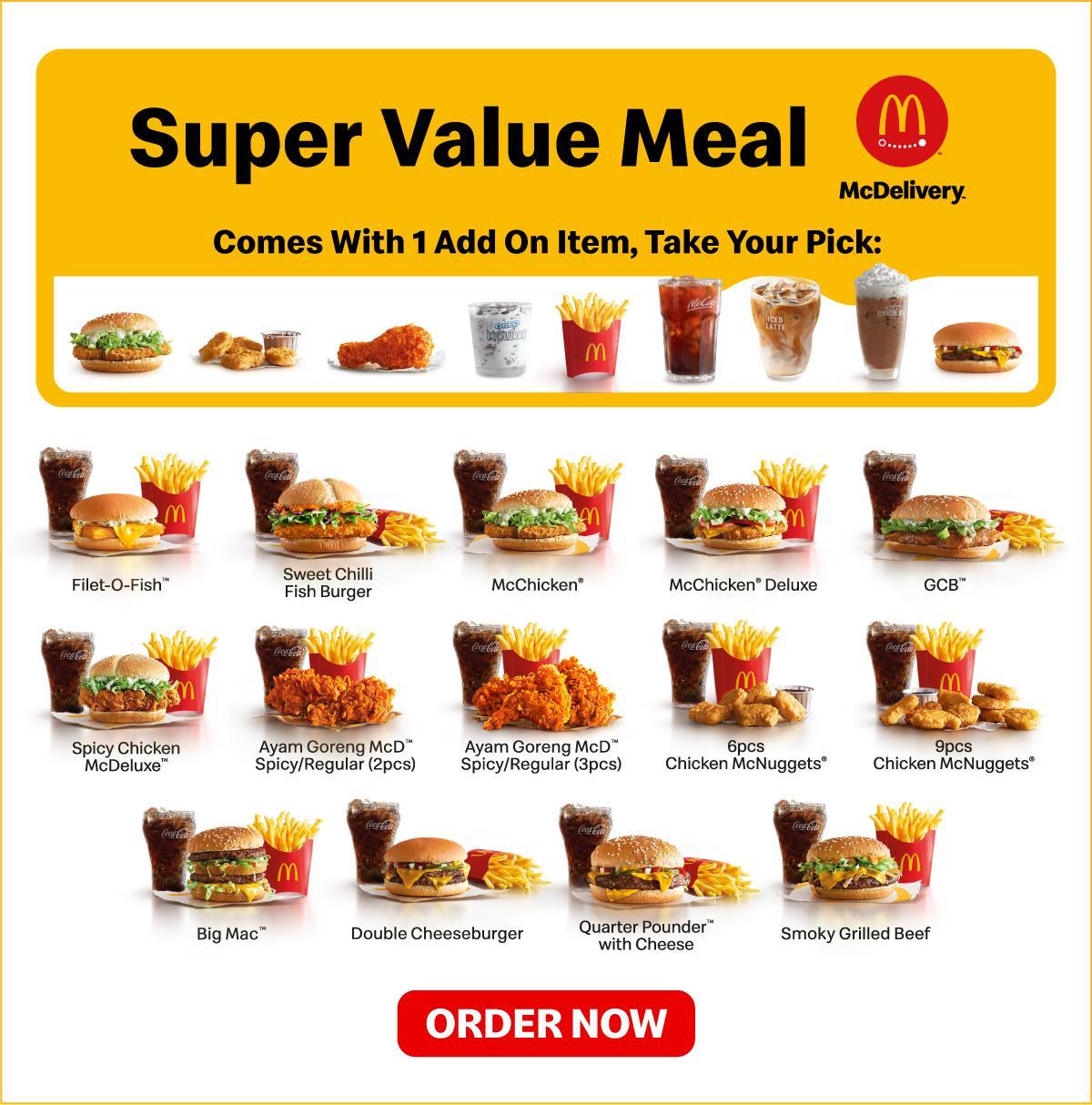
Wall Street is currently high on french fry grease and "beat estimates" headlines. The narrative is tidy: McDonald’s leaned into value, the $5 Meal Deal saved the quarter, and the Golden Arches have once again proven they are the ultimate inflation-proof fortress.
It’s a lie.
If you look at the balance sheet without the rose-colored glasses of a quarterly earnings call, you aren’t seeing a "value push" that’s paying off. You are seeing a desperate, short-term liquidity grab that is eroding brand equity and cannibalizing the very franchises that keep the lights on. The "beat" isn't a sign of health; it's the twitching of a nervous system under extreme financial duress.
We need to stop pretending that a $5 bundle of a burger, four nuggets, small fries, and a drink is a sustainable business model in an era where a head of lettuce costs $3 and commercial electricity rates are spiking.
The $5 Meal Deal is a Loss Leader That’s Losing the Lead
The consensus among analysts is that the $5 promotion "drove traffic." Sure. If you stand on a street corner and hand out $20 bills for $10, you’ll have a line around the block. That doesn't make you a retail genius.
McDonald's isn't "finding efficiencies." They are squeezing franchisees. I have spent years looking at the unit economics of QSR (Quick Service Restaurant) models, and the math on these value bundles is brutal. When you factor in the rising cost of labor—specifically in states like California where the $20 minimum wage is the new floor—and the soaring cost of paper goods and logistics, the margin on a $5 meal is razor-thin to non-existent.
The Math of Desperation
Let’s break down the actual COGS (Cost of Goods Sold) for a typical promotional bundle:
- Protein/Bun: $1.10 - $1.30
- Small Fry: $0.25 (The only high-margin item left)
- 4-Piece Nugget: $0.45
- Small Drink: $0.15
- Packaging (Bag, wrappers, cups, straws): $0.35
- Labor (Allocated per transaction): $1.80 - $2.10
Total cost before rent, utilities, insurance, royalties, or marketing fees: ~$4.10 to $4.65.
Once the franchisee pays their 4% marketing fee and 4% to 5% royalty to corporate, they are effectively paying the customer to eat at their restaurant. This isn't a "strategy." It’s a hostage situation. Corporate gets their cut of the top-line revenue regardless of whether the store owner makes a dime of profit.
The "beat" that investors are cheering for is built on the backs of thousands of small business owners whose margins are being vaporized to keep the stock price buoyant for another ninety days.
The Myth of the Inflation Proof Brand
The common refrain is that McDonald's wins during recessions because people "trade down" from casual dining like Chili’s or Applebee’s.
This logic is a decade out of date.
The "trade down" effect has hit a ceiling. When a Big Mac meal in a major metropolitan area pushes $12 to $15, you aren't trading down from a sit-down restaurant; you’re competing with them. A $15 McDonald's order puts the Golden Arches in direct competition with local diners, Chipotle, and even grocery store prepared foods.
McDonald's hasn't just increased prices; they’ve alienated their core demographic: the low-income consumer who relied on them for calories-per-dollar. By the time they launched the $5 "Value Push," the damage was already done. You cannot spend three years hiking prices by 40% and then expect a temporary $5 bundle to fix the "vibe shift."
Customers aren't stupid. They see the $5 deal for what it is—a digital leash designed to get them to download an app that tracks their location and harvests their data.
Digital Dependency is the New Rent
The "growth" McDonald's touts in digital sales isn't about convenience. It’s about control.
The company is obsessed with "Loyalty Members" and "Digital Sales" because that data allows for Dynamic Pricing. This is the dirty secret of the industry. Eventually, the price of your McDouble won't be on the menu board; it will be determined by an algorithm in the app based on your past spending habits, the time of day, and how much battery life is left on your phone.
We are moving toward a "Surge Pricing" model for cheeseburgers. They call it "personalization." I call it the death of the transparent transaction.
Why the App is a Trap
- Margin Recovery: By forcing you onto the app, they can push "suggestive selling" algorithms that have a higher success rate than a tired teenager at the headset.
- Labor Reduction: Kiosks and apps don't call in sick or demand a living wage.
- Price Discrimination: The app allows McDonald’s to charge a different price to the "value seeker" (via coupons) than they charge to the "convenience seeker" who walks in and pays full freight.
This fragmentation of the customer base is a short-term win for data scientists but a long-term disaster for brand trust. When you have to do "work" (navigating a buggy app) just to get a fair price, the "fast" in fast food disappears.
The Quality Gap Nobody Wants to Talk About
While we argue about $5 bundles, the actual product quality has entered a death spiral.
In a desperate bid to keep costs down while paying for these massive "value pushes," the supply chain is being optimized into oblivion. We've seen it with the recent E. coli scares and the constant "refinement" of ingredients. Every time they "improve" a burger—like the recent move to toast buns longer and melt cheese faster—it’s usually a linguistic mask for a process change that saves 1.5 cents per unit.
The "insider" truth is that the food is becoming more engineered and less "food." We are reaching the "Peak Processed" limit. There is only so much soy protein you can add to a nugget before it stops tasting like chicken. There is only so much air you can whip into the soft serve before it’s just cold foam.
The competitor article talks about "Value." But what is the value of a meal that leaves you hungry an hour later and requires a chemistry degree to decode the ingredient list?
Stop Asking if McDonald’s "Beat Estimates"
The question isn't whether they beat a number set by a group of analysts in midtown Manhattan who haven't stepped inside a McDonald's since 2012.
The real questions are:
- Is the franchisee profitable enough to maintain the building?
- Is the "Value" customer actually returning once the coupon expires?
- How much of the "Growth" is just the result of aggressive price hikes on the 80% of the menu not included in the $5 deal?
I’ve seen this movie before. A legacy giant realizes they’ve priced themselves out of the market. They panic and launch a high-decibel value campaign. It spikes the numbers for two quarters. Then, the realization sets in: they’ve trained their customers to only buy the loss leader.
The "Value" push isn't a sign of strength. It’s a sign that the brand has lost its pricing power. When you have to beg people to come in with a $5 bribe, you are no longer a market leader. You are a commodity.
The Actionable Truth for the Consumer
Stop looking for "Value" in the bundles. It’s a psychological trick.
If you want to actually beat the system, you have to understand the Menu Engineering at play here. The $5 meal is the "anchor." It’s designed to make the $9.00 standalone Big Mac look reasonable. It’s designed to make you feel like you’re winning, so you don't notice that the "Large" fry you used to get for $2.00 is now $4.50.
The Real McDonald's Playbook:
- The App is Only for the House: The "rewards" are designed to expire before you can use them effectively, or they lure you into "spending" points on items that have a high perceived value but zero cost to the company (like a large soda).
- Ignore the "Limited Time" Panic: These value meals will stay as long as the traffic stays down. The moment they see a 1% uptick in "Full Price" transactions, that $5 deal will vanish faster than a seasonal milkshake.
- Check the "A La Carte" vs. "Meal" Pricing: In many regions, ordering two items off the "Value" menu is cheaper than the bundled meal, even if the cashier is trained to tell you otherwise.
The Mic Drop
McDonald’s isn't winning because they "solved" value. They are winning because they are the largest real estate company in the world that happens to sell burgers, and they are currently cannibalizing their own equity to satisfy the God of Quarterly Earnings.
The $5 Meal Deal is the corporate equivalent of burning the furniture to keep the house warm. It looks cozy for a few hours, but eventually, you run out of chairs.
Wall Street can keep their "estimates." The rest of us can see the smoke.