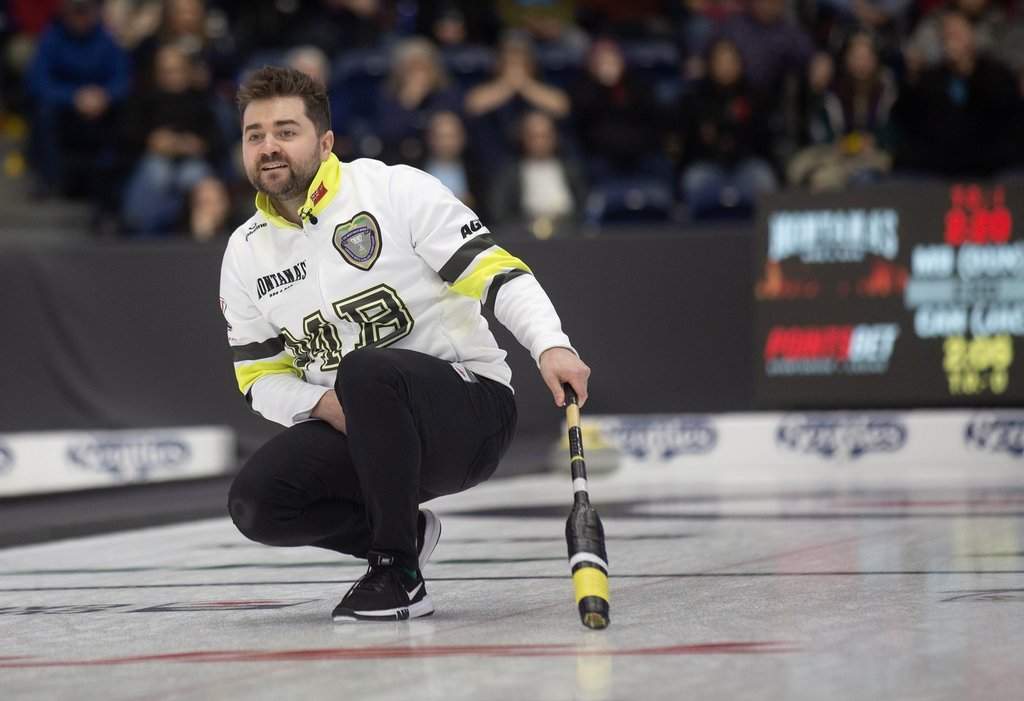
The streak is dead. Matt Dunstone and his high-powered Winnipeg rink finally hit the wall at the world championship, dropping a critical game that strips away their aura of invincibility. For a team that arrived with the weight of a nation and a pedigree of clinical execution, the loss isn't just a mark in the L column. It is a diagnostic map of the specific, recurring pressures that haunt Canadian curling on the global stage. While the scoreboard shows a single defeat, the tape reveals a more troubling narrative about shot selection, ice reading, and the narrowing gap between the birthplace of the modern game and the rest of the chasing pack.
Dunstone didn't just lose; he was outmaneuvered in the late ends. This wasn't a fluke of a lucky tick or a heavy draw. It was a systematic breakdown in the tactical nuances that usually define a top-tier Canadian representative. To understand why this happened, you have to look past the missed rocks and into the evolving geometry of international competition.
The Myth of the Canadian Safety Net
For decades, Canadian teams operated under the assumption that their domestic depth was a shield. The logic was simple: if you can survive the Brier, the world championship is a victory lap. That era is over. The international circuit has become a laboratory where European and Asian rinks have deconstructed the Canadian style.
In this specific loss, Dunstone’s rink struggled with ice migration. As the draws progressed, the path to the button shifted, and the Canadians failed to calibrate their weight fast enough. It is a subtle failure, but at this level, being off by two inches is the difference between a buried stone and a gift for the opposition. The "Safety Net" of superior talent no longer catches you when your technical adjustments lag behind the curve.
The opposition didn't play a defensive game. They played a high-risk, high-reward strategy that exploited Dunstone’s tendency to play for the big end. By cluttering the front of the house and forcing the Canadian skip into difficult run-backs, they turned Canada’s greatest strength—aggressive shot-making—into a liability.
Tactical Rigidity and the Weight of Expectation
There is a psychological tax paid by every Canadian team at the worlds. You aren't just playing for yourself; you are playing for a curling culture that views anything less than gold as a national disaster. This pressure often manifests as tactical rigidity.
During the middle ends of this defeat, Dunstone had multiple opportunities to take a simple force and move on. Instead, the team chased deuces that weren't there. They pushed for angles that required a perfection the ice conditions wouldn't support.
- Shot Selection: Choosing the high-difficulty double instead of the simple draw.
- Time Management: Agonizing over line calls until the clock becomes a secondary opponent.
- Communication: A breakdown in the feedback loop between the sweepers and the house.
When you look at the percentages, the numbers tell a story of a team that was fighting the rocks rather than working with them. The lead and second stayed consistent, but the back end—the engine room of the Dunstone machine—saw their efficiency dip into the low 70s. You cannot win at this level with those numbers.
The Ice Factor
Ice conditions at the world championship are notoriously different from the crisp, predictable surfaces found at the Brier or the Grand Slams. The humidity in the arena and the specific pebble profile create a "slower" finish.
Dunstone’s team is built for speed and precision. They thrive on hard, fast ice where they can use their sweeping power to steer rocks with surgical accuracy. When the ice goes "flat," that advantage evaporates. The loss exposed a lack of a Plan B. If they can't out-muscle the ice, they struggle to out-think the opponent.
Analyzing the Turning Point
The sixth end served as the pivot. Holding a slim lead, Dunstone faced a choice between a guarded hit and a risky draw through a narrow port. He chose the draw. The rock caught a piece of the guard, hung out in the open, and allowed the opposition to score a catastrophic three.
This wasn't an execution error so much as a situational awareness error. In championship curling, the goal isn't always to make the best possible shot; it's to avoid the worst possible outcome. By opening the house, Dunstone invited the very chaos he needed to avoid.
The opposition sensed the hesitation. They stopped playing to the middle and started playing to the corners, forcing the Canadians to defend parts of the sheet they hadn't tested in the early ends. It was a masterclass in psychological territorialism.
The Global Parity Reality
We have to stop treating these losses as "upsets." The world has caught up. Programs in Sweden, Scotland, and Switzerland are now better funded and more scientifically managed than many Canadian provincial setups.
The "Dunstone Loss" is a symptom of a larger shift. International teams are no longer intimidated by the Maple Leaf. They see a Canadian jersey and they see a target that is prone to over-thinking. They know that if they can keep the game close until the eighth end, the internal pressure of Canadian expectations will do half the work for them.
Data Points and Percentages
| Position | Team Canada % | Opponent % |
|---|---|---|
| Lead | 91 | 88 |
| Second | 85 | 86 |
| Third | 74 | 89 |
| Skip | 71 | 84 |
The table above illustrates the surgical nature of the defeat. While the front ends were locked in a stalemate, the back-end gap was a chasm. When the opposing third is outplaying your third by 15 percent, your skip is left with "garbage" shots—low-probability attempts to save an end rather than win it.
The Technical Breakdown of the Final Draw
In the final end, with a chance to force an extra, the delivery was flawed from the hack. You could see it in the release. The stone had too much handle, causing it to "dig" earlier than expected.
This points to a fatigue factor that analysts often ignore. The world championship is a grind. The physical toll of sweeping is one thing, but the mental exhaustion of ten days of high-stakes strategy is another. Dunstone looked spent. The crispness in his pre-shot routine had vanished, replaced by a hurried cadence that signaled a desire to just get the shot over with.
Readjusting the Strategy
To bounce back, this rink needs to embrace defensive flexibility. They need to prove they can win the boring games. Not every end needs to be a highlight reel. Sometimes, the most professional thing you can do is throw a rock through the house and live to fight another end.
The scouting report on Dunstone is now out. Opponents know that if they can frustrate his desire for an open, aggressive game, he will eventually beat himself trying to force a masterpiece on a dirty canvas. The counter-move is to go "small ball." Shorten the game. Simplify the house.
The Core of the Problem
The core issue isn't talent. Matt Dunstone is arguably the most gifted pure shooter Canada has produced in a decade. The issue is the cultural feedback loop. Canadian curling prizes the "big shot" skip. We celebrate the heroics. But at the world level, heroics are a sign that your strategy failed three rocks ago.
This loss provides a necessary cold shower. It strips away the complacency and forces a reckoning with the fact that the "Canadian Way" of aggressive, high-line curling is currently being picked apart by more conservative, data-driven international strategies.
The path to the podium now requires a fundamental shift in how this team handles adversity. They cannot rely on superior hitting power to bail them out of poor positioning. They must learn to respect the ice as much as they respect their own ability. The world is no longer waiting for Canada to win; they are actively working to ensure Canada loses.
Adaptation is the only currency that matters now. If Dunstone continues to chase the ghost of the perfect game, he will find himself watching the medal ceremony from the stands. The game has changed, and the first loss is the only warning he's going to get.
Stop looking for the highlight reel and start looking at the broom.