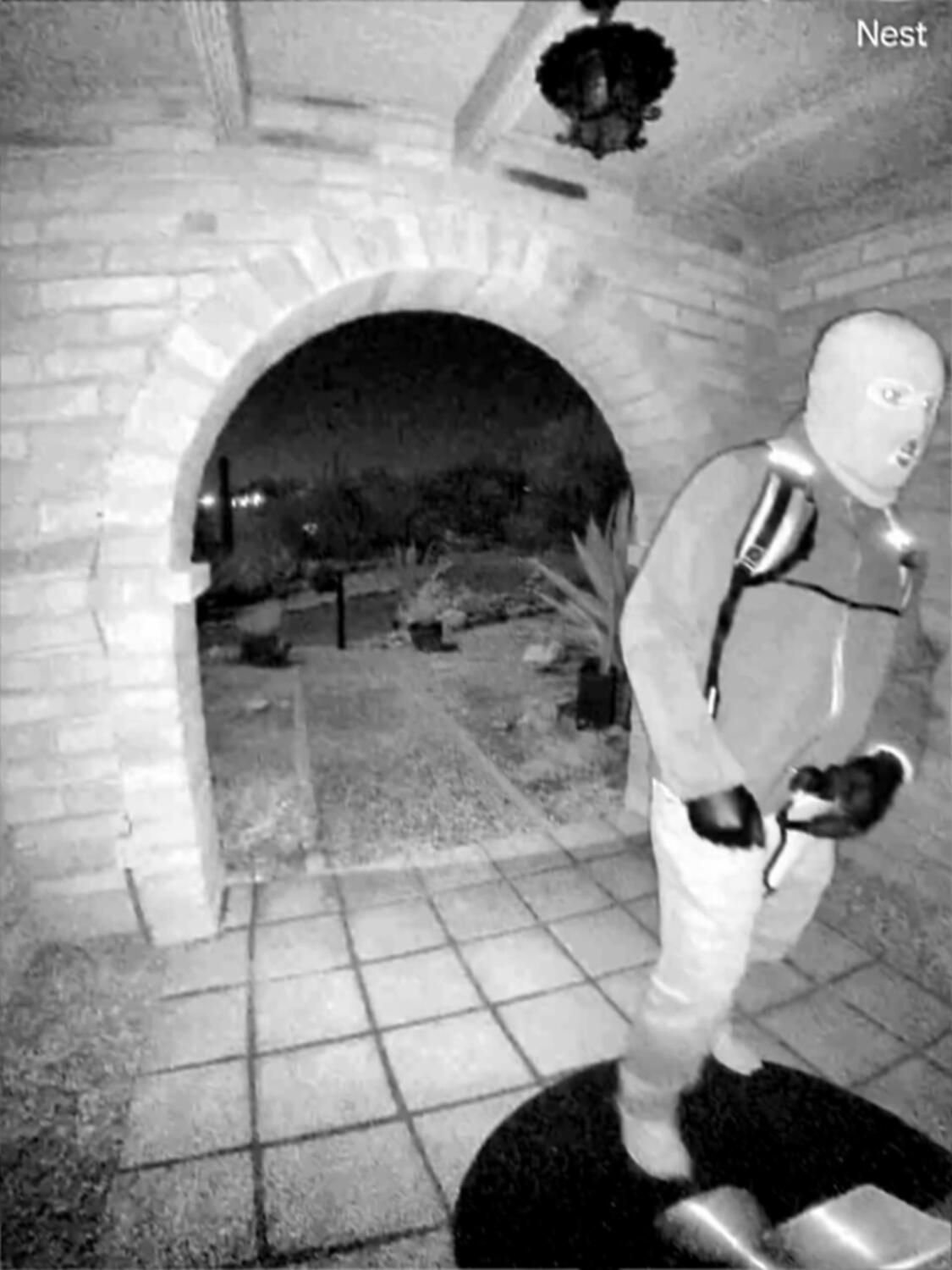
The search for answers in the Nancy Guthrie investigation just took a massive turn. For weeks, the trail felt cold, buried under a mountain of digital clutter and dead-end leads. Then the video surfaced. We aren't just talking about another grainy doorbell clip of a porch pirate. This is different. The footage of a masked intruder entering the property provides a physical anchor for a case that was drifting into the realm of pure speculation. It changes the math for investigators and, more importantly, for the family seeking justice.
When a high-profile disappearance or suspected crime occurs, the public tends to obsess over motive. We want to know who had a grudge or who stands to inherit the estate. But detectives need more than a "why." They need a "how" and a "when." That's exactly what this footage delivers. It moves the needle from theory to forensic reality. If you've been following the Guthrie case, you know the timeline was always the weakest link. Now, that timeline has a heartbeat.
Breaking Down the Visual Evidence
The video doesn't just show a person. It shows a predator. The way the intruder moves—staying low, avoiding the direct line of sight of the primary security cameras—suggests someone who didn't just stumble upon the house. This looks like pre-meditation. Most burglars are looking for an easy out. They see a camera and they bolt. This individual knew where the cameras were and, more tellingly, knew how to bypass them.
Criminal profilers often look for "forensic awareness" in suspects. It's a fancy way of saying the person knows how the police work. The masked figure in the Guthrie video displays this in spades. They aren't wearing a bulky Halloween mask that obscures their vision. It's a tight-fitting gaiter, likely chosen to maintain peripheral sight while hiding identifiable features. They're wearing gloves despite the mild weather. These small details tell us we're looking at someone who planned this encounter down to the minute.
Why the Timing is More Important than the Face
Everyone wants a "gotcha" moment where the mask slips and we see a recognizable face. That rarely happens in real life. However, the metadata of the footage is actually more valuable than a blurry nose or chin. We now have a verified timestamp. In the Guthrie investigation, the window of disappearance was originally estimated at six hours. That's an eternity in a police search.
This video shrinks that window to a matter of minutes.
Think about what that does to an alibi. If a "person of interest" claimed they were across town at 11:00 PM, but the video shows the intruder at 11:05 PM, the police can now focus their digital dragnet. They can pull cell tower pings for that specific five-minute burst. They can check traffic cameras on the three main arteries leading away from the Guthrie neighborhood. It turns a haystack into a handful of needles.
The Problem with Modern Home Security
We have a false sense of safety because of our smart doorbells. We think we're watched over by a digital guardian, but the Guthrie case highlights a massive flaw. Most consumer-grade cameras rely on PIR (Passive Infrared) sensors. These trigger when they detect heat moving across the field of view.
If you move slowly enough, or if you're heavily layered in clothing that masks your heat signature, you can sometimes walk right past these sensors without triggering a recording. It's terrifying. In Nancy Guthrie’s case, it appears the intruder knew exactly how to exploit these technical limitations. The only reason we have this "game-changing" footage is because of a secondary, old-school wired system that recorded 24/7 rather than just on motion triggers.
Why Wired Systems Beat Wireless Every Time
- No Lag: Wireless cameras often have a two-second wake-up delay. By the time they start recording, a fast-moving intruder is already past the lens.
- Continuous Recording: If the Guthrie home only had motion-activated clips, we might have seen a shadow and nothing else.
- Local Storage: Hackers can't jam a signal to a hard drive buried in a basement.
Identifying the Intruder Through Gait Analysis
Since we can't see the face, investigators are leaning on something called gait analysis. It's the study of how a person walks. Everyone has a unique "walking fingerprint." The length of the stride, the swing of the arms, and the tilt of the pelvis are incredibly hard to fake, especially when you're moving under stress.
Forensic experts can compare the movement in the masked intruder video against surveillance footage of suspects walking into a grocery store or a gas station. It’s not a "slam dunk" in court like DNA might be, but it’s enough to get a search warrant. In the Guthrie investigation, this is likely where the next big break will come from. They aren't looking for a face anymore. They're looking for a limp, a slouch, or a specific rhythmic hitch in a step.
The Neighborhood Canvass Reimagined
Before this video, the police were asking neighbors, "Did you see anything suspicious?" That’s a useless question. People forget things. They misinterpret a neighbor taking out the trash as something sinister. Now, the question is specific. "Check your footage between 10:45 PM and 11:15 PM for a dark-colored SUV or a person on foot wearing a gray hoodie."
This video has turned the entire community into a coordinated surveillance network. It’s no longer a vague search for Nancy. It’s a targeted hunt for a specific silhouette. We've seen this work in cases like the Idaho student murders, where a specific car on camera led to a nationwide search that eventually narrowed down to a single suspect. The Guthrie case is now on that same trajectory.
What This Means for the Legal Case
If an arrest is made, this video becomes the "anchor" for the prosecution. Even without a face, it establishes "presence and intent." It proves that the entry wasn't accidental. It proves the person wasn't a guest. The mask itself is evidence of "mens rea" or a guilty mind. You don't wear a mask to your friend's house at midnight unless you're planning something you don't want the world to see.
Defense attorneys will try to argue that the footage is too grainy to be certain. They’ll say it could be anyone of a similar height and build. But when you layer that footage over cell site location information (CSLI) and potentially matching clothing found in a search, the "it could be anyone" defense falls apart.
Immediate Steps for Homeowners Following This Case
Don't just wait for the news to update. Use this as a wake-up call for your own security. Most people set up their cameras and forget them.
- Check your angles: Walk your own property at night. See if you can get to your front door without triggering your camera. You'll be surprised how easy it is.
- Update your lighting: Shadows are the intruder's best friend. Motion-activated floodlights are cheap and act as a massive deterrent.
- Hardwire when possible: If you’re serious about security, move away from battery-powered "set and forget" cameras.
The Nancy Guthrie investigation is far from over, but the "masked intruder" video has ended the era of uncertainty. We know someone was there. We know when they were there. And based on the way they moved, we know they didn't want to be caught. The digital trail is getting warmer every hour.
Check your own security system's storage capacity today. Ensure you're keeping at least seven days of rolling footage, as many cases—like Guthrie's—rely on looking back at "casing" behavior that happened days before the actual incident.