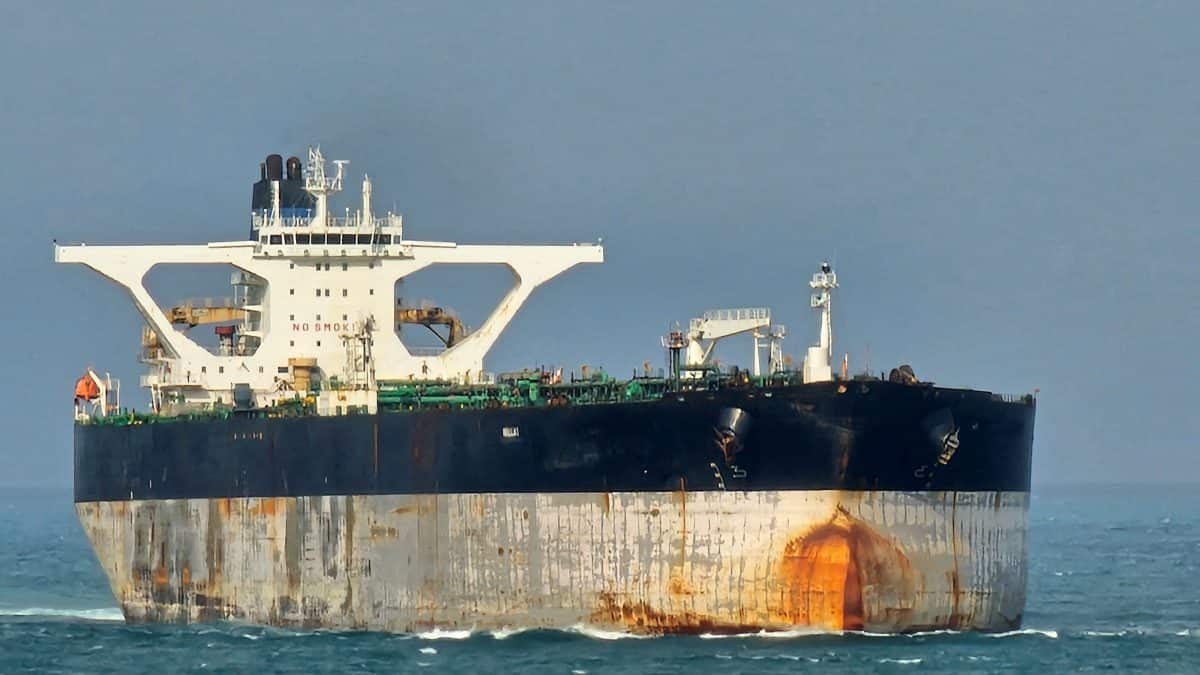
The death of three Indian sailors and the injury of another in recent maritime strikes represents a critical failure in the global security architecture governing the Red Sea and Gulf of Aden. This is not merely a localized tragedy; it is a systemic breakdown of the "freedom of navigation" doctrine that underpins approximately 12% of global trade and 40% of Asia-Europe container traffic. When merchant vessels become kinetic targets, the risk-reward calculus for global shipping shifts from operational efficiency to existential survival, forcing a re-evaluation of maritime labor supply chains and the insurance premiums that dictate commodity pricing.
The Triad of Maritime Risk Factors
The vulnerability of Indian seafarers—who constitute roughly 10% of the global seafaring population—is a function of three intersecting variables that the current geopolitical framework has failed to mitigate.
- Asymmetric Projection of Power: Non-state actors and regional powers are utilizing low-cost drone technology and anti-ship cruise missiles to negate the traditional dominance of high-cost naval carrier groups.
- Neutrality Erosion: The assumption that "neutral" flags or multi-national crews provide a layer of diplomatic protection has vanished. Attackers now prioritize the vessel's destination or perceived ownership links over the nationality of the workers on deck.
- The Labor Bottleneck: India provides the backbone of the global merchant navy. Targeted attacks on this specific demographic create a "chilling effect" that threatens to disrupt the availability of certified officers and ratings, potentially stalling global logistics more effectively than a physical blockade.
Kinetic Mechanics and Vessel Vulnerability
To understand why these specific attacks resulted in fatalities, one must analyze the structural vulnerability of modern merchant vessels. Unlike naval warships, commercial tankers and bulk carriers are not designed with redundant systems or armored citadels capable of withstanding high-explosive anti-ship missiles.
The Impact Physics of Anti-Ship Munitions
When a missile or suicide drone strikes a merchant ship, the damage is dictated by the kinetic energy formula $E_k = \frac{1}{2}mv^2$. Even a relatively small payload, when traveling at high subsonic speeds, creates a catastrophic pressure wave within the confined, steel-walled environments of a ship's superstructure.
- Primary Blast: Initial detonation destroys immediate bulkheads and navigation equipment.
- Fragmentation: Steel shards from the hull become secondary projectiles, which are the leading cause of death for bridge-side personnel.
- Thermal Ingress: Fires in the engine room or accommodation blocks are notoriously difficult to suppress due to the presence of heavy fuel oil and the chimney effect of vertical stairwells.
In the case of the confirmed Indian casualties, the proximity of the impact to crew quarters suggests a deliberate or highly accurate targeting of the vessel’s "brain"—the bridge and accommodation block—rather than a mere attempt to disable the propulsion system.
The Economic Distortion of Maritime Insecurity
The death of sailors triggers a cascade of financial and logistical adjustments that extend far beyond the immediate grief of the families. The shipping industry operates on thin margins where "War Risk Premiums" can make or break the viability of a route.
The Insurance Feedback Loop
Insurance underwriters categorize the Red Sea as a "Listed Area." Following these fatalities, we observe a predictable hardening of the market:
- War Risk Surcharges: These have spiked from 0.01% of hull value to over 0.7% in high-tension periods. For a $100 million vessel, this adds $700,000 per single transit.
- Crew Danger Pay: International bargaining forums often mandate double basic pay for seafarers entering high-risk zones. While necessary for the crew, this increases the "OPEX" (Operating Expenditure) for ship managers who are already facing longer transit times around the Cape of Good Hope.
- Diversion Costs: The decision to bypass the Suez Canal adds approximately 3,500 nautical miles and 10 to 14 days to a journey. The fuel consumption for a large container ship during this detour can exceed $1 million, while the carbon footprint increases by 30% per TEU (Twenty-foot Equivalent Unit).
India’s Strategic Dilemma: Protection vs. Participation
The Indian government faces a complex optimization problem. It must protect its citizens without escalating its naval presence to a point that invites direct conflict or compromises its "strategic autonomy" in the Middle East.
The Deployment Equilibrium
The Indian Navy has increased its presence in the Arabian Sea, deploying guided-missile destroyers like the INS Kolkata and INS Kochi to provide "Over-the-Horizon" security. However, the sheer volume of traffic—hundreds of ships per day—makes individual escorts a mathematical impossibility.
Instead, the strategy has shifted toward:
- Point Defense Intelligence: Sharing real-time tracking data with merchant vessels to help them avoid known "hot zones."
- VBSS (Visit, Board, Search, and Seizure): Increasing the frequency of elite marine commando patrols to deter piracy and boarding attempts that often follow a missile strike.
- Diplomatic De-escalation: Leveraging ties with regional players to ensure that Indian-flagged or Indian-crewed vessels are not explicitly categorized as hostile.
The limitation of this strategy is its reactivity. Naval assets can respond to a distress call (S.O.S.), but they can rarely intercept a subsonic missile launched from a mobile shore-based battery before it impacts a slow-moving target.
The Human Capital Crisis in Global Shipping
Beyond the immediate tactical concerns lies a long-term threat to the maritime labor market. The "Psychological Attrition" of seafarers is a quantifiable metric that determines the future stability of trade.
If the Red Sea remains a "kill zone" for Indian sailors, the recruitment pipeline will contract. The maritime industry already struggles with officer shortages; a sustained period of casualties will lead to:
- Brain Drain: Experienced officers moving to shore-based logistics or coastal trade where the risk profile is lower.
- Increased Training Costs: As the risk increases, the "Risk Premium" required to attract new cadets rises, forcing ship owners to subsidize training more heavily.
- Flag State Shifts: Ship owners may seek flags of convenience that they perceive as having better diplomatic protection, though as evidenced by recent strikes, the flag on the stern provides no physical protection against a drone.
Structural Failures in International Law
The United Nations Convention on the Law of the Sea (UNCLOS) provides the legal framework for "Innocent Passage," but it lacks an enforcement mechanism against non-state actors or rogue states using proxy forces. The current situation exposes a "Responsibility Gap":
- The Flag State: Often a small nation like Panama or Liberia, lacks the naval power to protect its fleet.
- The Port State: Interested only in the cargo, not the transit.
- The Labor-Sourcing State: India, in this case, has the power but not the jurisdiction over a foreign-flagged vessel.
This fragmentation allows attackers to exploit the "diffusion of responsibility," knowing that a strike on a ship involves so many different national interests that a unified military response is slowed by diplomatic friction.
Strategic Recommendation for Maritime Stakeholders
The current "wait and see" approach is no longer viable given the confirmed loss of life. Stakeholders must pivot toward a three-tiered hardening strategy:
Technical Hardening: Ship owners must move beyond passive "Citadels" and invest in active non-kinetic defense systems. This includes sophisticated Electronic Warfare (EW) suites capable of jamming drone frequencies and GPS spoofing to misdirect incoming munitions.
Contractual Realignment: BIMCO (Baltic and International Maritime Council) clauses must be updated to give captains absolute autonomy to divert without penalty if a specific risk threshold is met, regardless of the charterer’s demands. The "Right to Refuse" for individual seafarers must be backed by a global fund that ensures their career is not penalized for avoiding war zones.
Coalition Intelligence Integration: The Indian Navy’s Information Fusion Centre for the Indian Ocean Region (IFC-IOR) must be integrated directly into the bridge systems of high-risk merchant vessels. Real-time, encrypted data feeds regarding localized threat vectors are more valuable than a destroyer that is 200 miles away.
The loss of these three Indian sailors is a definitive signal that the "maritime commons" are currently unpoliced and unsafe. Continued reliance on the goodwill of regional actors or the presence of a few naval hulls is a strategy of diminishing returns. The industry must prepare for a prolonged era of "Contested Transit," where the safety of the crew is treated as a core engineering and intelligence challenge rather than an afterthought of global trade.


