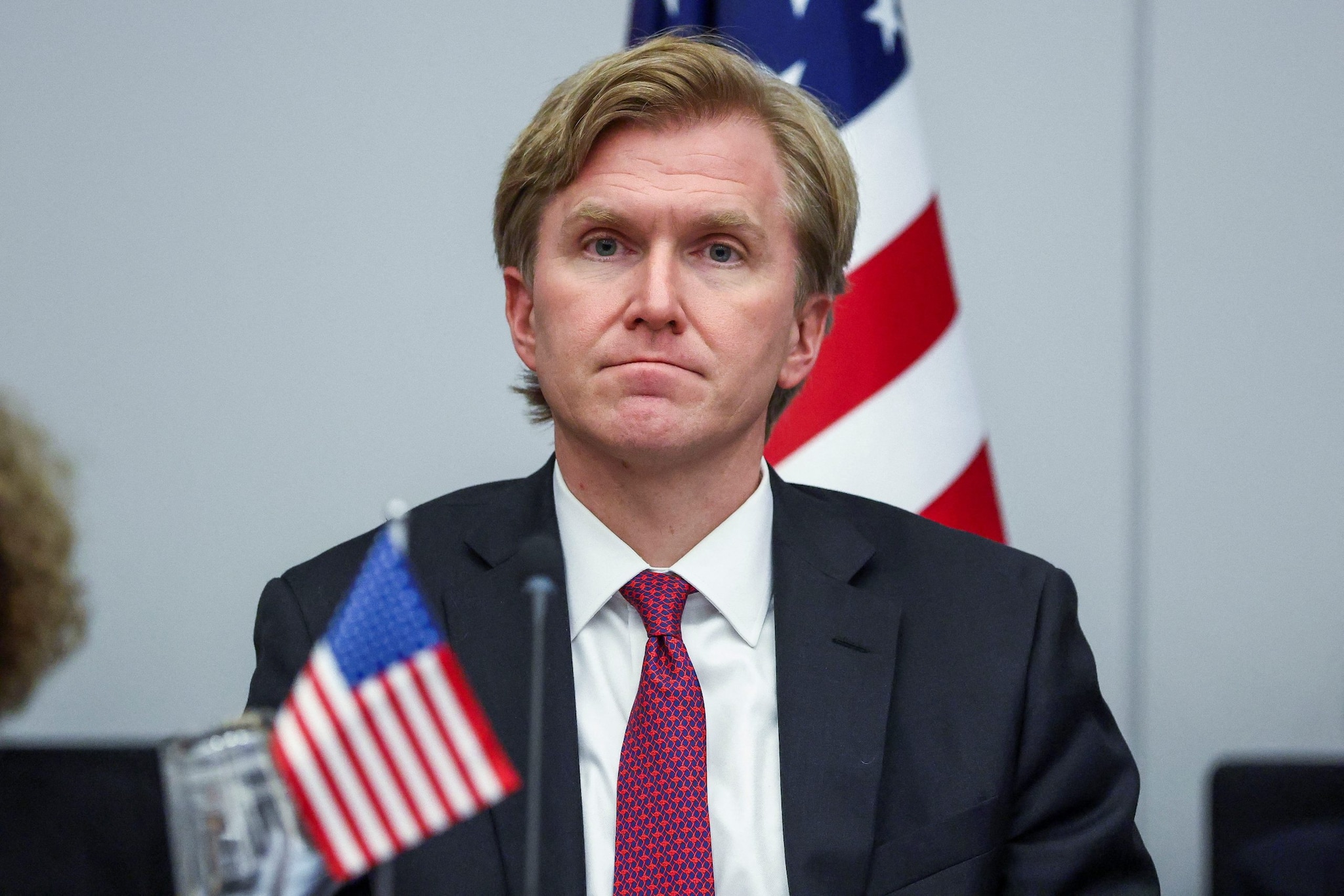
Elbridge Colby knows how to read a map. But when he touches down in New Delhi, he isn't looking at the colorful lines of borders or the blue expanses of the Indian Ocean. He is looking at the friction. He is looking at the places where the world is starting to fray at the edges.
The air in Delhi during these high-level visits usually carries a specific scent: a mix of jet fuel, marigolds, and the heavy, humid weight of history. For a US defense official, this isn't just a diplomatic stopover. It is a frantic attempt to lash two massive ships together before the hurricane hits. While the headlines scream about the escalating war with Iran, the real story is happening in quiet rooms where men like Colby try to convince India that their destinies are no longer separate. For a deeper dive into similar topics, we suggest: this related article.
The ghost in the room
Imagine a shopkeeper in Mumbai. He doesn't care about the intricacies of the Pentagon’s integrated deterrence strategy. He cares about the price of the cooking oil in his pantry and the stability of the power lines above his street. But that shopkeeper is tethered to the Persian Gulf by an invisible, unbreakable thread of oil and labor.
When missiles fly over the Strait of Hormuz, the lights in that Mumbai shop flicker. For further context on this issue, comprehensive reporting is available on NPR.
Washington knows this. Colby knows this. The visit is less about "shoring up ties" and more about an urgent realization: the old silos of "Middle East policy" and "Indo-Pacific strategy" have collapsed into each other. If Iran becomes a wildfire, the smoke will choke New Delhi long before it reaches DC.
For decades, India played the role of the cautious neutral. It was the "Strategic Autonomy" era—a fancy way of saying they wanted to be friends with everyone and beholden to no one. They bought Russian S-400s while practicing flight maneuvers with American F-16s. It was a delicate dance.
The dance is getting harder. The music is too loud.
The weight of the hardware
Moving a country’s military posture is like trying to turn an aircraft carrier with a rowing oar. It is slow. It is agonizing. It requires a level of trust that doesn't usually exist between superpowers.
Colby’s arrival signals a shift from grand speeches to the grueling work of "co-production." This is a sanitized word for a very visceral reality. It means American engineers sitting side-by-side with Indian technicians, sharing the "crown jewels" of jet engine technology. It means making sure that if a conflict breaks out, an Indian destroyer can talk to a US satellite without a second of lag.
Consider the MQ-9B Predator drones. These aren't just toys for the generals. They are the eyes of a nation that has thousands of miles of coastline to watch. When India integrates these systems, they aren't just buying hardware; they are stitching their nervous system into the West’s.
But there is a catch. There is always a catch.
India remembers 1971. They remember when the US Seventh Fleet sailed into the Bay of Bengal as a threat, not an invitation. That memory sits in the back of the room during every meeting Colby has. It’s the cold shiver in the middle of a warm handshake. Trust isn't built by a single visit; it’s built by the American realization that India will never be a "junior partner." They will be an anchor, or they will be nothing.
The Iran complication
The timing of this visit is not accidental. As Washington finds itself dragged back into the visceral, bloody reality of a Middle Eastern conflict, there is a palpable fear that the "Pivot to Asia" is rotting on the vine.
If the US gets bogged down in a long-term war with Iran, who watches the Himalayas? Who keeps the sea lanes open in the South China Sea?
The American message to Delhi is blunt: We need you to step up, because we might be busy elsewhere.
This creates a terrifying paradox for Indian leadership. On one hand, they see an opportunity to become the preeminent power in the region. On the other, they see the risk of being left holding the bag if the US decides to retreat behind its oceans again. It is the anxiety of the "middle power"—the fear of being the grass that gets trampled when the elephants fight.
The human cost of the silicon shield
We often talk about "defense ties" as if they are made of steel and software. They are actually made of people. They are made of the graduate student from Hyderabad who moves to Arlington to work on AI. They are made of the sailor from Maine who finds himself docking in Chennai for the first time, realizing that the world is much smaller than he was told.
The collaboration on iCET (Initiative on Critical and Emerging Technology) is the heartbeat of this visit. It sounds like bureaucratic alphabet soup. In reality, it is the race to ensure that the future—the AI that runs our hospitals, the chips that power our cars, the space stations that watch our weather—isn't owned by a single, authoritarian vision.
If Colby succeeds, it won't be because of a signed piece of paper. It will be because he convinced the skeptics in the Indian Ministry of Defence that the "American Century" isn't over—it’s just becoming a joint venture.
The skeptics are loud. They point to the fluctuating prices of oil. They point to the millions of Indian expatriates working in the Gulf who are now in the crosshairs of a potential regional war. For these people, "stability" isn't a buzzword. It is the difference between a paycheck and a displacement camp.
Beyond the briefing books
There is a specific kind of silence that happens in these high-stakes meetings. It’s the moment after the translators finish and before the next point is made. In that silence, you can feel the ghost of the Cold War and the shadow of the next great conflict.
Colby is there to fill that silence with a roadmap.
He is pitching a world where the US and India are the two pillars of a bridge that spans the globe. But bridges are under constant tension. They require maintenance. They require the understanding that if one pillar crumbles, the whole structure drops into the dark water below.
The war with Iran is the immediate fire. It is the emergency that requires a siren. But the relationship with India is the slow, steady construction of a firebreak. It is the realization that the world is no longer a collection of "theaters"—European, Middle Eastern, Pacific—but one single, interconnected web of risk.
As the sun sets over the Rashtrapati Bhavan, casting long, orange shadows across the red sandstone, the maps are folded away. The black cars wait in the driveway. The officials move on to the next banquet, the next briefing, the next crisis.
But the friction remains.
The shipkeeper in Mumbai sleeps uneasily. The technician in a Bangalore lab watches a loading bar on a joint-defense project. And the mapmaker realizes that the most important lines on the map aren't the ones he drew in ink, but the ones drawn in the shared breath of two nations realizing they can no longer afford to be alone.
The storm is coming. The only question left is how well we have lashed the ships together.