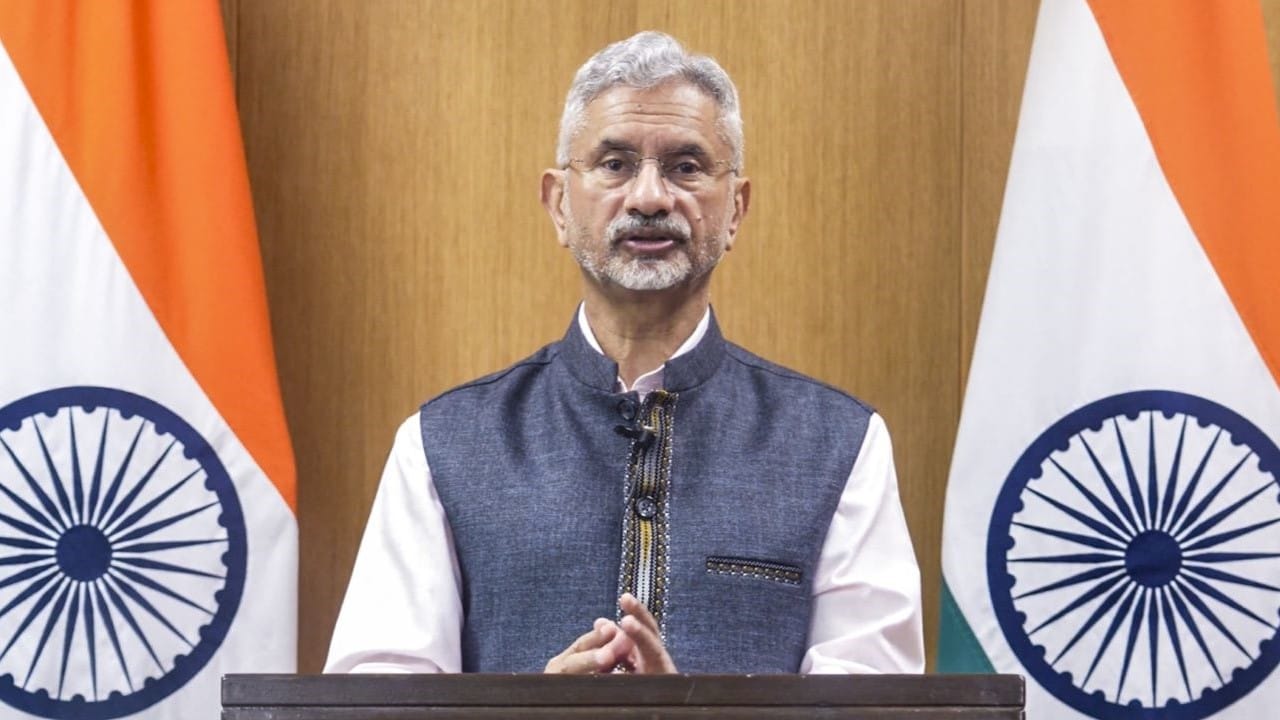
The air in the French Alps carries a specific, crystalline silence, even when the world’s most powerful leaders are gathered within its grasp. Outside the heavy doors of the G7 summit, the peaks of Haute-Savoie stand indifferent to human history. Inside, the atmosphere is heavy with a different kind of pressure. It is the weight of geography.
Imagine a shipping container sitting on a rain-slicked dock in Odesa. Inside are the components of a future—perhaps grain, perhaps the raw materials for a digital revolution. For that container to reach a shelf in Mumbai or a factory in Bengaluru, it must navigate a world that has suddenly become very small and very dangerous. This isn't just a matter of logistics. It is the story of how two men, Prime Minister Narendra Modi and President Volodymyr Zelenskyy, sat down in the shadow of the mountains to redraw the invisible lines that keep our world fed and powered.
They met on the sidelines, a term that suggests a casual aside. It was anything but.
The Geography of Hunger and Hardware
When we talk about "supply chains," the phrase feels clinical. It sounds like a spreadsheet. But for a farmer in the Punjab or a technician in a Kyiv suburb, a supply chain is a lifeline. It is the pulse of their daily existence.
Ukraine and India are separated by thousands of miles, yet they are joined at the hip by the most basic of human needs. Before the sky over Ukraine was filled with the smoke of conflict, the country was a primary engine for India’s food security, specifically sunflower oil. When the ports went silent, the price of a meal in a Delhi household shifted. It was a visceral reminder that a tremor in the Black Sea creates a tidal wave in the Indian Ocean.
In France, the conversation between Modi and Zelenskyy moved past the immediate tragedy of the front lines to the cold, hard reality of the "Middle Corridor." They discussed the Middle East and the shifting routes of global trade. They weren't just looking at maps; they were looking at the survival of their economies.
Consider the Red Sea. For months, it has been a gauntlet. Ships carrying the very lifeblood of global commerce have had to choose between the risk of fire or the staggering cost of circumnavigating an entire continent. When India and Ukraine discuss the Middle East, they aren't just talking about diplomacy. They are talking about the safety of the sailor standing watch at 3:00 AM, wondering if his vessel is the next target.
The Silent Architecture of Peace
Peace is often discussed in the abstract, as a collection of treaties and signatures. But true stability is built on the mundane. It is built on the reliability of a gearbox, the steady flow of wheat, and the predictable arrival of a cargo plane.
India’s position has always been one of a delicate, deliberate balance. It is a country that views the world through the lens of Vishwa Bandhu—a friend to the world. But friendship in the modern age requires more than a handshake. It requires an honest reckoning with the fact that no nation is an island.
Zelenskyy’s presence at the G7, and his specific outreach to India, signals a shift. He isn't just looking for ammunition; he is looking for an anchor. India represents a massive, stabilizing force in the Global South. If India can help secure the routes that bring Ukrainian goods to the world, the economic incentive for peace becomes a physical reality.
The two leaders delved into the specifics of trade corridors that bypass traditional choke points. This is where the narrative of the war meets the narrative of the future. By strengthening the links between the Baltic, the Black Sea, and the Arabian Sea, they are creating a world where no single conflict can starve a population or freeze an industry.
The Human Stake in the High-Tech
There is a tendency to view these meetings as a clash of titans, but the stakes are remarkably humble.
Think of a small business owner in Poland who relies on Indian IT services to keep her shop running. Or an Indian engineering firm that uses Ukrainian turbines. When the supply chain breaks, these people don't see a "geopolitical shift." They see a closed door. They see a child’s tuition they can no longer afford.
The G7 summit in France provided the stage, but the substance was found in the quiet intensity of the Indo-Ukrainian dialogue. It was an acknowledgment that the "Middle East" is no longer just a region on a map; it is a vital artery. If that artery is blocked, the whole body suffers.
India has maintained a stance that calls for dialogue and diplomacy, a position that has often been scrutinized by the West. Yet, in the room with Zelenskyy, that stance took on a practical dimension. Modi isn't just a mediator; he is a stakeholder. India’s growth depends on a world where the rules of the sea are respected and where borders don't become barriers to the basic necessities of life.
The Invisible Thread
The "Middle East" section of their talk wasn't a distraction from the war in Europe. It was an extension of it. The volatility in Gaza and the surrounding waters has created a secondary front in the global economic struggle. By discussing these two regions in the same breath, Modi and Zelenskyy recognized that the world’s crises are no longer isolated incidents. They are a single, tangled web.
We often think of history as something that happens to us. We watch the news and feel like spectators to a play we didn't write. But the reality is that the decisions made in a sun-drenched room in France determine the price of the bread on your table tonight.
The supply chain is the invisible thread that sews the world together. If it is pulled too hard in one place, the fabric begins to unravel everywhere.
The meeting ended not with a grand proclamation, but with a commitment to keep talking. In the world of high diplomacy, silence is the enemy and movement is the only metric of success. They are moving. They are trying to find a way to ensure that the container on the dock in Odesa eventually finds its way to the hand that needs it in Mumbai.
As the leaders flew out of France, the mountains remained, cold and unchanging. But below them, the world had shifted slightly. The map was being redrawn, not by soldiers this time, but by the urgent, human necessity of keeping the lights on and the shelves full.
The true cost of the conflict isn't just found in the ruins of a city. It is found in the uncertainty of the journey. By focusing on the supply chain, India and Ukraine are trying to build a road through the chaos. It is a road paved with pragmatism, guarded by diplomacy, and driven by the simple, enduring hope that tomorrow, the ships will arrive on time.
The mountains are silent, but the world is listening for the sound of the engines.