The air in Texas has a specific weight. In the high summer, it presses against your chest like a physical hand, carrying the scent of baked asphalt and the persistent, low-frequency hum of cicadas that sound like a warning no one quite knows how to heed. It is a place where you can drive for six hours and still be in the same state, surrounded by the same scrub brush and the same endless, shimmering horizon.
This vastness is usually a comfort. It’s a canvas for reinvention. But for a woman whose name now lives in police affidavits and grief-stricken social media posts, that vastness became a shroud.
The story began with a silence that didn't belong.
In a normal life, silence is a luxury. It’s the quiet moment before the coffee pot hisses or the brief pause between text messages. But there is another kind of silence—a heavy, curdled quiet that suggests the gears of a routine have ground to a violent halt. When friends and family realized the digital heartbeat of a young woman had flatlined, the Texas heat suddenly felt much colder.
The Anatomy of a Disappearance
We often think of "disappearing" as a sudden, cinematic event. We imagine a struggle in a dark alley or a door left swinging on its hinges. The reality is frequently more mundane and far more chilling. It starts with a missed call. Then a message that stays "delivered" but never "read."
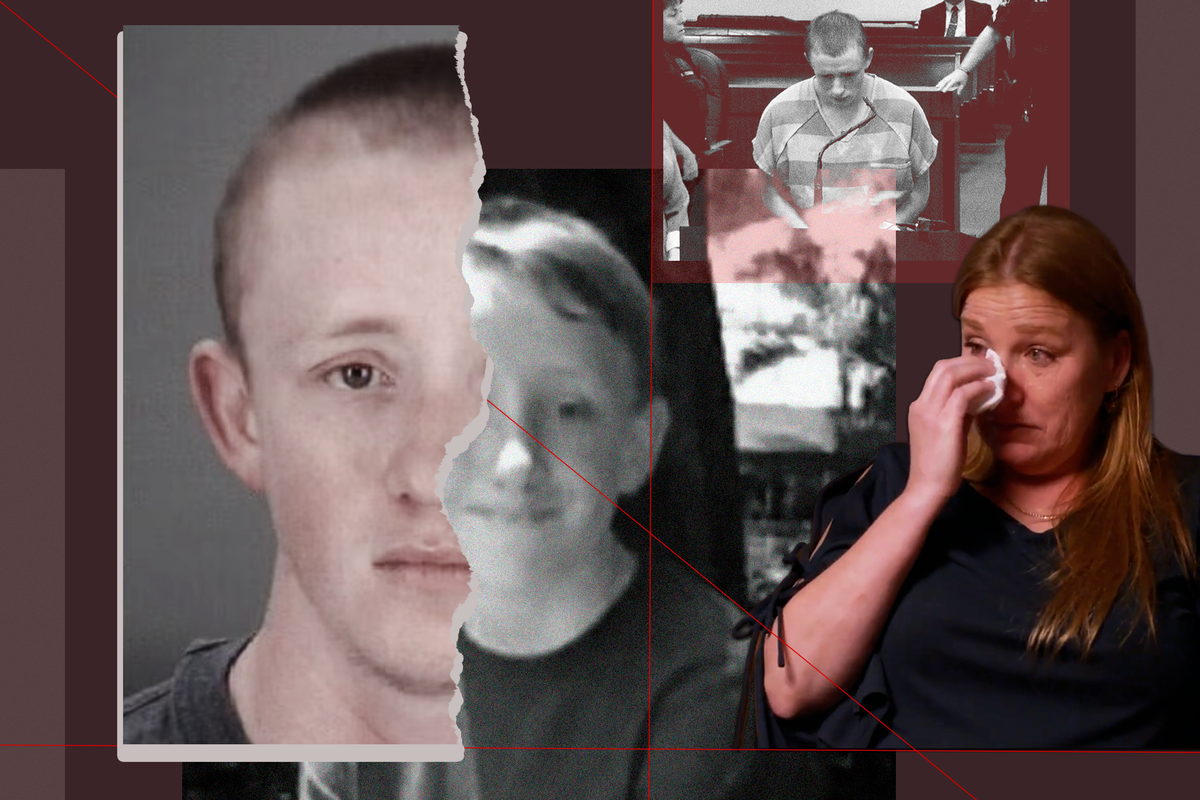
Investigators in Texas began pulling at the threads of a life that had been abruptly unspooled. They looked at the boyfriend. Statistically, the person who shares your bed is the most likely person to end your life. It is a grim, recurring glitch in the human condition. While we scan the woods for monsters, the real danger often has a key to the front door and knows exactly how you take your coffee.
The man in question didn't offer a frantic search or a tearful plea to the local news cameras. Instead, he offered a void.
As the authorities moved through the digital breadcrumbs we all leave behind—GPS pings, cell tower handoffs, the timestamps of a life lived in the cloud—a terrifying map began to emerge. It wasn't a map of a search. It was a map of a flight.
Consider the logistics of a secret. To hide a body is to attempt to delete a physical fact from the universe. It is an impossible task. You are fighting against biology, against the elements, and against the sheer, stubborn weight of a human being who was once loved.
Crossing the Border of Morality
The suspect didn't just move through the Texas heat. He drove. He drove until the landscape changed, until the red dirt of the South gave way to the different hues of another state. This is where the story shifts from a local tragedy to a cross-country nightmare.
There is a specific kind of desperation that fuels a drive like that. It’s the belief that if you just get far enough away, the thing you’ve done will somehow un-happen. If you dump the remains across a state line, you aren't just crossing a geographic border; you are trying to outrun the reach of justice.
But borders are porous to the truth.
The discovery of remains in a different state isn't just a technicality for the prosecutor’s office. It is the moment a family’s hope is replaced by a permanent, jagged hole. For the investigators, it means coordinating across jurisdictions, syncing different radio frequencies, and merging two different sets of laws into one pursuit of the truth.
The suspect likely thought the distance would buy him safety. He didn't account for the fact that every mile he traveled was another data point, another witness in the form of a license plate reader or a gas station security camera. In the modern world, the "perfect place" to hide something no longer exists. The planet has become too small.
The Invisible Stakes of a Domestic Pulse
Why does this matter to the person sitting in a quiet kitchen reading this?
It matters because this isn't just a story about a "Texas man" and a "dead girlfriend." Those are labels designed to help us process the horror without feeling the heat of it. The real story is about the thinness of the veil between a life and a memory.
We live in a culture that often fetishizes true crime as entertainment. We listen to the podcasts while we fold laundry. We watch the documentaries to unwind. But there is a hidden cost to this consumption. We begin to see these victims as plot points rather than people who had favorite songs, unwashed dishes in the sink, and plans for next Tuesday.
When a man is accused of killing his partner and hauling her across state lines like unwanted cargo, it exposes a fundamental breakdown in the social contract. It’s a reminder that domestic violence isn't a "private matter." It is a public hazard that leaves a trail of wreckage across the map of the country.
Hypothetically, imagine a woman named Sarah. Sarah has been told for years that his temper is just "passion." She’s been told that the way he checks her phone is just "protection." She lives in the tension between the person she loves and the person she fears. The moment that tension snaps, it doesn't just affect Sarah. It ripples outward to the police officer who has to process the scene, the truck driver who finds a shallow grave in a clearing, and the siblings who will never get another phone call.
The Weight of the Evidence
The legal system moves with a glacial, agonizing precision.
In this case, the evidence isn't just the remains. It’s the behavior. It’s the silence. It’s the trail of GPS coordinates that scream a guilty conscience louder than any confession ever could. Prosecutors have to build a bridge from "accused" to "convicted" using nothing but the cold, hard stones of facts.
- The timing of the disappearance.
- The movements of the vehicle.
- The digital footprints left in the dust of the interstate.
- The testimony of those who saw the cracks in the relationship before the break occurred.
The man sits in a cell now, the Texas sun likely visible only through a narrow, reinforced window. He is a person who thought he could outsmart the geography of his own actions. He is a reminder that the most dangerous thing in the world isn't a stranger in the dark. It’s the person who knows your secrets and decides they are no longer worth keeping.
The Quiet Aftermath
When the headlines fade—and they always do—the landscape remains.
The scrub brush in Texas will keep growing. The highway will continue to hum with the sound of people going somewhere, fleeing something, or heading home. But for one family, the map of the United States has been permanently altered. There is a spot on that map, hundreds of miles from home, that will forever represent the end of a story that should have had chapters left to write.
We tell these stories not to gawk at the macabre, but to remember the weight of a single life. We tell them because the silence of the victim must be filled by the noise of the living demanding an accounting.
The tragedy isn't just that she is gone. The tragedy is that he thought he could leave her behind in the dirt of another state and keep driving as if the road ahead was clear. He forgot that the past is a passenger that never exits the vehicle. It sits in the backseat, watching the rearview mirror, waiting for the moment the lights appear in the distance.
Justice isn't a fast car. It’s a slow, steady walk that eventually covers every mile, no matter how far you've run.
The Texas heat is still there. The silence is still there. But the map is finally being read correctly.
The woman is no longer just a headline. She is a reminder that we are all responsible for looking closer at the silences in our own neighborhoods, before they turn into a drive across a state line that no one ever intended to take.
The road ends here.