The air in Tehran does not just carry the scent of exhaust and toasted sangak bread. It carries the weight of a thousand years of shifting shadows. In the high-walled compounds where the real decisions of state are made, silence is a language. To understand the man who might soon hold the fate of eighty-five million people in his hands, you have to look not at what he says, but at the space he occupies when he isn't speaking.
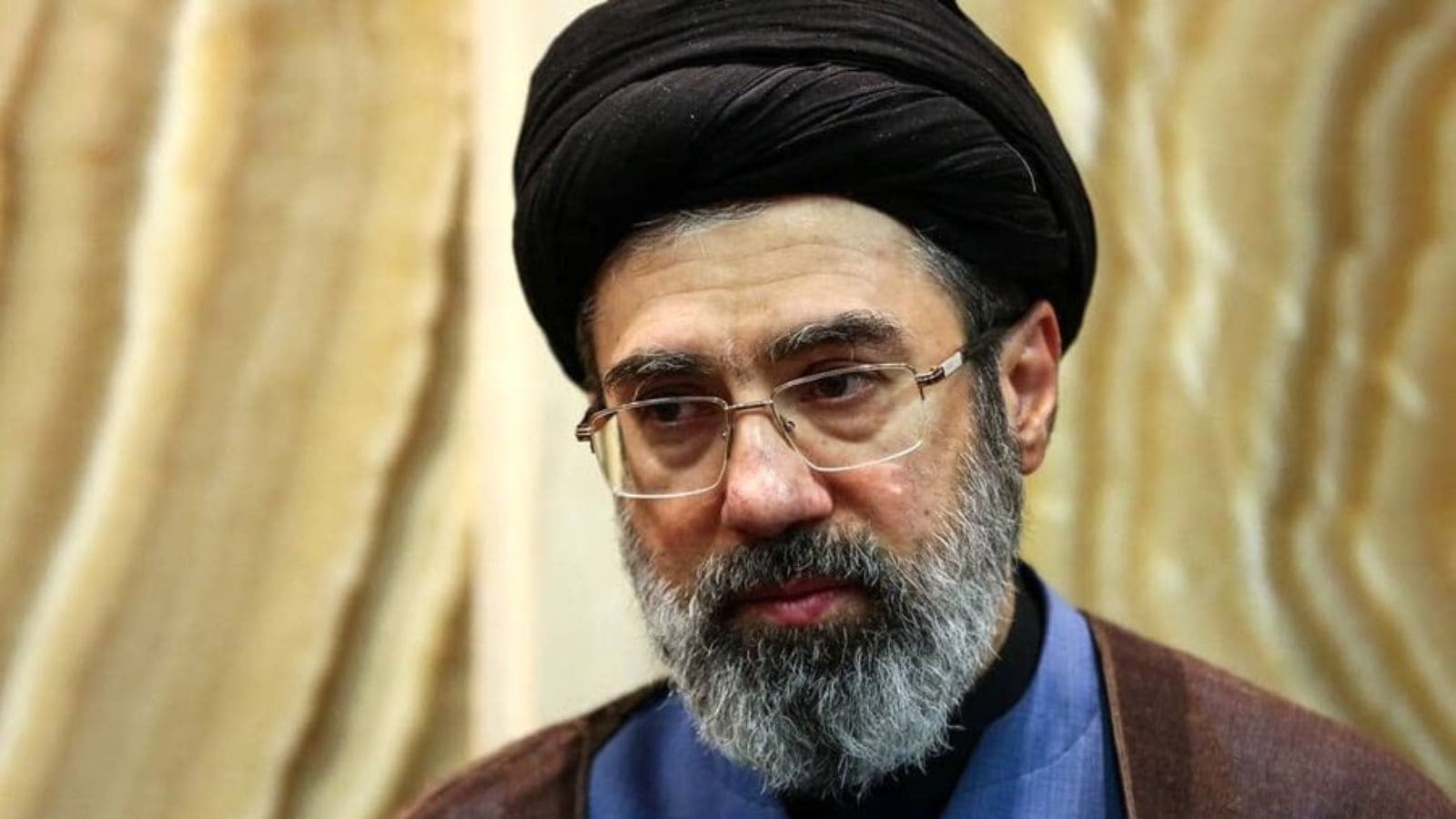
Mojtaba Khamenei is a ghost in a country of loud proclamations.
For decades, the second son of Iran’s Supreme Leader, Ali Khamenei, has lived in a deliberate, curated obscurity. While other regional scions flaunt their wealth on Mediterranean yachts or post curated clips of their military prowess, Mojtaba has mastered the art of being everywhere and nowhere at once. He is the whisper behind the curtain. He is the architect of the invisible.
Following the sudden, fiery death of President Ebrahim Raisi in a helicopter crash—a man long groomed as the frontrunner for the ultimate prize—the path to the leadership has suddenly narrowed. The fog has cleared. And standing there, blinking in a light he has avoided for fifty-five years, is the son.
The Education of a Prince
Power in the Islamic Republic is not merely about votes or even guns. It is about a specific, lethal blend of religious legitimacy and proximity to the source. Mojtaba was born in Mashhad in 1969, just as the old world of the Shah was beginning to fracture. He didn't grow up in luxury; he grew up in the austere, paranoid atmosphere of a revolutionary household.
His father was a dissident then, a man frequently arrested, a man whose life hung by a thread. This shaped the boy. It taught him that the world is a place of betrayal, where survival depends on who you know and what you keep hidden. When the 1979 Revolution flipped the world on its head, Mojtaba didn't move into a palace. He moved into the machinery.
During the brutal Iran-Iraq War of the 1980s, Mojtaba served in the Habib Battalion. Imagine a young man, the son of one of the most powerful men in the burgeoning theocracy, crouched in a muddy trench. He wasn't there for the cameras. He was there to build a network. It was in those trenches that he forged bonds with the men who would eventually become the top brass of the Islamic Revolutionary Guard Corps (IRGC).
These are the men who now hold the keys to the kingdom. They don't see a "nepo baby." They see a brother-in-arms who understands the language of force.
The Office of the Leader
If you want to find the true pulse of Iran, don't look at the Parliament building. Look at the Beit-e Rahbari—the House of the Leader. This is the sprawling administrative complex where the Supreme Leader operates. It is a black box.
Inside this box, Mojtaba has spent the last two decades acting as a gatekeeper. Think of it as a corporate headquarters where the CEO has stayed in power for thirty-five years, and the only way to get a signature on a contract is to go through his son. Over time, the son stops just passing messages. He starts making the edits.
By the mid-2000s, Mojtaba’s influence became an open secret. During the disputed 2009 "Green Movement" protests, when millions of Iranians took to the streets demanding to know "Where is my vote?", it was Mojtaba who was widely believed to be coordinating the crackdown. While his father provided the theological justification for the suppression, the son allegedly managed the logistics of the Basij militia and the security forces.
He became the bridge. On one side, the aging, scholarly clergy. On the other, the young, technocratic, and ruthless military elite. Mojtaba is the only person who speaks both dialects perfectly.
The Myth of the Marja
The hurdle for Mojtaba has always been one of credentials. To be the Supreme Leader, the Constitution of Iran originally required the person to be a Marja—a "source of emulation," the highest rank of Shia cleric. His father wasn't one when he took power, and they had to change the rules to make it work.
Mojtaba has spent the last few years trying to solve this "legitimacy gap." In 2022, he began teaching advanced religious seminars in the holy city of Qom. For a man who had spent his life in the shadows of intelligence briefings, this was a loud announcement. It was the equivalent of a corporate heir suddenly getting an MBA from Harvard just before the board meeting.
State-affiliated media began referring to him as "Ayatollah." In the world of the Islamic Republic, titles aren't just honors; they are job requirements.
But this rise hasn't been without friction. The Iranian people are weary. They have lived through decades of sanctions, corruption, and a shrinking middle class. The idea of "hereditary" rule in a Republic that was founded on the rejection of a monarchy is a bitter pill. It feels like a betrayal of the 1979 promise.
"We didn't kick out the Pahlavis just to get the Khameneis," is a sentiment whispered in the tea houses of Isfahan and the tech hubs of North Tehran.
The Empty Chair
When the helicopter carrying President Raisi vanished into the mist of the East Azerbaijan mountains, the political landscape of the Middle East shifted in a single afternoon. Raisi was the perfect placeholder. He was loyal, he was unimaginative, and he was the "safe" choice to succeed the elder Khamenei.
With Raisi gone, the "safe" choice is dead.
Now, the ruling elite faces a terrifying vacuum. If they pick a weak successor, the various factions—the Guard, the traditional clergy, the pragmatists—will tear each other apart for the spoils. If they pick a strong successor from outside the family, Ali Khamenei risks his legacy being dismantled by someone who wants to take the country in a new direction.
This leaves Mojtaba as the ultimate continuity candidate. To the IRGC, he represents stability and the protection of their vast economic interests. To his father, he represents the only person on earth who can be trusted to preserve the "Revolutionary" line.
The Hidden Stakes
What does a Mojtaba Khamenei presidency—or rather, "Leadership"—actually look like?
It likely looks like a tightening of the screw. He is a child of the security apparatus. He does not share his father’s poetic sensibilities or his long-winded historical grievances. He is a creature of the 21st century: digital surveillance, proxy warfare, and hard-nosed survivalism.
For the West, he is a riddle. There are no records of him meeting foreign dignitaries. There are no speeches at the UN. There is only a trail of influence that leads through the most sensitive files of the Iranian state.
But there is a human cost to this high-stakes game of succession. Behind the geopolitical analysis are millions of young Iranians who are more connected to the outside world than any generation before them. They watch Netflix through VPNs. They trade crypto. They want a life that isn't defined by the shadows of their grandfathers' revolution.
When they look at Mojtaba, they see the ultimate embodiment of the "Aghazadeh"—the "noble-born" children of the elite who enjoy the fruits of a system that demands sacrifice from everyone else.
The tension in Iran is not a slow burn; it is a pressurized tank. Every time the government tightens the lid, the pressure grows. The elevation of a son to succeed a father in a "Republic" might be the spark that finally breaches the hull.
The Final Move
Ali Khamenei is 85. He is a man who has outlived his rivals, his friends, and now, his hand-picked successor. He is alone on the summit.
In the coming months, we will see a series of carefully choreographed moves. Watch the Assembly of Experts, the body tasked with choosing the next leader. Watch the state-run TV channels for documentaries about the "quiet brilliance" of the Leader’s son. Watch for the sudden disappearance of any other potential rivals from the public eye.
The transition of power in Iran is rarely a loud explosion. It is a gradual thickening of the air. It is the sound of doors being locked, one by one, until only one person is left in the room.
Mojtaba Khamenei has spent fifty years learning how to be that person. He has learned to wait. He has learned to watch. He has learned that in the game of thrones, the man who hides his face often ends up wearing the crown.
But a crown is heavy. And in a country as volatile and storied as Iran, the weight of the past can crush even the most prepared heir. The shadow is finally moving. The ghost is becoming flesh. And for the first time in his life, Mojtaba Khamenei will have nowhere left to hide.
The silence is about to end.