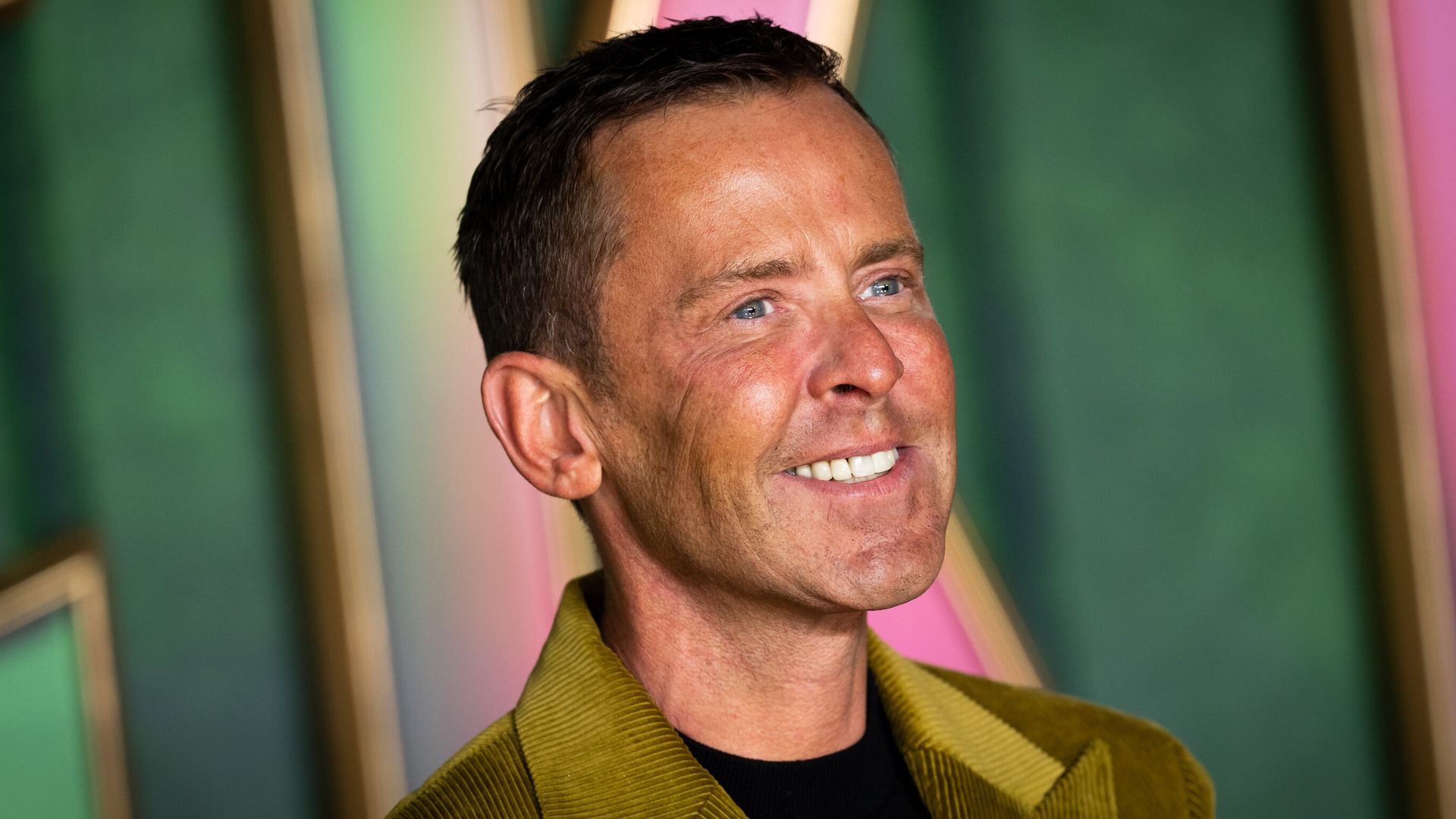
The year was 1975, and the air in Los Angeles smelled like eucalyptus and expensive analog tape. If you walked into a recording studio in the South Bay, you might hear a sound that didn't quite fit the era's obsession with guitar gods or the looming shadow of disco. It was a swirling, cinematic wash of Hammond B3 and Moog synthesizers—a sound that felt like it was breathing. At the center of that sound was Christopher North.
He wasn't just a keyboardist. He was an architect of atmosphere.
Christopher North, a founding pillar of the progressive-pop group Ambrosia, passed away recently at the age of 75. To the casual radio listener, he was the engine behind hits like "How Much I Feel" and "Biggest Part of Me." But to those who truly listen—the ones who sit in the dark with headphones on, waiting for the bridge to transport them—he was the man who figured out how to bridge the gap between high-art complexity and the warm, accessible embrace of soft rock.
The Sound of a Five-Stringed Soul
To understand North is to understand the weird, wonderful friction of Ambrosia. Most bands pick a lane. They are either radio-friendly hitmakers or they are wizard-caped prog rockers trying to outplay Rick Wakeman. Ambrosia, fueled by North’s ivory-key explorations, refused to choose.
Think of a song like "Nice, Nice, Very Nice." It wasn't just a catchy tune; it was a lyrical nod to Kurt Vonnegut, wrapped in a jagged, experimental arrangement that should have been too smart for its own good. North’s keyboards provided the connective tissue. He understood that a melody is a line, but harmony is a room. He invited the listener into those rooms, decorated them with lush textures, and then blew the roof off with a solo that felt more like a conversation than a performance.
He grew up in San Pedro, a town defined by the sea and the industry of the docks. That grit stayed with him. Even when the music turned "soft," North’s playing had a muscularity to it. He wasn't just pressing keys; he was wrestling with the electricity inside the machines.
The Invisible Stakes of Success
We often treat the "yacht rock" era as a punchline, a sea of pastel sweaters and smooth transitions. But there is a hidden cost to making music sound that effortless. For North and his bandmates—Joe Puerta, Burleigh Drummond, and David Pack—the stakes were nothing less than the soul of American pop.
In the mid-70s, the industry was shifting. The wild experimentation of the 60s was being codified into something more commercial. Bands were being pressured to trim the fat, lose the seven-minute keyboard solos, and give the people a hook they could hum in their cars.
North faced a choice: remain an underground prog-rock hero or find a way to infuse the mainstream with something deeper. He chose the latter. When you hear the opening chords of "How Much I Feel," you aren't just hearing a love song. You are hearing a master class in restraint. North used his vast knowledge of classical and jazz theory to ground those ballads. He made sure the "soft" in soft rock never meant "weak."
He proved that you could sell millions of records without losing your edge. That is a tightrope walk few musicians survive.
The Alchemy of Four
Ambrosia was a four-way democracy, a rare thing in a business built on ego. They were four young men who caught the ear of Gordon Anderson and, eventually, the legendary Alan Parsons. Parsons, fresh off engineering Dark Side of the Moon, saw in Ambrosia—and specifically in North’s sonic palette—a vehicle for the kind of high-fidelity exploration that defined the decade.
Parsons didn't just produce their first two albums; he became a collaborator in their search for the perfect sound. North’s keyboards were the primary colors on Parsons’ palette. Whether it was the eerie, atmospheric shifts in "Holdin' on to Yesterday" or the jaunty, complex rhythms that earned them Grammy nominations, North was the one ensuring the foundation never cracked.
Imagine the pressure. You are in your mid-20s. You are being heralded as the "next big thing" by the same people who helped the Beatles and Pink Floyd find their voice. One wrong move, one self-indulgent solo, and the magic evaporates. North didn't blink. He played with a confidence that suggested he knew exactly where the song was going, even when the rest of us were still catching our breath.
Beyond the Gold Records
As the 80s rolled in and the musical landscape—that's the wrong word—the musical world shifted toward neon and drum machines, North’s role changed. The band drifted, as bands do. Lawsuits, changing tastes, and the sheer exhaustion of the road took their toll.
But North never stopped being a seeker.
He stepped away from the spotlight for a time, but he never left the music. He was a man who understood that the notes are finite, but the way you play them is infinite. He eventually returned to the fold, playing with the reformed Ambrosia and reminding audiences that those songs weren't just relics of the 70s. They were living things.
When he sat behind the Hammond in his later years, he didn't look like a man playing a "greatest hits" set. He looked like a man still trying to find that one specific chord that could unlock a memory.
The Final Fade
There is a specific kind of silence that follows the death of a musician like Christopher North. It’s not the silence of an absence, but the silence of a long, resonant chord finally reaching its natural end.
We live in an age of disposable melody. Songs are written by committees and polished by algorithms until every "imperfection"—every human breath, every slight hesitation—is scrubbed away. North represented the opposite of that. He was a man of the analog age, a time when your "sound" was something you built with your hands and a soldering iron.
His passing marks the departure of one of the last true colorists of the keyboard. He didn't just play the notes; he gave them a temperature. He gave them a weight.
Consider the bridge of a song you’ve heard a thousand times on the radio. Maybe you’re stuck in traffic, or you’re grocery shopping, and "Biggest Part of Me" starts to play. For three minutes, you are transported. You aren't thinking about your taxes or your boss. You are floating on a sea of lush, Hammond-driven harmony.
That was Christopher North’s gift. He built vessels for our escape.
He leaves behind a discography that serves as a roadmap for anyone who thinks pop music can't be profound. He showed us that you can be complex and still be loved. You can be an intellectual and still have a heart that beats in 4/4 time.
The lights have dimmed on the stage, and the tubes in the Leslie speaker are cooling down for the last time. But the air still hums. If you listen closely to the fade-out of those old records, you can still hear him. He’s there in the shimmer of the cymbals and the warmth of the mid-tones. He’s in the space between the notes, waiting for the next person to come along and wonder how he made it sound so easy.
The man is gone. The atmosphere remains.