The steel door doesn’t just shut. It exhales. It is a heavy, pneumatic gasp that signifies the end of the world as you knew it. For Richard Jones, that sound didn’t just mark the beginning of a sentence; it was the start of a seventeen-year heist. The state didn't just take his freedom. It took his face.
Imagine standing in a lineup. You are innocent. You know where you were on the night of the robbery. You have alibis, a life, a reputation. But across the glass, a witness points a trembling finger. They aren't looking at you, though. They are looking at a ghost. For a deeper dive into similar topics, we recommend: this related article.
In 1999, a man snatched a cell phone in a Roeland Park, Kansas, parking lot. It was a low-level crime, the kind of gritty, forgettable occurrence that fills police blotters every Tuesday. But the legal machinery that followed was anything but forgettable. It was a meat grinder. Despite no physical evidence—no DNA, no fingerprints, no recovered stolen property—Richard Jones was convicted of aggravated robbery.
He was sentenced to nineteen years. For additional details on this issue, comprehensive analysis can be read at Al Jazeera.
The Geometry of a Mistake
The problem with eyewitness testimony is that the human brain is not a video recorder. It is a storyteller. Under stress, the mind fills in the gaps. It seeks patterns. If a witness is shown a tray of photos and told the suspect is likely there, they will pick the person who most resembles their trauma.
For nearly two decades, Richard sat in a cell. He watched his children grow up through grainy polaroids and collect calls. He missed the birthdays, the first steps, the mundane beauty of a Saturday morning. He became a number in a ledger, a "convict" in the eyes of the Department of Corrections.
But inside the prison walls, a strange rumor began to circulate. Other inmates kept approaching Richard. They didn't call him Richard. They called him "Rick."
"Hey Rick, I didn't know you were back in," they would say.
"I'm not Rick," he would answer. "I'm Richard. I've been here the whole time."
At first, it felt like a haunting. It’s one thing to be wrongly accused; it is quite another to realize your life has been hijacked by a literal double. Through the tireless work of the Midwest Innocence Project and the University of Kansas School of Law, the truth began to emerge from the fog. They found him. They found "Rick."
His name was Ricky Amos. He lived near the scene of the crime. And the resemblance was not just passing—it was uncanny. They shared the same skin tone, the same facial hair, the same build, the same weary set of the eyes.
The Architecture of Doubt
When the two men were finally placed side-by-side in a courtroom, the silence was deafening. Even the original witnesses, the people whose testimony had buried Richard for seventeen years, were shaken. When shown the photos of both men, they could no longer say with any certainty who had committed the crime.
The legal system is built on the idea of "beyond a reasonable doubt." It is a high bar, a sturdy wall meant to protect the innocent. But in the original trial, that wall was made of paper. The jury saw a face that matched a description, and that was enough. They didn't see the other man, the one who actually lived in the neighborhood, the one who fit the shadow.
Richard’s release wasn't a "win" in the traditional sense. You don't win when you get back what was stolen from you after the thief has already used it up. You just stop losing.
When a judge finally vacated his conviction in 2017, Richard walked out into a world he didn't recognize. Technology had leaped forward. His children were adults. The air tasted different. But the weight of those seventeen years didn't just vanish. It stays in the way a man holds his shoulders. It stays in the way he looks at a police cruiser in the rearview mirror.
The Human Cost of Precision
We often talk about the justice system as if it’s a machine—impartial, cold, and calculated. We use words like "efficiency" and "closure." But machines are built by people, and people are flawed. We are prone to bias, blinded by the need for a neat ending, and remarkably bad at admitting when we’ve looked at the wrong man.
The state eventually awarded Richard a settlement of $1.1 million. On paper, it looks like a lot of money. In reality, it is about $177 per day. That is the price Kansas put on a man’s life. It’s the cost of seventeen Christmases, thousands of meals he didn't choose, and the dignity of his own name.
Money can buy a house. It can buy a car. It can even buy time in the sense of a comfortable retirement. But it cannot retroactively apply a father’s hand to a child’s shoulder in 2005. It cannot un-hear the sound of that steel door gasping shut.
The tragedy of Richard Jones isn't just that he was innocent. It’s that for seventeen years, the truth was sitting in a different file, wearing a different name, while the world moved on without him. We like to think that the truth is a light that eventually burns through the darkness. Sometimes, though, the truth is just a man standing in a courtroom next to his own reflection, waiting for someone to finally see him.
Richard Jones didn't just walk out of prison that day. He walked back into his own skin. He reclaimed a face that had been used as a mask for someone else’s sin.
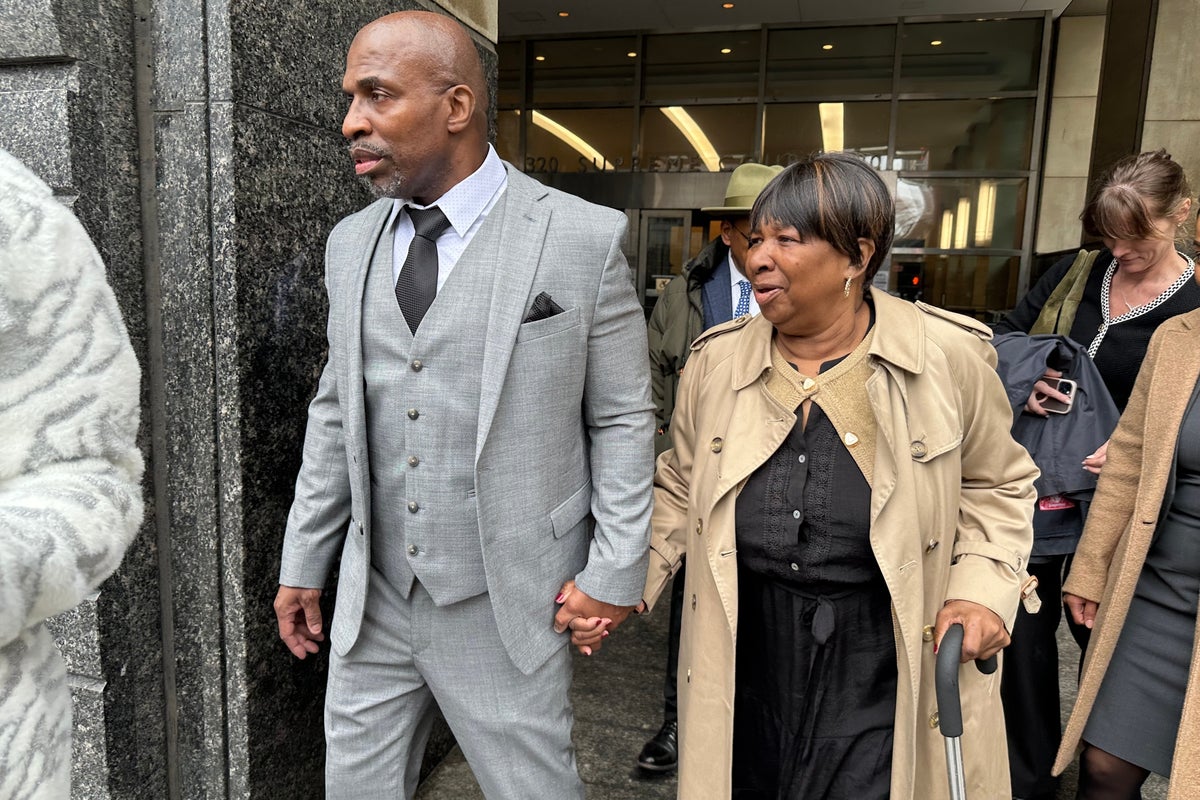
He stood on the courthouse steps, squinting against the unaccustomed brightness of a sun he wasn't supposed to see for another two years. He didn't look like a man who had won a million dollars. He looked like a man who had finally stopped being a ghost.
The shadow was gone, but the silhouette of the bars remained, etched into the map of his face.