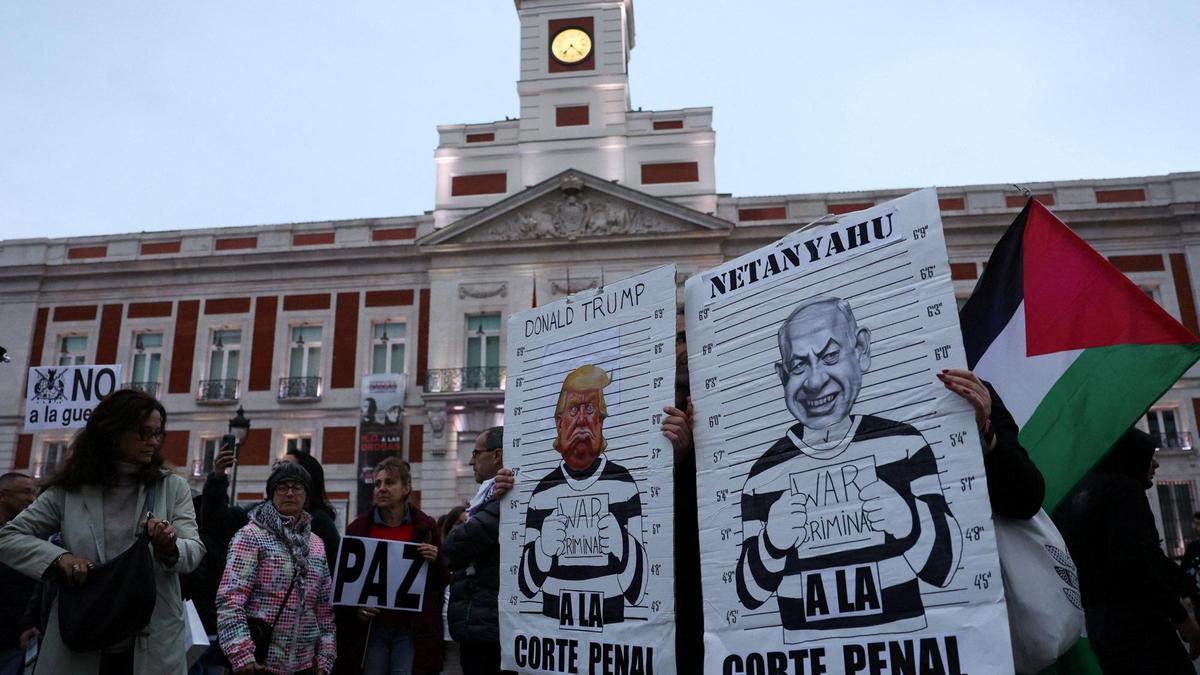
The Mediterranean sun rarely shines on a more complicated geopolitical divorce than the one currently unfolding between Washington and Madrid. Spain has formally denied the United States use of its airspace and military bases for any offensive operations against Iran, labeling such potential strikes as a violation of international law. This isn't just a bureaucratic hiccup or a scheduling conflict. It is a fundamental fracture in the NATO alliance that reveals a growing European refusal to be dragged into a regional conflict that lacks a clear legal mandate or a logical endgame.
The decision comes at a moment when tensions in the Middle East have reached a boiling point, with U.S. carrier strike groups positioning themselves for what the Pentagon calls "deterrence." But for the Spanish government, deterrence is a thin veil for a campaign they believe lacks the backing of the United Nations Security Council. By withholding the use of the Rota and Morón de la Frontera bases—sites that have been the bedrock of U.S. power projection in the Mediterranean for decades—Spain is effectively cutting off a vital logistical artery.
The Legal Firewall
Madrid’s refusal is rooted in a strict interpretation of the 1988 Agreement on Defense Cooperation. Under this treaty, the U.S. is granted access to Spanish soil, but that access is not an open checkbook. The Spanish executive branch has made it clear that "illegal" wars—those conducted without a direct threat to Spanish national security or a specific UN mandate—cannot be staged from their territory.
This isn't the first time Spain has flexed its sovereignty. Older hands in the intelligence community remember the 2003 fallout over the Iraq War. The current administration in Madrid is determined not to repeat the mistakes of the past, where Spanish support for a U.S.-led invasion led to domestic political upheaval and a legacy of public distrust. They are prioritizing the "rules-based order" over the "special relationship," a move that has left many in the U.S. State Department scrambling for alternatives.
The Rota Problem
The strategic significance of Naval Station Rota cannot be overstated. It is the gateway to the Mediterranean. It is the home port for four U.S. Navy Aegis-equipped destroyers that form the backbone of the European Phased Adaptive Approach to missile defense. When Spain says "no," the logistics of a Middle Eastern air campaign don't just get harder; they become a nightmare.
If U.S. tankers and bombers cannot use Spanish corridors, flight paths must be rerouted over more contentious territory or longer, fuel-intensive paths around the African continent. This adds hours to missions and increases the strain on a refueling fleet that is already stretched thin. It forces the U.S. to rely more heavily on bases in the Persian Gulf, which are within easy range of Iranian tactical missiles. Spain knows this. They are using their geography as a diplomatic shield, betting that the cost of an "illegal" war will become too high for Washington to pay.
Sovereignty Over Solidarity
For decades, the assumption in D.C. was that NATO allies would fall in line when the drumbeats of war started. That assumption is dead. Spain's move reflects a broader European sentiment that the "America First" or even "America Alone" approach to Middle East policy creates more instability than it solves.
The Spanish Ministry of Foreign Affairs has been quiet but firm. They argue that an unprovoked strike on Iranian soil would trigger a refugee crisis and energy price spikes that Europe—not America—would have to bear. Their logic is cold and transactional. Why should Madrid provide the staging ground for a conflict that will ultimately burn their own backyard?
The Ripple Effect Across the Continent
This denial isn't happening in a vacuum. Other European capitals are watching Madrid with a mixture of envy and trepidation. If Spain successfully blocks U.S. movements without facing crippling diplomatic or economic sanctions, it sets a precedent. Italy, Greece, and even Germany might find their own voices when it comes to the "use of facilities" clauses in their respective defense treaties.
The U.S. military presence in Europe has always been a trade-off. Europe gets a security umbrella, and the U.S. gets a forward-operating platform. But the umbrella is starting to feel more like a lightning rod. When the U.S. unilaterally withdraws from deals like the JCPOA (the Iran Nuclear Deal) and then expects allies to provide the logistics for the ensuing fallout, the "synergy" of the alliance evaporates. Spain is simply the first to say the quiet part out loud.
Logistics of a Blockade
What does this look like on the ground? It means that a C-17 Globemaster carrying munitions cannot touch down in Rota for a "gas and go." It means that F-35s cannot loiter in Spanish-controlled airspace while waiting for tanker support. It means the U.S. must treat Spanish territory as a "no-go" zone for offensive operations.
The Pentagon's response has been one of practiced indifference, publicly stating they have "multiple options" in the region. Privately, the mood is different. Replacing Rota and Morón would take years and billions of dollars. There is no other port in the region with the same combination of deep-water access, security, and proximity to both the Atlantic and the Mediterranean.
A Fragmented NATO
The real casualty here is the concept of a unified NATO front. While the alliance remains strong regarding Eastern European defense against Russia, the Mediterranean flank is fracturing. The U.S. wants a global NATO that can pivot to any hotspot; Spain wants a regional NATO focused on collective defense of member states. These two visions are now in direct conflict.
Critics in Washington argue that Spain is being a "free rider," enjoying the protection of the U.S. Navy while refusing to help when the chips are down. Madrid counters that they are being a "responsible actor," preventing a regional fire from becoming a global conflagration. It is a stalemate of ideologies.
The Shift Toward Strategic Autonomy
Spain’s stance is a major victory for the proponents of European "strategic autonomy." For years, French President Emmanuel Macron and others have argued that Europe needs its own military capabilities and a foreign policy independent of the United States. Spain is now putting that theory into practice. By denying the U.S. the tools of war, they are effectively exercising a veto over American foreign policy in the Middle East.
This isn't just about Iran. It’s about who holds the keys to the Mediterranean. If the U.S. cannot rely on its oldest allies for basic logistical support, the entire structure of American global power projection needs to be re-evaluated. The "Spanish No" is a signal that the era of the blank check is over.
Economic and Diplomatic Blowback
There will be consequences. Already, voices in the U.S. Congress are calling for a review of military aid and industrial cooperation with Spanish defense firms. If Spain wants to act like a neutral party, some argue, it should be treated like one. This could mean moving the Aegis destroyers to a more "cooperative" port, perhaps in Morocco or another non-EU partner.
But moving those ships is a logistical Herculean task. It would also signal a permanent retreat from a key NATO ally, handed to adversaries like Russia and China on a silver platter. Madrid is gambling that Washington needs Spain more than Spain needs the U.S. military’s presence. It is a high-stakes game of geopolitical chicken.
The Reality of Modern Alliances
We are entering a period where geography is once again destiny. The U.S. may have the most powerful military in history, but that power is diminished if it cannot find a place to land its planes or dock its ships. Spain has reminded the world that sovereignty isn't a relic of the past; it is a contemporary weapon.
The "illegal" label used by Madrid is particularly stinging. It frames the U.S. not as a leader of the free world, but as a rogue actor that must be restrained by its friends. This rhetorical shift is arguably more damaging than the loss of the airspace itself. It provides a moral and legal framework for other nations to follow suit.
Spain has drawn a line in the sand, or more accurately, across the sky. They have made it clear that their territory will not be used to launch a war they don't believe in. For a veteran analyst, the message is clear: the days of automatic European compliance are gone, and the U.S. must now negotiate for every inch of cooperation it once took for granted.
Washington now faces a choice: adapt to a world where its allies have their own red lines, or continue to push until the alliance breaks entirely. The hangars in Rota remain closed to offensive sorties, and for the first time in a generation, the U.S. finds itself locked out of its own front yard.


