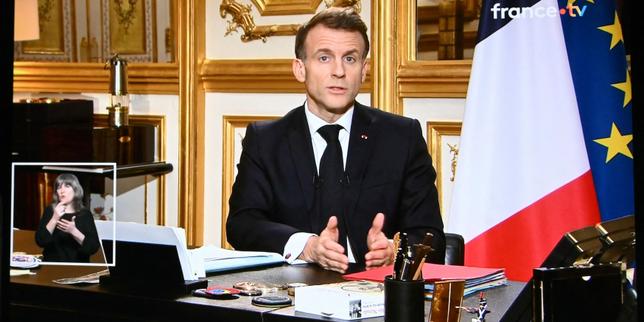
Emmanuel Macron just took to the airwaves to address a crisis that feels like it’s slipping out of anyone’s control. If you watched the speech, you saw a French president trying to walk a tightrope that's getting thinner by the second. He didn't just offer platitudes. He laid out a vision for Lebanon and Gaza that challenges both his allies and his critics.
The core of his message was clear. France isn't stepping back. Macron wants to position Paris as the bridge between a hovering regional war and a fragile diplomatic exit. He’s pushing for a ceasefire in Lebanon while simultaneously demanding that Israel’s security be guaranteed. It’s a bold stance. Some might even call it idealistic given the rockets currently flying over the Blue Line. You might also find this connected coverage useful: Strategic Asymmetry and the Kinetic Deconstruction of Iranian Integrated Air Defense.
The urgent call for a Lebanese ceasefire
The situation in Lebanon is the immediate fire Macron wants to douse. He was blunt about the risks of Lebanon becoming "a new Gaza." To prevent that, he's calling for an immediate cessation of hostilities by both Hezbollah and the Israeli Defense Forces (IDF).
This isn't just about stopping the bombs. It’s about the state of Lebanon itself. Macron emphasized that the country needs to regain its sovereignty. He’s pushing for the Lebanese Armed Forces to deploy in the south, as stipulated by UN Resolution 1701. He knows that without a functional state, Lebanon remains a playground for proxies. As reported in detailed reports by The Guardian, the implications are significant.
You’ve got to realize how difficult this is. Macron is essentially asking for a political miracle in Beirut. He wants the Lebanese parliament to finally elect a president—a post that’s been vacant for two years. He’s betting that political stability in Beirut will weaken the justification for Hezbollah’s "support front" for Gaza. It’s a long shot, but in his eyes, it’s the only shot.
Redefining the red lines for Israel
Macron didn't mince words regarding Israel’s right to defend itself. He’s consistent there. The October 7 attacks were a "barbaric act," and he reaffirmed France’s commitment to Israel’s safety. But—and it’s a big but—he’s clearly losing patience with the civilian toll in Gaza and now Lebanon.
He’s calling for a halt to the export of weapons used in Gaza. This isn't just a suggestion. It’s a shift in tone that signals a widening gap between Paris and the current Israeli government. Macron argues that you can't fight terrorism by creating a humanitarian catastrophe that fuels the next generation of radicals.
Why the arms embargo talk is a big deal
When a major Western power mentions restricted arms sales, the world listens. Macron isn't saying Israel shouldn't have weapons. He’s saying that if those weapons are used in a way that ignores international law, the supply chain should be questioned. It’s a move designed to pressure Benjamin Netanyahu into a diplomatic track.
Critics say this weakens Israel. Macron counters that true security only comes through a political solution—specifically the two-state solution. He’s doubling down on the idea that Palestinian statehood isn't a "taboo" for France. If anything, he sees it as the only way to ensure Israel’s long-term peace.
The Iranian shadow and regional escalation
You can’t talk about the Middle East without talking about Tehran. Macron knows this. He addressed Iran directly, warning against any further escalation. He wants the Iranian regime to stop using its proxies to destabilize the region.
France has been involved in intercepting Iranian missiles aimed at Israel before. Macron made it clear that France remains ready to act if regional stability is further threatened. However, he’s also trying to keep channels open. He believes in "exacting diplomacy"—tough talk backed by a willingness to negotiate.
What this means for French influence
Some say France is punching above its weight. Maybe. But France has deep historical ties to Lebanon. For Macron, this isn't just foreign policy; it’s about France’s identity as a global mediator. He’s organizing an international conference to support Lebanon’s population and sovereignty.
He’s trying to rally the European Union and the "Quint" (USA, France, Saudi Arabia, Qatar, and Egypt) to coordinate a single message. The goal? Force a pause. Every day the fighting continues, the chance of a total regional meltdown grows. Macron is trying to be the "cool head" in a room that's currently on fire.
The reality check on the ground
Let's be honest. Macron’s words are powerful, but the reality on the ground is grim. Hezbollah isn't likely to lay down arms because of a speech from the Élysée. Israel’s government feels it has a window to significantly weaken its enemies and seems intent on taking it.
The "Macron Method" relies on everyone acting rationally. In the Middle East, "rational" often looks different depending on which side of the border you’re standing on. His success depends on whether the US joins his push for a ceasefire or continues to provide the diplomatic cover for Israel to finish its military objectives.
The humanitarian cost is the silent driver
The President highlighted the displacement of hundreds of thousands of people. He knows that a refugee crisis in Lebanon doesn't just stay in the Middle East. It hits Europe. It hits France. This isn't just altruism; it’s domestic policy disguised as international diplomacy. Preventing a collapse in Lebanon is a direct way to prevent further instability in the Mediterranean.
Your next steps for staying informed
Don't just take the headlines at face value. If you want to understand if Macron’s plan is working, watch these three things over the next few weeks.
- The Lebanese Parliament: See if there’s any movement on electing a president. If they can’t even do that, Macron’s "political track" is dead on arrival.
- UNIFIL’s Status: Watch how the UN peacekeeping force in southern Lebanon is treated. If they are forced to withdraw or are repeatedly caught in the crossfire, the chances of a diplomatic solution plummet.
- The US Response: Watch the State Department. If they start using Macron’s language regarding a 21-day ceasefire, it means the pressure is working.
Follow the humanitarian corridors. If they remain blocked or under fire, the "Gaza-fication" of Lebanon that Macron fears is already happening. Stay critical of the "total victory" rhetoric on both sides. In this conflict, victory usually just means the other guy stopped breathing first, which isn't a foundation for peace. Keep an eye on the upcoming Paris conference for Lebanon—it’ll be the real test of whether Macron can put money and troops behind his words.